
 RO
RO EN
EN DE
DE IT
IT FR
FR ES
ES RU
RU JP
JP
Kallirhoe
Cumpara bilete
 Mai 2033 Mai 2033 | ||||||
|---|---|---|---|---|---|---|
Lu | Ma | Mi | Jo | Vi | Sa | Du |
Kallirhoe | Balet
Actul 1 aproximativ: 65 de minute
Pauză aproximativ: 25 de minute
Actul 2 aproximativ: 50 de minute
Sinopsis
Actul 1
În anul 400 î.Hr. în orașul grec Siracuza, un cor de femei celebrează pe Afrodita, zeita iubirii. Li se alătură Callirhoe, o femeie atât de frumoasă încât toți o compară cu Afrodita. O grupă de tineri sportivi, conduși de Chaereas și prietenul său Polycharmus, ajung la locul scenei. Callirhoe și Chaereas își încrucișează privirile și se îndrăgostesc instantaneu.
Pretendenții invidioși ai Callirhoe o aduc pe tatăl ei, Hermocrates, și pe tatăl lui Chaereas, Ariston, dușmani amari, în speranța că vor reuși să rupă iubirea celor doi tineri. Totuși, tații sunt convinși să lase deoparte conflictele și să permită căsătoria copiilor lor. Callirhoe și Chaereas își schimbă brățările ca semn al devotamentului lor și încep să sărbătorească nunta.
Nedespărțiți, pretendenții pun la cale o nouă schemă. Unul dintre ei îi dă pe ascuns servitoarei lui Callirhoe o brățară identică celor de la nuntă, folosind-o pentru a-l face pe Chaereas să creadă că Callirhoe este infidelă. Într-o furie geloasă, Chaereas se grăbește să o confrunte. Deși ea cere să fie crezută, el nu o ascultă. Ea cedează și pare moartă. Servitoarea plină de remușcări îi dezvăluie complotul lui Chaereas, iar acesta este disperat, crezând că a ucis-o pe Callirhoe.
Cetățenii în doliu o îngroapă pe Callirhoe. După ce toată lumea pleacă, ea se trezește și este îngrozită să descopere că a fost îngropată de vie. Piratul Theron și echipajul său vin să jefuiască mormântul și o răpesc împreună cu tezaurul.
În doliu, Chaereas se întoarce la locul de odihnă al Callirhoe cu Polycharmus și rămâne șocat când descoperă că mormântul este complet gol. Ei își dau seama că ea trebuie să fie vie și se grăbesc să o găsească.
Peste mare, în Milet, nobilul Dionysius plânge moartea soției sale. Pirații ajung și o vând pe Callirhoe lui Dionysius. Cum o vede, el uită de durerea sa și se îndrăgostește nebunește de ea. Între timp, servitorul său, Plangon, bănuiește că Callirhoe este însărcinată. Callirhoe explică că este copilul lui Chaereas. Plangon o sfătuiește să se căsătorească cu Dionysius pentru a se proteja pe ea și pe copilul ei, iar Callirhoe, cu reticență, este de acord cu propunerea lui. În momentul în care începe nunta, Chaereas ajunge. Plangon vede brățara sa și deduce că el este soțul Callirhoe. Loială față de Dionysius și dorind să păstreze fericirea acestuia, ea face ca Chaereas și Polycharmus să fie arestați.
Actul 2
Acum prizonieri, Chaereas și Polycharmus sunt duși la palatul puternicului Mithridates. Mithridates observă brățara fină a lui Chaereas și îl întreabă cine este. Pe măsură ce Chaereas povestește trecutul său, acesta prinde viață în fața ochilor săi, sub forma unei viziuni. Mithridates vrea să o aibă pe Callirhoe pentru el și ordonă gardienilor să o găsească. Când ea ajunge, Dionysius și Mithridates se luptă pentru ea. Totuși, sunt opriți și li se reamintește că, prin lege, toate disputele dintre nobili trebuie rezolvate de regele Babilonului.
La Babilon, Dionysius și Mithridates își prezintă cazul regelui. Dionysius afirmă că Mithridates a încercat să o seducă pe soția sa, dar Mithridates susține că Callirhoe nu este soția lui Dionysius pentru că era deja căsătorită cu Chaereas. Callirhoe și Chaereas sunt chemati și brățările lor dovedesc că sunt căsătoriți. Deși își doresc să se reunească, sunt opriți de rege, care acum o dorește și el pe Callirhoe. Refuzând să asculte protestele tuturor, el o forțează să danseze cu el.
Dintr-o dată, palatul este cuprins de haos când Egiptul declară război Babilonului. Regele își ia curtea într-un loc sigur, luând-o pe Callirhoe cu el și numindu-l pe Dionysius general al armatei sale. Un Chaereas plin de ură se înrolează în armata egipteană. În bătălie, generalul egiptean este rănit, iar hotărârea lui Chaereas de a lupta pentru iubirea sa devine și mai puternică. El conduce forțele egiptene spre victorie.
După încercările cumplite prin care au trecut, Callirhoe și Chaereas se reunesc. Un Chaereas plin de remușcări o roagă să-l ierte, iar ea este tulburată. Deși este recunoscătoare pentru bunătatea lui Dionysius, își dă seama că a iubit mereu doar pe Chaereas.
Ea alege să ierte.
Dionysius acceptă decizia ei și, ca un gest de iubire, îl trimite pe Plangon să-i aducă Callirhoe copilul. Greșelile trecutului sunt înțelese cu compasiune. Callirhoe, Chaereas și copilul lor pornesc pe drumul spre casă.
Program si distributie
Dirijor muzical: Paul Connelly
Coregrafie: Alexei Ratmansky
Dramaturgie & Libret: Guillaume Gallienne după romanul Kallirhoe de Chariton din Afrodisia
Muzică: Aram Haciaturian
aranjament de: Philip Feeney
Decoruri & Costume: Jean-Marc Puissant
Realizarea costumelor: Sukie Kirk
Lumini: Duane Schuler
Repetiții: Nancy Raffa, Eric Tamm
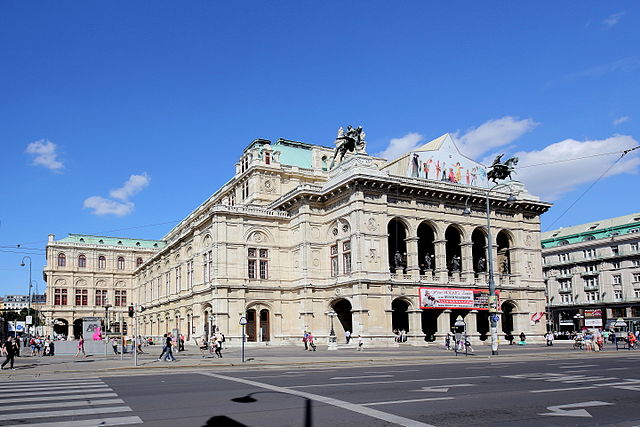
Opera de Stat Viena
Practical information
Punctuality
We ask you to arrive punctually for the performances. Late arrivals can only be admitted during the intermission. It is not possible to be admitted after intermission-during the performance.
Admission to the building for performances begins one hour before the start of the performance.
Cloakroom
For security reasons, we ask you to leave coats, jackets and bulky items such as bags or rucksacks in our free cloakrooms. Our cloakrooms are located next to the entrances on Operngasse, on the balcony on the right and left-hand side, as well as in the gallery.
As a box guest, please use the cloakroom in your box.
Program booklets
Program booklets for the performance of the day - in both German and English - are sold before the performance and during intermission by our Audience Service. Program booklets for other performances are available at any time in the opera foyer.
Cell phones
Ringing telephones, and glowing screens disturb the performance. We therefore ask you to silence your cell phones or put them in flight mode during the performance and stow them away accordingly.
Photography & video
Photography and filming during the performance is not permitted. Photography and filming for private purposes is of course permitted at the curtain callor during intermission. The use of smartphones and cameras in the proscenium boxes is prohibited throughout the entire performance to protect the orchestra from falling objects.
Dress code
Many of our guests take the opportunity to dress elegantly for their visit to the opera. When choosing your clothing, please bear in mind that you will be in close contact with other guests in the rows of seats. If you are not sufficiently dressed (e.g. flip-flops, an undershirt as a top or very short shorts), you may be refused admission.
Head coverings that obstruct the view of other guests are not permitted.
Length of the performance
When you select the date on which you want to purchase the ticket, the start and end time of the performance will be displayed. Each event may also include additional details regarding its schedule, and some even provide a complete timeline showing the number of acts, intermissions, and their respective durations.
Payment
Program booklets can only be purchased from our Audience Service by cash. Our box offices and intermission buffets accept both cash and card payments.
"I don't understand Italian"
It doesn't matter! Every seat has its own subtitle tablet, on which you can choose which language you want them to be displayed in. German, English and the original language of the opera are always included! You can choose from a total of up to 8 languages.
There are also trailers and lots of other information about the content, the music or the production, which can be found on the pages of the respective production.
Which opera is good for a first visit?
Of course, this depends entirely on your personal preferences, but experience shows that classical operas are particularly suitable for a first evening at the opera. You will be amazed at how many melodies you know! Whether from movie scenes, music lessons, a TV commercial, sports, ..
For example, the music from George Bizet's opera Carmen is very well known - not least because of its use in the Formula 1 victory ceremony.
Getting Here
The Vienna State Opera can be reached by public transport, bicycle, taxi, or car.
Public Transport Connections
Subway
U1, U2, U4 – Karlsplatz station
Streetcar
Lines 1, 2, D, 62, 71 – Opera or Karlsplatz stations
Bus
Line 59A – Opera or Karlsplatz stations
Local Railway
Badner Bahn – Vienna Opera Station
Arrival by Bicycle
Bicycle stands are located directly to the left and right of the building, providing convenient and secure parking.
Taxi
Taxi stands are situated near the opera, and cabs are available at the main entrance after performances.
Arrival by Car & Parking
Two parking garages near the State Opera provide ample parking facilities for visitors, ensuring a comfortable arrival experience.
Underground parking garage Kärntnerringgarage
Park for 10 hours for €8!
The Vienna State Opera and the ÖPARK-Kärntnerringgarage at Mahlerstraße 8, under the Ringstraßengalerien, offer the audience of the Vienna State Opera a favorable parking package.
You can park for up to 10 hours for just €8 with our evening rate from 5pm to 3am. Any hours before this must be paid for separately (€4/hour; with P-Card: €2.50/hour) To apply, go to P Card | Mein-Contipark.
The new system works simply and without a parking ticket. Simply drive into the garage. When you drive in, your license plate number is recorded and the barrier opens. When paying, all you have to do is enter your license plate number at the machine and pay. You can also pay contactless at the exit terminal with your P Card. When you exit, your car's license plate number is recognised and the barrier opens.
ÖPARK Kärntnerringgarage
A Mahlerstraße 8, 1010 Vienna
Gastronomy & Shops
Opera Café
The Opera Café is open daily from 10:00 to 18:00.
On performance days, it remains open until 22:30.
Drinks and snacks are available at the interval buffets during performances.
Souvenir Store
The Hamtil & Söhne souvenir store is located under the arcades of the Vienna State Opera, on the Herbert-von-Karajan-Platz side.
Opening hours: daily from 10:00 to 19:00.
Accessibility
Due to the historical structure of the Vienna State Opera building, accessibility conditions are not ideal. However, the venue aims to ensure that visitors with reduced mobility can attend performances as smoothly as possible.
All seating areas are accessible by elevator, and barrier-free restrooms are available.
Dedicated wheelchair spaces are provided for wheelchair users.
Wheelchair Spaces
A total of 22 wheelchair spaces are available. Four are located in the stalls and up to 18 (as needed) in the gallery.
In the stalls, wheelchair spaces are positioned on both the left and right sides of the auditorium, once near row 1 and once near row 14. Folding companion seats for these spaces are mounted on the auditorium wall and correspond to the height of rows 15–17. In the gallery, companion seats are also fixed to the wall directly behind the wheelchair spaces.
As availability is limited, wheelchair spaces must be reserved through the ticket store or the order office. For first-time reservations, prior registration with the order office is required.
Access
Barrier-free entry to the building is located on the Herbert-von-Karajan-Platz side, at the beginning of the arcades (swinging door, 87 cm wide).
The stalls and the elevator to the gallery can be reached via the inclined elevator in the opera foyer, located near the Opera Café.
The standard elevator to the gallery is positioned next to it (width 95 cm, depth 140 cm, door clearance 80 cm).
Cloakrooms, interval buffets, and wheelchair-accessible restrooms are available on both levels.
From the Best in Parking Kärntnerstraße underground garage (featuring two disabled parking spaces), Herbert-von-Karajan-Platz can be reached by elevator. The passage from the garage to the opera house is opened one hour before the performance begins and closed again once the audience has exited at the end of the event.
Additional disabled parking spaces are currently available at Helmut-Zilk-Platz 1 and Walfischgasse 1 and 6.
Service dogs are permitted.
Cloakroom
Can I take my coat with me? Where can I leave my backpack? Where is the cloakroom?
Coats, jackets, bulky bags, and other items (e.g., backpacks, suitcases, umbrellas, musical instruments) must be checked in at the free cloakroom.
The main cloakroom is located next to the entrances on the Operngasse side. Additional cloakrooms can be found on the right and left sides of the balcony and in the gallery.
Box seat holders have access to a private cloakroom directly at their box, providing a convenient and exclusive service.
©

Evenimente asociate