
 RO
RO EN
EN DE
DE IT
IT FR
FR ES
ES RU
RU JP
JP
Mireasa vândută
Cumpara bilete
 Iulie 2045 Iulie 2045 | ||||||
|---|---|---|---|---|---|---|
Lu | Ma | Mi | Jo | Vi | Sa | Du |
Mireasa vândută – Bedřich Smetana | Operă
OPERĂ COMICĂ în trei acte
Libret: Karel Sabina
Noua versiune în limba germană de SUSANNE FELICITAS WOLF, în colaborare cu SERGIO MORABITO, bazată pe versiunea scenică de CARL RIHA și WINFRIED HÖNTSCH, cu pasaje din traducerile lui KURT HONOLKA și PAUL ESTERHAZY
Actele 1 & 2: 90 minute
Pauză: 30 minute
Actul 3: 60 minute
Rezumat
Actul 1
Un grup de săteni sărbătorește la un bâlci de hram („Să ne bucurăm și să fim veseli”). Printre ei se află Mařenka și Jeník. Mařenka este nefericită deoarece părinții ei vor s-o căsătorească cu cineva pe care nu l-a întâlnit niciodată. Ea spune că vor încerca s-o forțeze. Dorințele ei se îndreaptă către Jeník, chiar dacă, așa cum explică în aria „De-aș afla vreodată”, nu știe nimic despre trecutul lui. Cei doi își declară apoi sentimentele într-un duet pasional de dragoste („Iubirea adevărată nu poate fi pătată”).
După ce cei doi se despart, apar părinții Mařenkei, Ludmila și Krušina, împreună cu pețitorul Kecal. După câteva discuții, Kecal anunță că i-a găsit un mire – Vašek, fiul mai mic al bogatului moșier Tobiáš Mícha; fiul cel mare, explică el, este un pierde-vară lipsit de valoare. Kecal laudă calitățile lui Vašek („E un băiat bun, bine crescut”), în timp ce Mařenka reintră în scenă. În cvartetul ce urmează, ea declară că are deja un iubit. Kecal o îndeamnă să-l alunge. Cei patru se ceartă, dar fără rezultat. Kecal decide că trebuie să-l convingă pe Jeník să renunțe la Mařenka, în timp ce sătenii se întorc cântând și dansând o polcă festivă.
Actul 2
Bărbații din sat cântă un cântec de băut vesel („Pentru bere!”), în timp ce Jeník și Kecal discută despre valoarea iubirii versus bani, la o halbă de bere. Intră femeile, iar toți dansează o furiantă. Departe de veselie, Vašek, emoționat, reflectează asupra căsătoriei ce urmează într-un cântec bâlbâit („Ma-ma-ma-maica mea mi-a zis”).
Apare Mařenka și, recunoscându-l imediat pe Vašek, nu-și dezvăluie identitatea. Prefăcându-se că este altcineva, îi zugrăvește un portret al „Mařenkei” ca fiind o trădătoare înșelătoare. Vašek se lasă păcălit cu ușurință și, când Mařenka (în chip fals) flirtează cu el („Cunosc o fată frumoasă”), acesta cade în mrejele ei și jură că o va renunța la Mařenka.
Între timp, Kecal încearcă să-l mituiască pe Jeník și, după un schimb de replici, îi oferă direct bani: o sută de florini dacă renunță la Mařenka. Jeník refuză. Când Kecal mărește suma la 300 de florini, Jeník se preface că acceptă, dar impune o condiție – doar fiul lui Mícha să aibă dreptul să se căsătorească cu Mařenka. Kecal acceptă și pleacă grăbit să pregătească contractul. Rămas singur, Jeník reflectează asupra înțelegerii făcute („Când vei afla pe cine ai cumpărat”), întrebându-se cum ar putea crede cineva că ar face așa ceva, și își exprimă iubirea pentru Mařenka.
Kecal adună sătenii pentru a fi martori la semnarea contractului („Intrați și ascultați”). Citește termenii: Mařenka nu se poate căsători decât cu fiul lui Mícha. Krušina și mulțimea se minunează de aparenta abnegație a lui Jeník, dar atmosfera se schimbă brusc când află că acesta a fost plătit. Actul se încheie cu Jeník fiind acuzat de trădare de către Krušina și ceilalți.
Actul 3
Vašek își exprimă confuzia într-un cântec scurt și trist („Nu-mi pot scoate din cap”), dar este întrerupt de apariția unui circ ambulant. Directorul de circ prezintă atracțiile: Esmeralda, dansatoarea spaniolă, un înghițitor de săbii „adevărat indian” și un urs dansator. Urmează o dans popular rapid – skočná. Vašek este fermecat de Esmeralda, dar tentativele sale timide sunt întrerupte când „indianul” anunță că „ursul” s-a prăbușit beat. E nevoie de un înlocuitor. Vašek acceptă rapid, încurajat de cuvintele măgulitoare ale Esmeraldei („Vom face ceva frumos din tine”).
Circarilor pleacă. Apar părinții lui Vašek – Mícha și Háta – împreună cu Kecal. Vašek le spune că nu mai vrea să se căsătorească cu Mařenka, după ce a aflat adevărul despre ea de la o fată frumoasă și ciudată. Aceștia sunt șocați („Nu o mai vrea – ce s-a întâmplat?”). Vašek fuge, iar Mařenka apare cu părinții ei. Tocmai a aflat despre înțelegerea lui Jeník cu Kecal, și urmează un ansamblu tensionat („Nu, nu, nu pot să cred”). Situația se complică atunci când Vašek revine, o recunoaște pe Mařenka ca fiind „fata ciudată” și spune că vrea să se căsătorească cu ea. În sextetul ce urmează („Hotărăște-te, Mařenka”), aceasta este îndemnată să reflecteze. Toți pleacă, lăsând-o singură.
În aria ei („Ah, ce durere”), Mařenka cântă despre trădare. Când apare Jeník, ea îl respinge furioasă și declară că se va căsători cu Vašek. Kecal apare și se amuză de încercările lui Jeník de a o îmbuna pe Mařenka, care îl alungă. Intruă apoi sătenii și cele două perechi de părinți, dorind să afle decizia ei („Ce ai hotărât, Mařenka?”). Când aceasta confirmă că se va mărita cu Vašek, Jeník revine și, spre consternarea tuturor, i se adresează lui Mícha cu apelativul „tată”. Se dezvăluie astfel că Jeník este fiul cel mare al lui Mícha, dintr-o căsătorie anterioară – „pierde-vară”-ul disprețuit de Kecal – care fusese alungat de mama sa vitregă, Háta. Fiind fiul lui Mícha, conform contractului, are dreptul să se căsătorească cu Mařenka. Când înțelege totul, Mařenka îl îmbrățișează.
Strigăte din afara scenei întrerup momentul – se pare că ursul a scăpat din circ și se îndreaptă spre sat. Creatura apare, dar se dovedește a fi Vašek costumat în urs („Nu vă temeți!”). Comportamentul lui convinge pe toți că nu este pregătit pentru căsătorie, iar părinții îl scot din scenă. Mícha binecuvântează căsătoria dintre Mařenka și Jeník, iar totul se încheie într-un cor de sărbătoare.
Program si distributie
Septembrie și Octombrie 2025
Krušina: Franz Xaver Schlecht
Ludmila: Margaret Plummer
Mařenka: Slávka Zaméčníková
Mícha: Ivo Stanchev
Háta: Monika Bohinec
Jeník: Pavol Breslik
Vašek: Michael Laurenz
Kecal: Peter Kellner
Directorul comedianților: Matthäus Schmidlechner
Esmeralda: Ilia Staple
Comediant: Alex Ilvakhin
Dirijor muzical: Tomáš Hanus
Regie: Dirk Schmeding
Decoruri: Robert Schweer
Costume: Alfred Mayerhofer
Coregrafie: Annika Dickel
Lumini: Tim van t'Hof
Video: Johannes Kulz
Martie 2026
Krušina: Franz Xaver Schlecht
Ludmila: Juliette Mars
Mařenka: Slávka Zaméčníková
Mícha: Ivo Stanchev
Háta: Zoryana Kushpler
Jeník: Paul Breslik
Vašek: Michael Laurenz
Kecal: Peter Kellner
Directorul comedianților: Matthäus Schmidlechner
Esmeralda: Ilia Staple
Comediant: Alex Ilvakhin
Dirijor muzical: Tomáš Hanus
Regie: Dirk Schmeding
Decoruri: Robert Schweer
Costume: Alfred Mayerhofer
Coregrafie: Annika Dickel
Lumini: Tim van t'Hof
Video: Johannes Kulz
Opera de Stat Viena
Practical information
Punctuality
We ask you to arrive punctually for the performances. Late arrivals can only be admitted during the intermission. It is not possible to be admitted after intermission-during the performance.
Admission to the building for performances begins one hour before the start of the performance.
Cloakroom
For security reasons, we ask you to leave coats, jackets and bulky items such as bags or rucksacks in our free cloakrooms. Our cloakrooms are located next to the entrances on Operngasse, on the balcony on the right and left-hand side, as well as in the gallery.
As a box guest, please use the cloakroom in your box.
Program booklets
Program booklets for the performance of the day - in both German and English - are sold before the performance and during intermission by our Audience Service. Program booklets for other performances are available at any time in the opera foyer.
Cell phones
Ringing telephones, and glowing screens disturb the performance. We therefore ask you to silence your cell phones or put them in flight mode during the performance and stow them away accordingly.
Photography & video
Photography and filming during the performance is not permitted. Photography and filming for private purposes is of course permitted at the curtain callor during intermission. The use of smartphones and cameras in the proscenium boxes is prohibited throughout the entire performance to protect the orchestra from falling objects.
Dress code
Many of our guests take the opportunity to dress elegantly for their visit to the opera. When choosing your clothing, please bear in mind that you will be in close contact with other guests in the rows of seats. If you are not sufficiently dressed (e.g. flip-flops, an undershirt as a top or very short shorts), you may be refused admission.
Head coverings that obstruct the view of other guests are not permitted.
Length of the performance
When you select the date on which you want to purchase the ticket, the start and end time of the performance will be displayed. Each event may also include additional details regarding its schedule, and some even provide a complete timeline showing the number of acts, intermissions, and their respective durations.
Payment
Program booklets can only be purchased from our Audience Service by cash. Our box offices and intermission buffets accept both cash and card payments.
"I don't understand Italian"
It doesn't matter! Every seat has its own subtitle tablet, on which you can choose which language you want them to be displayed in. German, English and the original language of the opera are always included! You can choose from a total of up to 8 languages.
There are also trailers and lots of other information about the content, the music or the production, which can be found on the pages of the respective production.
Which opera is good for a first visit?
Of course, this depends entirely on your personal preferences, but experience shows that classical operas are particularly suitable for a first evening at the opera. You will be amazed at how many melodies you know! Whether from movie scenes, music lessons, a TV commercial, sports, ..
For example, the music from George Bizet's opera Carmen is very well known - not least because of its use in the Formula 1 victory ceremony.
Getting Here
The Vienna State Opera can be reached by public transport, bicycle, taxi, or car.
Public Transport Connections
Subway
U1, U2, U4 – Karlsplatz station
Streetcar
Lines 1, 2, D, 62, 71 – Opera or Karlsplatz stations
Bus
Line 59A – Opera or Karlsplatz stations
Local Railway
Badner Bahn – Vienna Opera Station
Arrival by Bicycle
Bicycle stands are located directly to the left and right of the building, providing convenient and secure parking.
Taxi
Taxi stands are situated near the opera, and cabs are available at the main entrance after performances.
Arrival by Car & Parking
Two parking garages near the State Opera provide ample parking facilities for visitors, ensuring a comfortable arrival experience.
Underground parking garage Kärntnerringgarage
Park for 10 hours for €8!
The Vienna State Opera and the ÖPARK-Kärntnerringgarage at Mahlerstraße 8, under the Ringstraßengalerien, offer the audience of the Vienna State Opera a favorable parking package.
You can park for up to 10 hours for just €8 with our evening rate from 5pm to 3am. Any hours before this must be paid for separately (€4/hour; with P-Card: €2.50/hour) To apply, go to P Card | Mein-Contipark.
The new system works simply and without a parking ticket. Simply drive into the garage. When you drive in, your license plate number is recorded and the barrier opens. When paying, all you have to do is enter your license plate number at the machine and pay. You can also pay contactless at the exit terminal with your P Card. When you exit, your car's license plate number is recognised and the barrier opens.
ÖPARK Kärntnerringgarage
A Mahlerstraße 8, 1010 Vienna
Gastronomy & Shops
Opera Café
The Opera Café is open daily from 10:00 to 18:00.
On performance days, it remains open until 22:30.
Drinks and snacks are available at the interval buffets during performances.
Souvenir Store
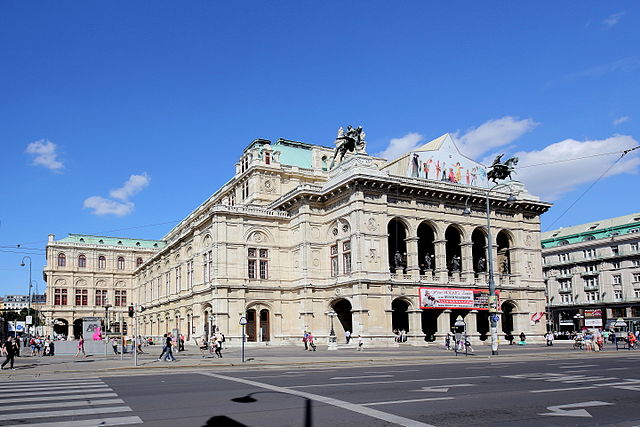
The Hamtil & Söhne souvenir store is located under the arcades of the Vienna State Opera, on the Herbert-von-Karajan-Platz side.
Opening hours: daily from 10:00 to 19:00.
Accessibility
Due to the historical structure of the Vienna State Opera building, accessibility conditions are not ideal. However, the venue aims to ensure that visitors with reduced mobility can attend performances as smoothly as possible.
All seating areas are accessible by elevator, and barrier-free restrooms are available.
Dedicated wheelchair spaces are provided for wheelchair users.
Wheelchair Spaces
A total of 22 wheelchair spaces are available. Four are located in the stalls and up to 18 (as needed) in the gallery.
In the stalls, wheelchair spaces are positioned on both the left and right sides of the auditorium, once near row 1 and once near row 14. Folding companion seats for these spaces are mounted on the auditorium wall and correspond to the height of rows 15–17. In the gallery, companion seats are also fixed to the wall directly behind the wheelchair spaces.
As availability is limited, wheelchair spaces must be reserved through the ticket store or the order office. For first-time reservations, prior registration with the order office is required.
Access
Barrier-free entry to the building is located on the Herbert-von-Karajan-Platz side, at the beginning of the arcades (swinging door, 87 cm wide).
The stalls and the elevator to the gallery can be reached via the inclined elevator in the opera foyer, located near the Opera Café.
The standard elevator to the gallery is positioned next to it (width 95 cm, depth 140 cm, door clearance 80 cm).
Cloakrooms, interval buffets, and wheelchair-accessible restrooms are available on both levels.
From the Best in Parking Kärntnerstraße underground garage (featuring two disabled parking spaces), Herbert-von-Karajan-Platz can be reached by elevator. The passage from the garage to the opera house is opened one hour before the performance begins and closed again once the audience has exited at the end of the event.
Additional disabled parking spaces are currently available at Helmut-Zilk-Platz 1 and Walfischgasse 1 and 6.
Service dogs are permitted.
Cloakroom
Can I take my coat with me? Where can I leave my backpack? Where is the cloakroom?
Coats, jackets, bulky bags, and other items (e.g., backpacks, suitcases, umbrellas, musical instruments) must be checked in at the free cloakroom.
The main cloakroom is located next to the entrances on the Operngasse side. Additional cloakrooms can be found on the right and left sides of the balcony and in the gallery.
Box seat holders have access to a private cloakroom directly at their box, providing a convenient and exclusive service.
©

Evenimente asociate