
 EN
EN DE
DE IT
IT FR
FR ES
ES RU
RU JP
JP RO
RO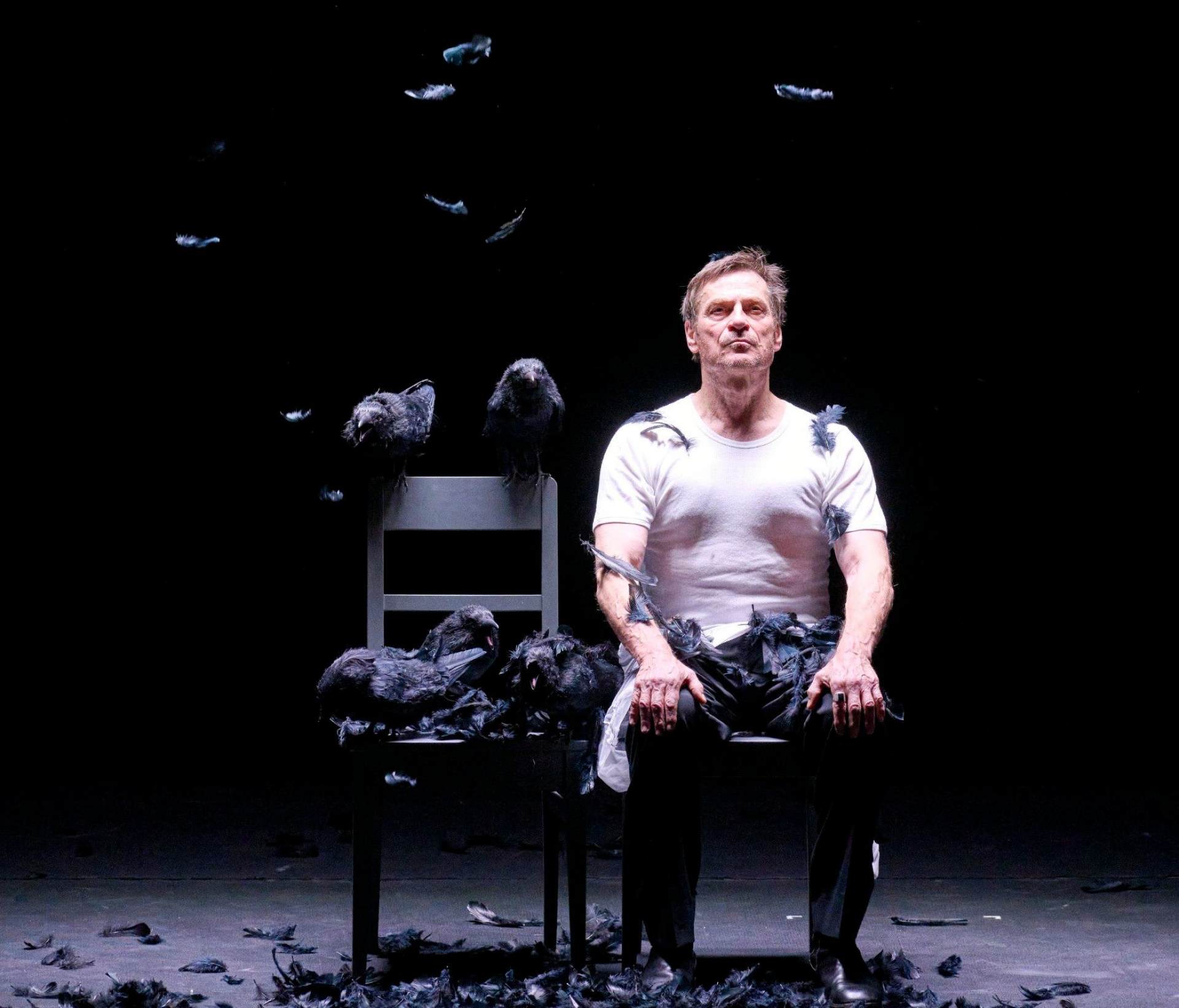
© Wiener Staatsoper
Macbeth
Order tickets
 March 2027 March 2027 | ||||||
|---|---|---|---|---|---|---|
Mo | Tu | We | Th | Fr | Sa | Su |
Macbeth – Giuseppe Verdi | Opera
Tragic opera in four acts
Text: Andrea Maffei & Francesco Maria Piave
after William Shakespeare
Language: Italian
Age recommendation 16+
About the work
Macbeth, a general in the service of King Duncan, is prophesied by three witches that he will become king himself. But the price is high, and soon he embarks on a bloody path of self-destruction.
Driven by the ambitious Lady Macbeth, he commits murder and treason to secure his power. But his deeds catch up with him as he faces his rival Macduff and a rebellious army. The tragedy reaches its peak in a devastating battle that seals Macbeth’s downfall and makes Malcolm, the son of the murdered king, the new ruler of Scotland.
Act 1 & 2 – approx. 85 minutes
Interval – approx. 25 minutes
Act 3 & 4 – approx. 70 minutes
Storyline
Act 1
Macbeth and Banco, the king's generals, return from the war.
Witches prophetically greet Macbeth, Lord of Glamis, as Lord of Cawdor and King of Scotland. Banco also wants to know his future. He is to become the father of kings. Soldiers announce Macbeth's appointment as Lord of Cawdor.
Macbeth shudders at the violence with which he could make the second prophecy come true. Banco sees through his temptation.
The witches expect Macbeth to visit them again soon. A letter from her husband tells Lady Macbeth about the encounter with the witches. She knows his ambition, but doubts his willingness to use violence. She is determined to remove his inhibitions.
A servant announces the imminent arrival of King Duncan. Lady Macbeth pins all her hopes on the night that the king will spend under her roof. Before the king and his entourage arrive, Macbeth and the lady find time to communicate.
Macbeth sees a bloody dagger leading him to the king's bedroom. At the agreed signal, he enters.
After the murder, the completely distraught Macbeth refuses to enter the room again in order to slip the murder weapon to the sleeping guards. Lady Macbeth does so. There is a knock at the door. Lady Macbeth drags her husband away with her.
Macduff and Banco discover the dead man and raise the alarm. Those who have rushed to the scene curse the murderer and call for God's judgment.
Act 2
Duncan's son Malcolm has fled to England. He is believed to be his father's murderer. Macbeth is king.
To prevent the prophecy that Banco will be the father of kings from coming true, he decides to kill Banco and his son Fleance.
Lady Macbeth becomes intoxicated with the power of life and death. Assassins hired by Macbeth lure Banco and his son into an ambush. Banco, who has accepted Macbeth's invitation despite his suspicions, is murdered. Fleance manages to escape.
The new king and queen give a party. Lady Macbeth sings a drinking song. One of the murderers informs Macbeth of Banco's death and Fleance's escape. As Macbeth sits down on the vacant armchair, Banco's ghost sits on it. Lady Macbeth and the guests do not see him. The ghost disappears. Macbeth has the drinking song repeated. Banco's ghost appears once more. Macbeth decides to go to the witches. The Lady reviles his fear of ghosts. The party observes the ruler's disintegration. Macduff, a Scottish nobleman, will leave the country.
Act 3
The witches are at work. Macbeth wants to know his fate.
The witches conjure up spirits. They prophesy: Macbeth should beware of Macduff; no one born of a woman can wound him; until the forest of Birnam comes against him, he is invincible. Macbeth wants to know whether Banco's family will reign. Eight kings appear, the last carrying a mirror: Banco. Laughing, he shows the long line of his crowned descendants. Macbeth faints.
Lady Macbeth is told about the apparitions. Macbeth and his wife will destroy Macduff's and Banco's families.
Act 4
A refugee camp on the border between Scotland and England. Large sections of the Scottish population flee their country to escape Macbeth's tyranny.
Macduff thinks of his wife and children. He has left them behind in Scotland. Macbeth has murdered them. Macduff wants to carry out God's revenge.
Malcolm is on his way to Scotland with an English army. In the forest of Birnam, he orders the soldiers to disguise themselves with branches. Fugitives join the army.
A doctor and a chambermaid observe the sleepwalking Lady Macbeth. She repeatedly tries to remove a supposed bloodstain from her hand. Macbeth senses that death is near. He is without hope. The chambermaid reports the queen's death. Soldiers announce the approach of the Forest of Birnam. Macbeth calls for death or victory.
Macduff, who was once cut from his mother's womb, kills Macbeth, Macbeth is "cursed by God and man".
Malcolm is King of Scotland.
Program and cast
Macbeth: Étienne Dupuis
Banquo: Alexander Vinogradov
Lady Macbeth: Anastasia Bartoli
Macduff: Najmiddin Mavlyanov
Musical direction: Francesco Ivan Ciampa
Staging: Barrie Kosky
Stage direction rehearsal: Sylvie Döring
Set design and lighting: Klaus Grünberg
Costumes: Klaus Bruns
Dramaturgy: Claus Spahn
Vienna State Opera
Public Transport
Subway lines: U1, U2, U4
Trams: 1, 2, D, J, 62, 65
Buses: 59A
Local Railway: Badner Bahn
Stops: Karlsplatz / Opera
Taxi stands are available nearby.
Parking
Parking is only € 6, - for eight hours!
The Wiener Staatsoper and the ÖPARK Kärntner Ring Garage on Mahlerstraße 8, under the “Ringstraßengalerien”, offer the patrons of the Vienna State Opera a new, reduced parking fee. You can park in the Kärntner Ring Garage for up to 8 hours and pay only a flat fee of € 6, -. Just validate your ticket at one of the discount machines inside the Wiener Staatsoper. The normal rate will be charged for parking time greater than 8 hours. The validation machines can be found at the following coat checks: Operngasse, Herbert von Karajan-Platz, and the right and left and balcony galleries.
Important: In order to get the discount, please draw a ticket and do not use your credit card when entering the garage!
After devaluing your ticket in the Wiener Staatsoper you can pay comfortably by credit card or cash at the vending machines.
The machines accept coins and bills up to 50.- Euro. Parking time longer than 8 hours will be charged at the normal rate.
History
The structure of the opera house was planned by the Viennese architect August Sicard von Sicardsburg, while the inside was designed by interior decorator Eduard van der Nüll. It was also impacted by other major artists such as Moritz von Schwind, who painted the frescoes in the foyer, and the famous "Zauberflöten" (“Magic Flute”) series of frescoes on the veranda. Neither of the architects survived to see the opening of ‘their’ opera house: the sensitive van der Nüll committed suicide, and his friend Sicardsburg died of a stroke soon afterwards.
On May 25, 1869, the opera house solemnly opened with Mozart's Don Giovanni in the presence of Emperor Franz Joseph and Empress Elisabeth.
The popularity of the building grew under the artistic influence of the first directors: Franz von Dingelstedt, Johann Herbeck, Franz Jauner, and Wilhelm Jahn. The Vienna opera experienced its first high point under the direction of Gustav Mahler. He completely transformed the outdated performance system, increased the precision and timing of the performances, and also utilized the experience of other noteworthy artists, such as Alfred Roller, for the formation of new stage aesthetics.
The years 1938 to 1945 were a dark chapter in the history of the opera house. Under the Nazis, many members of the house were driven out, pursued, and killed, and many works were not allowed to be played.
On March 12, 1945, the opera house was devastated during a bombing, but on May 1, 1945, the “State Opera in the Volksoper” opened with a performance of Mozart's THE MARRIAGE OF FIGARO. On October 6, 1945, the hastily restored “Theaters an der Wien” reopened with Beethoven's FIDELIO. For the next ten years the Vienna State Opera operated in two venues while the true headquarters was being rebuilt at a great expense.
The Secretary of State for Public Works, Julius Raab, announced on May 24, 1945, that reconstruction of the Vienna State Opera would begin immediately. Only the main facade, the grand staircase, and the Schwind Foyer had been spared from the bombs. On November 5, 1955, the Vienna State Opera reopened with a new auditorium and modernized technology. Under the direction of Karl Böhm, Beethoven’s FIDELIO was brilliantly performed, and the opening ceremonies were broadcast by Austrian television. The whole world understood that life was beginning again for this country that had just regained its independence.
Today, the Vienna State Opera is considered one of the most important opera houses in the world; in particular, it is the house with the largest repertoire. It has been under the direction of Dominique Meyer since September 1, 2010.
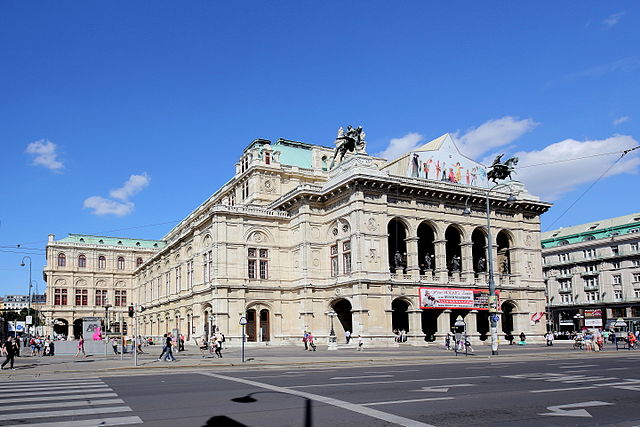
© Wiener Staatsoper
Related events