
 EN
EN DE
DE IT
IT FR
FR ES
ES RU
RU JP
JP RO
RO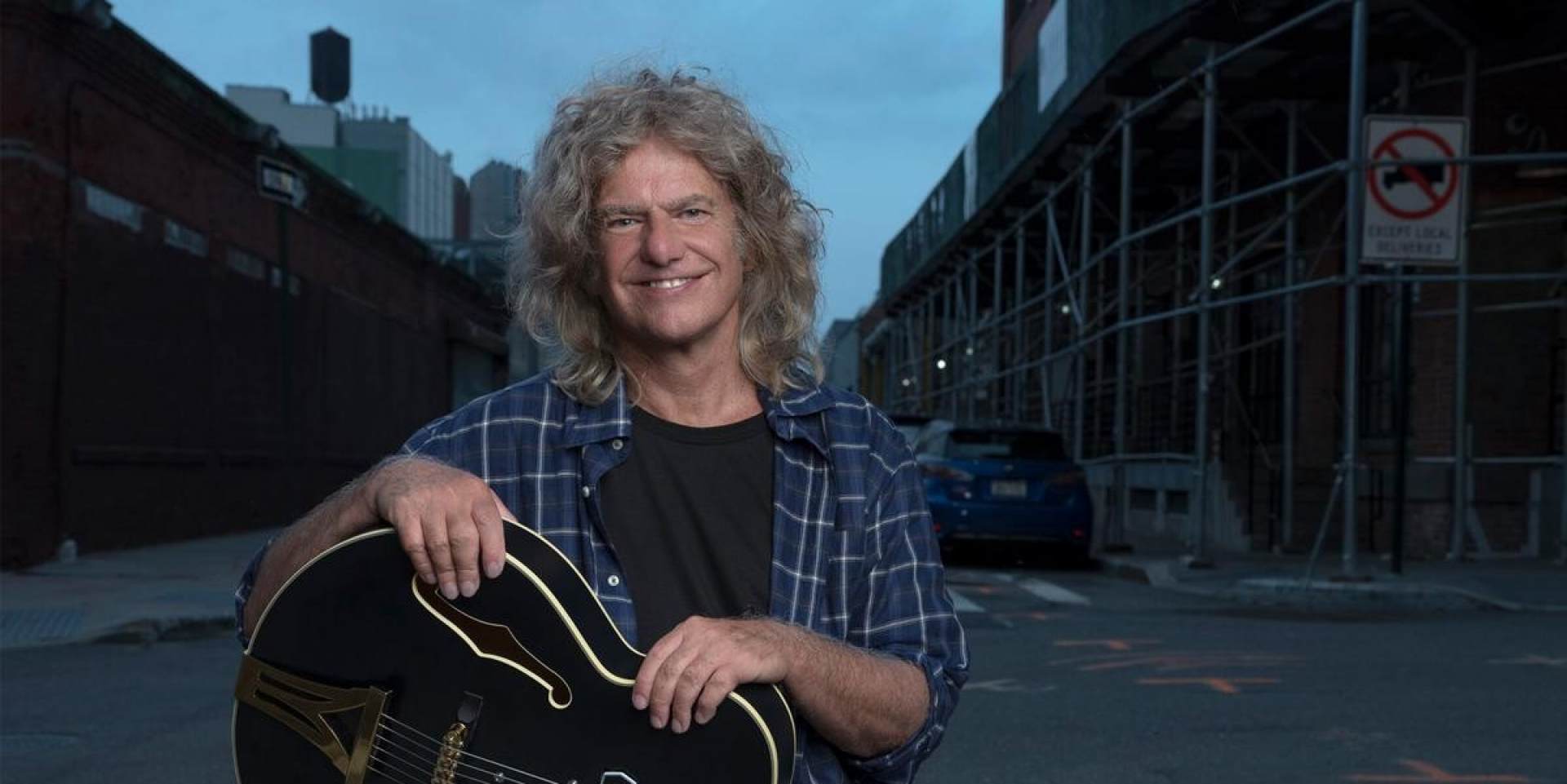
© James Katz
Pat Metheny
Order tickets
June 2026 | ||||||
|---|---|---|---|---|---|---|
Mo | Tu | We | Th | Fr | Sa | Su |
Pat Metheny, born on August 12, 1954, in Lee’s Summit, Missouri, has been at the forefront of modern music for more than five decades. He began playing the trumpet at the age of eight, switched to guitar at twelve, and by fifteen was already performing with the finest jazz musicians in Kansas City—an early start that shaped his unmistakable sound.
After joining vibraphonist Gary Burton’s group in 1974, Metheny quickly distinguished himself through his horn-like phrasing, lyrical touch, and rhythmic fluidity. His debut album Bright Size Life (1975) redefined the possibilities of jazz guitar, introducing a new sonic openness and melodic clarity that inspired generations of musicians.
With more than 20 million albums sold and 20 Grammy Awards across ten different categories—a record unmatched by any other artist—Metheny’s influence spans genres and generations. His collaborations range from Steve Reich and Ornette Coleman to Herbie Hancock, Jim Hall, Milton Nascimento, and David Bowie. His compositions encompass everything from solo guitar works and orchestral pieces to the groundbreaking Orchestrion project.
A dedicated educator, Metheny became the youngest faculty member in the history of both the University of Miami and the Berklee College of Music, where he later received an honorary doctorate. He is a member of the DownBeat Hall of Fame, an NEA Jazz Master, and has been inducted into both the Royal Swedish Academy of Music and the Missouri Hall of Fame.
In 2026, Metheny will embark on a world tour with his new ensemble Side-Eye III+, supporting the release of their self-titled album—the first on his new label, Uniquity Music, which will encompass all of his recordings since 1984 as well as all future projects.
Program and cast
Pat Metheny – Guitar
Wiener Konzerthaus
The Wiener Konzerthaus ( Vienna Concert House or Hall) is one of the largest and most artistically progressive institutions in international musical life. During the course of a season, which extends from September to June, some 750 wide-ranging events take place and more than 600,000 visitors can listen to around 2,500 different compositions. With this comprehensive and varied selection, the Wiener Konzerthaus – together with the Vienna State Opera House and the Musikverein – is central to Vienna’s reputation as one of the world’s leading music capitals.
From its earliest days, the Wiener Konzerthaus has held the highest cultural aims and artistic mission: «To act as a venue for the cultivation of fine music, as a meeting point for artistic endeavour, as a home for music and a cultural centre for Vienna». It was in this spirit that the Konzerthaus was inaugurated on 19 October 1913 with a festive concert attended by Emperor Francis Joseph I. To mark the occasion, Richard Strauss wrote the «Festliches Präludium op. 61», which was followed by Beethoven’s Ninth Symphony. This programme combination, comprising a contemporary work and a masterpiece from the past, served as a model for the Wiener Konzerthaus’s future direction: today, too, an awareness of tradition and the joys of innovation form the main pillars of the Konzerthaus’s artistic identity.
Access to the Wiener Konzerthaus
Public transport:
Short walk from the U4 Stadtpark Station: 10 min walk from the U4/U1 Karlsplatz Station, or take the 4A bus.
From the tram and bus stops at Schwarzenbergplatz, accessed by D, 2 & 71 trams and 3A & 4A buses. The 4a bus stop is at Hotel Am Konzerthaus.
Taxi:
The nearest taxi stands are at the Hotel Intercontinental in the Johannesgasse and at Hotel Am Konzerthaus on the Heumarkt.
Restaurants next to:
Gmoakeller
Hotels in immediate vicinity:
Hotel am Konzerthaus and Intercontinental
Great Hall
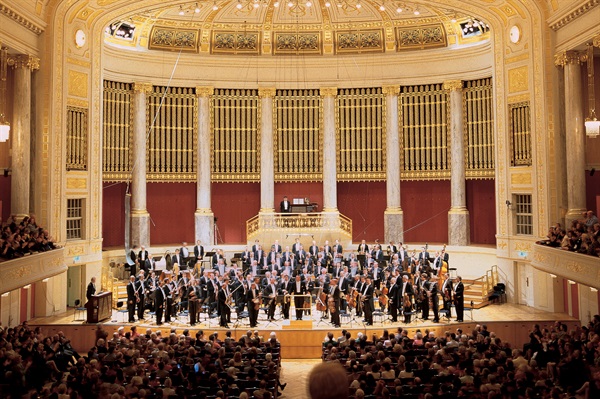
In the heart of the building (which consists of more than 600 rooms) lies the Konzerthaus’s flagship, the Grosser Saal (Great Hall). Designed with a sense of space and classical balance, its stage has provided the setting for many memorable concerts over the years. In this room, artists, audiences and atmosphere blend into a harmonious triad.
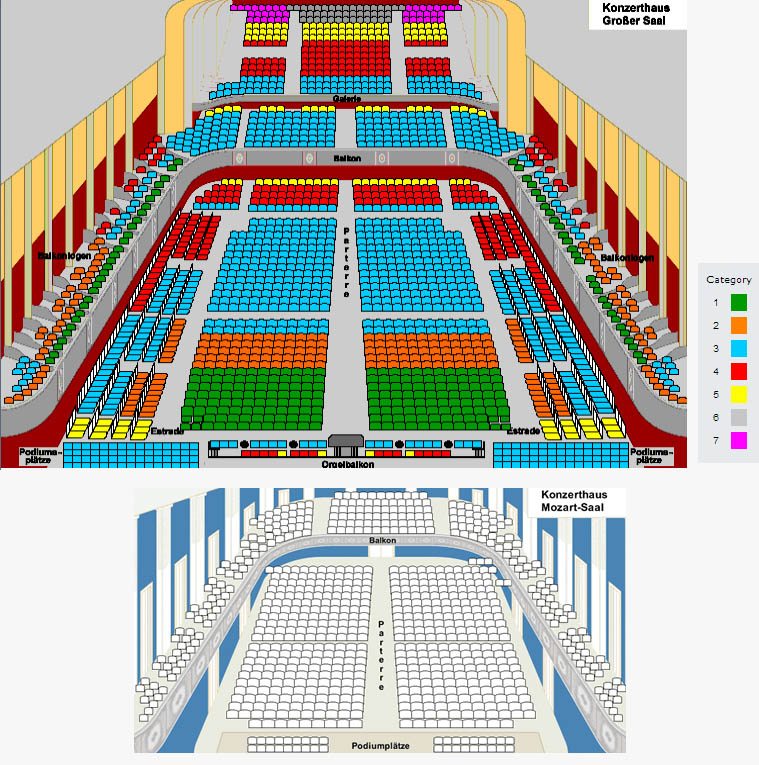
Home to world-famous orchestras, virtuoso soloists, renowned conductors and legendary jazz musicians, the Great Hall can accommodate an audience of 1,800 and offers the perfect venue for a wide variety of musical activity. The Great Hall has emerged from the major renovation with renewed splendour and, despite improvements in technical installation and audience comfort has continued to conserve its original elegance. Its unique atmosphere ideally lends itself to the broad range of artistic activities offered by the Vienna Konzerthaus.
Mozart Hall
Open and relaxing, welcoming and intimate, with its incomparable appeal, the Mozart Hall constitutes a jewel of international musical life. The perfect setting for all types of chamber music, from lute and Lieder recitals to string quartets and chamber orchestras, it can accommodate an audience of around 700 – an ideal size in which to experience the intimacy of chamber music and recital performances.
The Mozart Hall enjoys world-wide acclaim on account of its unique acoustics. This distinction makes it a top favourite with leading ensembles and soloists – as well as a popular venue for recordings. This was taken into account during the major renovation of the building: as with all other rooms in the Konzerthaus, the Mozart Hall is directly linked to a recording studio and a technical control room.
Schubert Hall
With its festive character, the Schubert-Saal presents the perfect model of a music salon, the restored use of the windows follwing the renovation having returned the room to its elegant, airy appearance.
Equipped with around 320 seats, it lends itself to a wide range of chamber-music concerts, as well as to receptions, dinners and lectures. It is home to the popular lunchtime concert series, as well as to events which enable promising young musicians to experience a professional concert stage. Many a musical career has been launched in the Schubert Hall of the Vienna Konzerthaus.
Seating capacity: 320
Auditorium: 240 m²
Podium: 50 m²
Related events