
 EN
EN DE
DE IT
IT FR
FR ES
ES RU
RU JP
JP RO
RO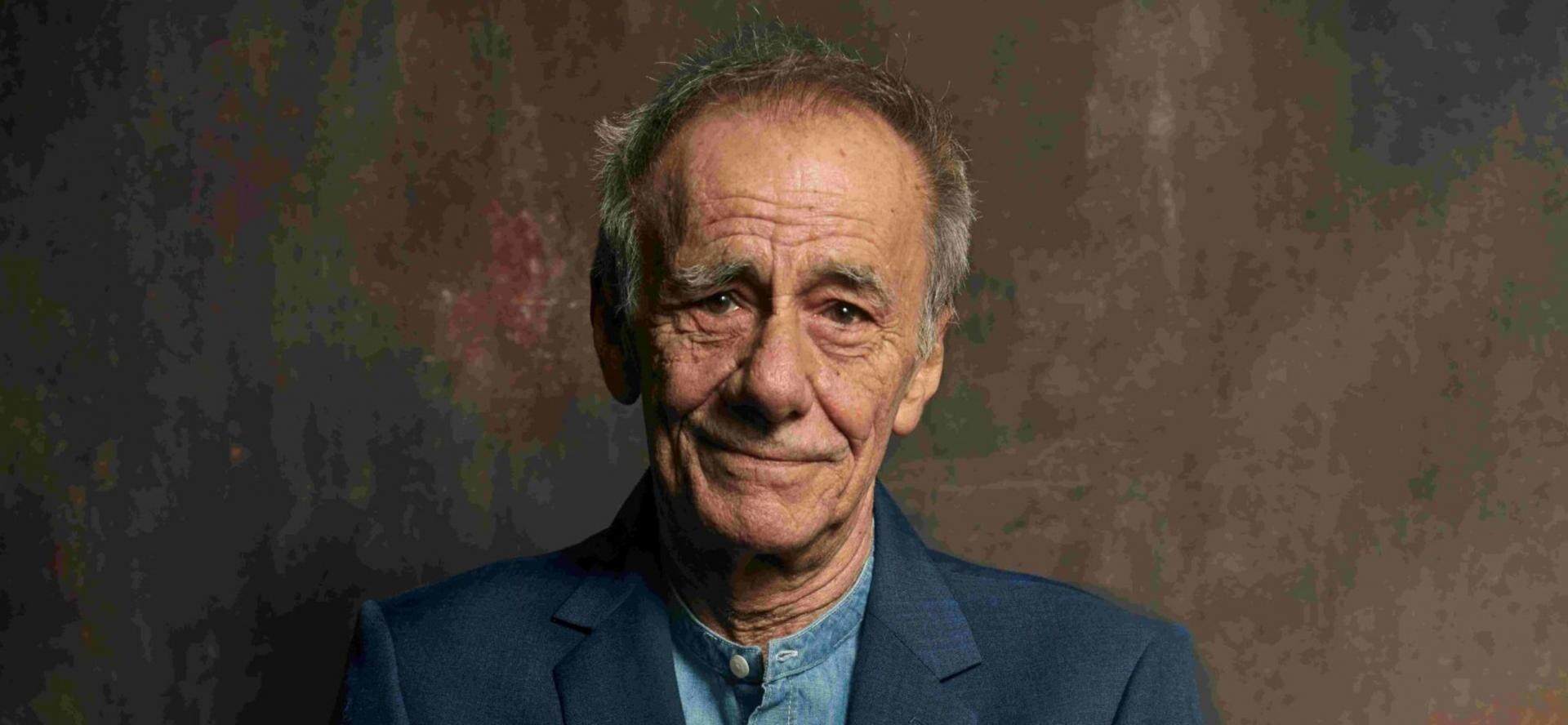
© Amilcare Incalza
Roberto Vecchioni, Ra il Silenzio e il Tuono Tour
Order tickets
 September 2028 September 2028 | ||||||
|---|---|---|---|---|---|---|
Mo | Tu | We | Th | Fr | Sa | Su |
A great show of songs and monologues
Roberto Vecchioni, after the success of the last book The White Bear was black. History and legend of the (Piemme), continues with Between the silence and the thunder Tour that takes its name from one of his literary works (Between silence and thunder, Einaudi 2024). The show, produced by DM Produzioni, scheduled in the most evocative places in Italy, in the first part is dedicated to the songs of the last album L’Infinito (2018, DME Label), and then leave room for some classics of the songwriter’s repertoire, in a narrative that holds together the music and the word.
Already from the title, self-quote of Call Me Still Love, emerges the autobiographical reference together with the analysis of the great themes that animate the author’s passion: literature, philosophy, music and cinema.
« Between the silence and the thunder Tour is a great show of songs and monologues. Silence belongs to the imagination, to the spirit, to the soul, while the thunder instead belongs to what I did and was made to me that is, to life, which pulses a lot: the only way to quiet it is to turn to the spirit – explains Vecchioni – the whole first part of the show is played on the last record and on the characters that beat destiny, they fought evil, they loved life, others and themselves. A recent, new concept of mine emerges, of great love for everything that is done and lived
The second part of the show, on the other hand, is a kind of return, a look at the past with the songs of before, which show how we came to the concept of Infinity through particular thoughts about love, dream, existence, pain, joy, happiness ... and how then all these little things have recomposed themselves in a single idea, which is to love life however, beautiful or ugly because in reality it is always beautiful. It’s us who sometimes imagine it in another way.”
Roberto Vecchioni is accompanied by the “historical band”, consisting of Lucio Fabbri (piano and violin), Massimo Germini (acoustic guitar), Antonio Petruzzelli (bass) and Roberto Gualdi (drums).
Program and cast
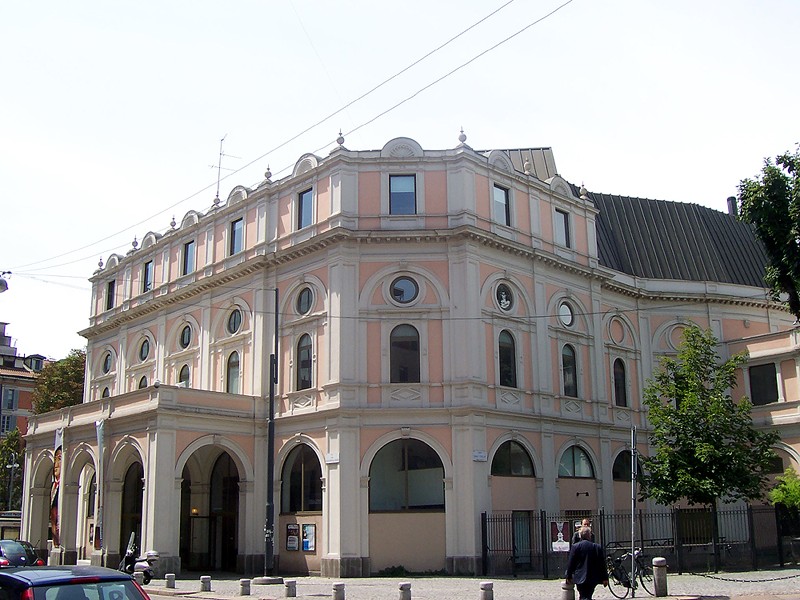
Teatro dal Verme
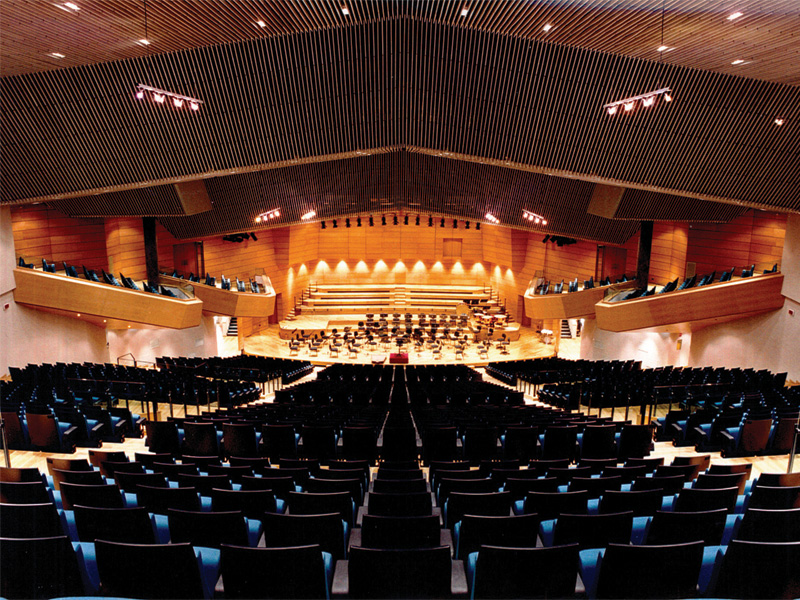
The Teatro Dal Verme is a theatre in Milan, Italy located on the Via San Giovanni sul Muro, on the site of the former private theatre the Politeama Ciniselli. It was designed by Giuseppe Pestagalli to a commission from Count Francesco Dal Verme, and was used primarily for plays and opera performances throughout the 19th and early 20th centuries. Today, the theatre is no longer used for opera, and is a venue for concerts, plays and dance performances, as well as exhibitions and conferences.
The original 3,000-seat theatre, surmounted by a large cupola, was constructed in the traditional horseshoe shape, with two tiers of boxes and a large gallery (or loggione) which alone contained more than 1000 seats. It opened on September 14, 1872 with a production of Meyerbeer's Les Huguenots and soon established itself as one of Italy's most important opera houses. During its "golden years", the theatre saw the world premieres of Puccini's Le Villi (May 31, 1884); Leoncavallo's Pagliacci (May 21, 1892) and I Medici (November 9, 1893); and Cowen's Signa (November 12, 1893). It also saw the Italian premiere of Lehár's The Merry Widow (April 27, 1907).
By the 1930s, the theatre was mainly being used as a cinema. It was then severely damaged by American aerial bombardment during World War II, after which its magnificent central cupola, which had survived the bombing, was stripped of all its metal parts by the occupying German army. It was partially rebuilt in 1946, and for a period in the 1950s it was used for the performance of musicals. It then reverted to a cinema and a political conference hall.
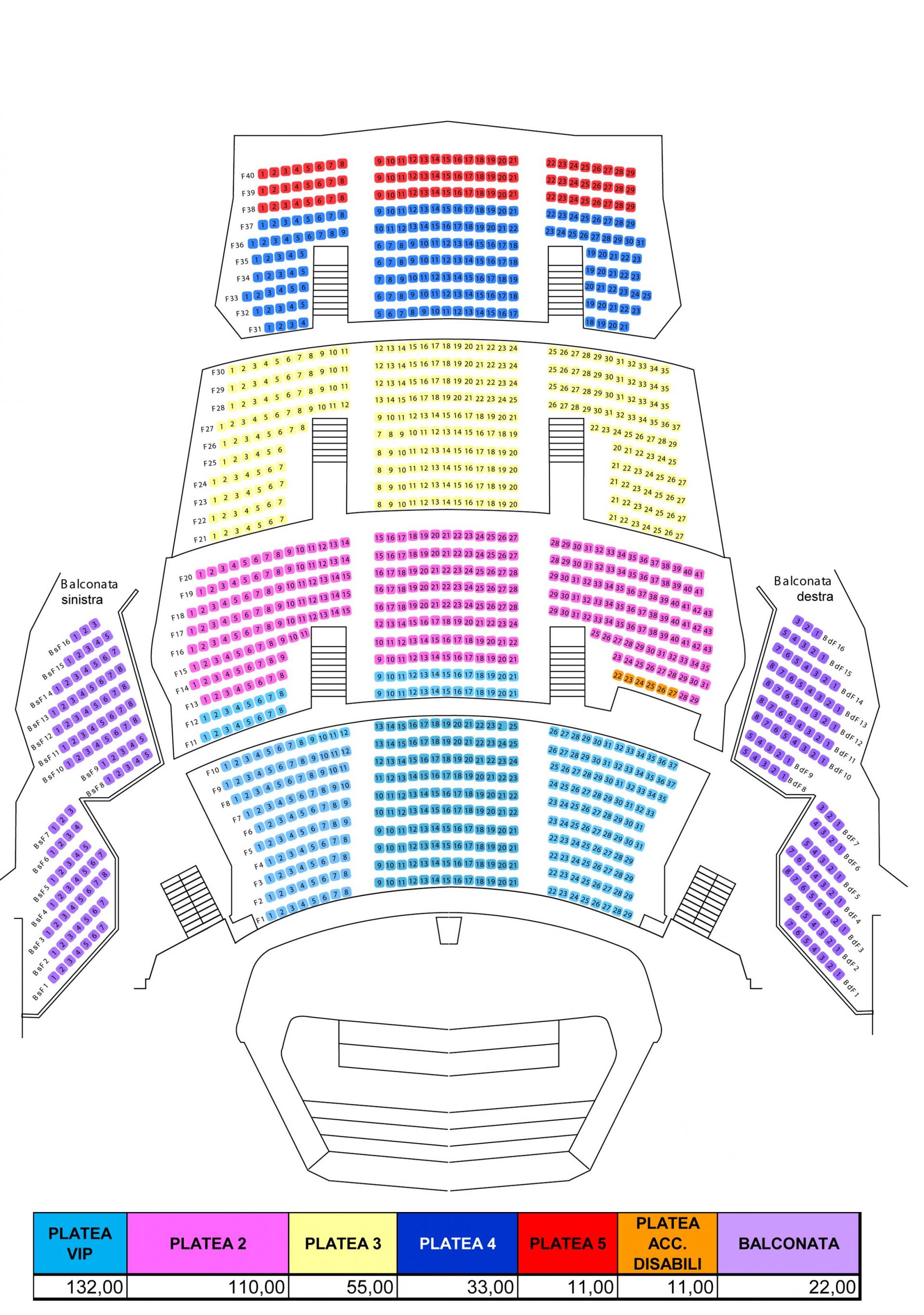
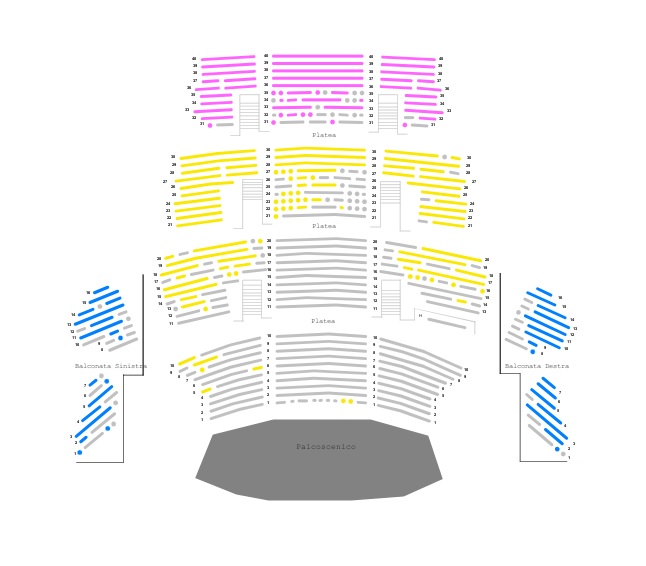
In 1991, the theatre's interior underwent a major restructuring and renovation project which was completed in 1998. It now has a large modern auditorium, the Sala Grande, with 1420 seats, a smaller performing space known as the Sala Piccola, with 200 seats, and a space for exhibitions and conferences, the Sala Terrazzo. Since September 2001, it has been administered
Related events