
 EN
EN DE
DE IT
IT FR
FR ES
ES RU
RU JP
JP RO
RO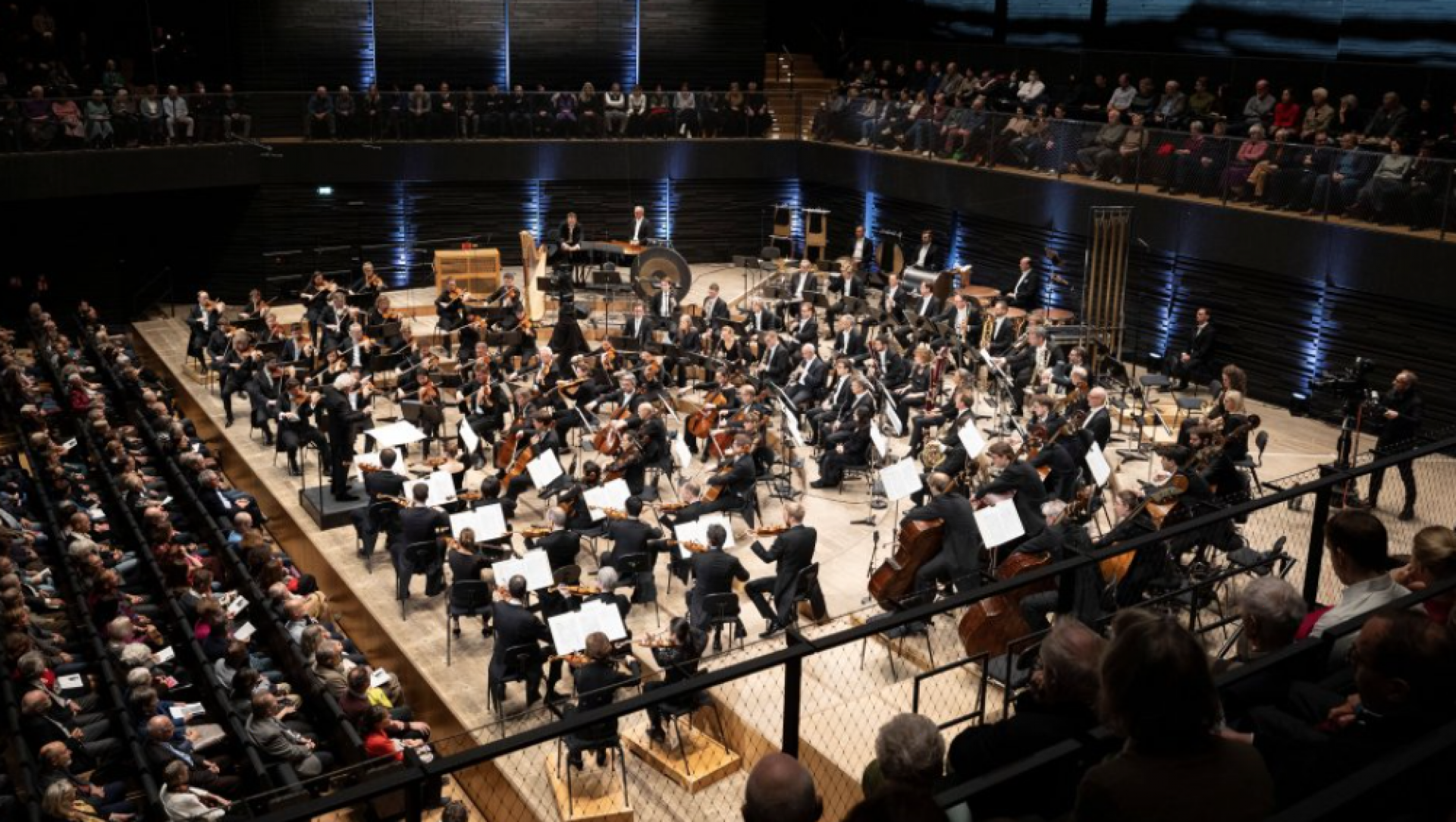
© Astrid Ackermann
Symphonieorchester des Bayerischen Rundfunks
Order tickets
 September 2026 September 2026 | ||||||
|---|---|---|---|---|---|---|
Mo | Tu | We | Th | Fr | Sa | Su |
A romantic symphony by Robert Schumann, set in contrast with the vibrant firework display in Igor Stravinsky’s music for the ballet The Firebird
The programme for the second Prague Spring concert by the Bavarian Radio Symphony Orchestra (BRSO), internationally regarded as one of the three greatest orchestras in the world, sees Chief Conductor Sir Simon Rattle placing the inward, restless Second Symphony by German Romantic Robert Schumann in juxtaposition with Igor Stravinsky’s spectacular, vibrantly colourful music for the ballet based on the Russian folk tale about the Firebird. The audience will thus be given a unique opportunity to experience the exceptional technique, exquisite sound and stylistic flexibility of the Munich-based orchestra, whose qualities are due in large part also to Rafael Kubelík, Czech conductor and founder of the Prague Spring.
“Schumann’s Second Symphony is one of those pieces that touch on existential matters. He wrote it after a serious mental breakdown, and it is probably the most profound of his four symphonies,” says Simon Rattle, referring to the first item on the programme. The work is indeed the result of the profound inner unease that Robert Schumann (1810–1856) himself described to his friend Felix Mendelssohn in a letter in September 1845: “For several days, there has been much trumpeting and drumming within me. I don’t know what will come of it.” The composer’s progress on the symphony was interrupted by his repeated bouts of depression and anxiety, his headaches and also his hearing difficulties. Although the entire piece was sketched within a mere two weeks in December 1845, the symphony was only completed shortly before its premiere, held on 5 November 1846 in the Leipzig Gewandhaus. In its day the symphony, strongly influenced by the composer’s intensive study of counterpoint (Schumann called this period “Fugenpassion”) and by his enthusiasm for the Symphony in C major “The Great” by Franz Schubert, was likened by critics to Beethoven’s Fifth and Mozart’s Jupiter Symphony.
The music for the ballet The Firebird, based on motifs from old Russian folklore, was written by the then 27-year-old, relatively unknown composer Igor Stravinsky (1882–1971) as a commission from Sergei Diaghilev’s Ballets Russes. Diaghilev dreamed of creating a devastating work that would be invigorating and, at the same time, fundamentally Russian, thus he chose the story of the Firebird, which symbolised rebirth, beauty and magic. Stravinsky worked on the ballet in close symbiosis with choreographer Michel (Mikhail) Fokine and produced a work for large orchestra of immensely colourful instrumentation, which included a xylophone, three harps, celesta and piano. The fairy tale tells the story of Prince Ivan (Tsarevich Ivan) who, aided by an enchanted feather from the Firebird, defeats the evil magician, Kashchei the Immortal, and frees the thirteen princesses held captive, including the beautiful Tsarevna. The production caused a sensation during its premiere in Paris on 25 June 1910 and propelled Stravinsky among the world’s compositional elite. On this occasion the BRSO will not be performing the composer’s more familiar suite on its own, but will instead present the entire work in all its unique splendour.
Program and cast
Programme
Robert Schumann: Symphony No. 2 in C major Op. 61
Igor Stravinsky: The Firebird, ballet music
Performers
Symphonieorchester des Bayerischen Rundfunks
Sir Simon Rattle – conductor
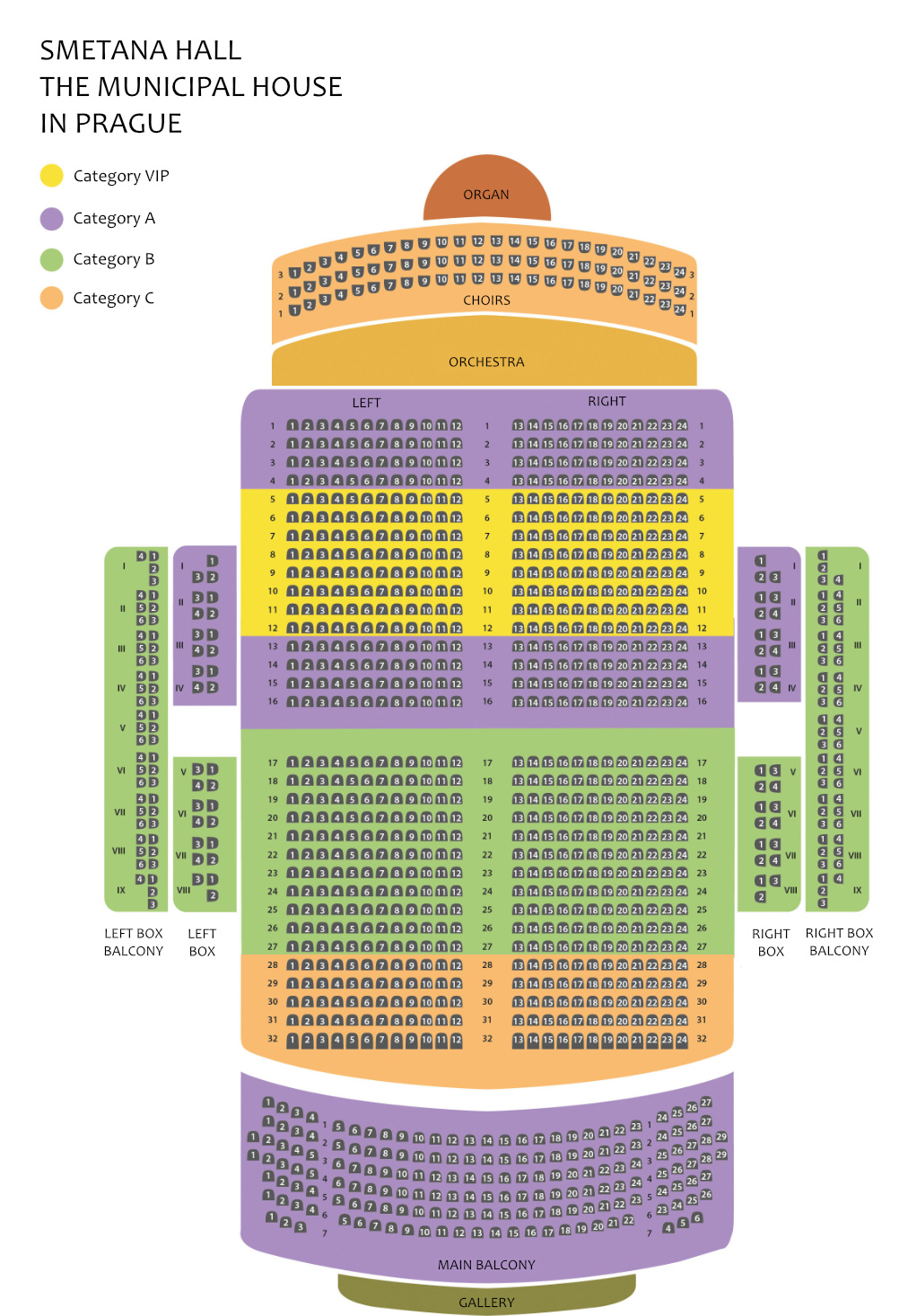
Municipal House Theater Prague
Municipal House (Czech: Obecní dům) is a civic building that houses Smetana Hall, a celebrate concert venue, in Prague, Czech Republic. Its address is Náměstí Republiky 5, next to the Powder Gate in the center of the city.
The Royal Court palace used to be located on the site of the Municipal House. From 1383 until 1485 the King of Bohemia lived on the property. After 1485, it was abandoned. It was demolished in the early 20th century. Construction of the current building started in 1905. It opened in 1912.[citation needed] The building was designed by Osvald Polívka and Antonín Balšánek.
The Municipal House was the location of the Czechoslovak declaration of independence.
The building is of the Art Nouveau architecture style. The building exterior has allegorical art and stucco. There is a mosaic called Homage to Prague by Karel Špillar over the entrance. On either side are allegorical sculpture groups representing The Degradation of the People and The Resurrection of the People by Ladislav Šaloun. Smetana Hall serves as a concert hall and ballroom. It has a glass dome.

Related events