
 EN
EN DE
DE IT
IT FR
FR ES
ES RU
RU JP
JP RO
RO
The Valkyrie
Order tickets
January 2027 | ||||||
|---|---|---|---|---|---|---|
Mo | Tu | We | Th | Fr | Sa | Su |
Die Walküre – Richard Wagner
Contemporary
Language: German
Surtitle: Hungarian, English, German
Running time: 4 hours 45 minutes including two intervals
Act I: 1 hour 2 minutes
Interval: 30 minutes
Act II: 1 hour 33 minutes
Interval: 20 minutes
Act III: 1 hour 20 minutes
“I've captured a terrific storm of elements and of hearts which gradually calms to Brünnhilde's magic sleep,” Wagner on the score of Die Walküre, in a letter to Ferenc Liszt. Following on the heels of the introductory Das Rheingold, this opera about the tragic love between two of Wotan's children constitutes the start of the more tightly drawn dramatic trilogy. Once again, the laws of the gods clash: can paternal love save a lad who has violated the sanctity of marriage? And what punishments await the woman who protects the as-yet-unborn and innocent hero?
Parental guidance - The performance is not recommended for children under 12 years of age.
Synopsis
Act I
Exhausted from fleeing his pursuers through a storm, Siegmund bursts into the door of a strange house and collapses. Sieglinde finds him slumped beside the hearth, and the two feel an immediate attraction toward each other. Their discussion is interrupted by Sieglinde's husband, Hunding, who asks Siegmund who he is. Siegmund, saying his name is "Wehwalt" (Woeful), describes his life of adversity, the death of his mother and the loss of his sister. Eventually everyone realises that Hunding is in fact kin to Siegmund's enemies. In observance of the law of hospitality, the host will not take Siegmund's life right away, but states that when morning comes, the two must meet in mortal combat. Left by himself, Siegmund addresses his father, Wälse – who is really Wotan, the ruler of the gods in human form – to give him the sword that he once promised him. Sieglinde returns and tells him that she has given Hunding a sleeping draught, and the two can speak without fear. She relates the story of how she became Hunding's wife, and of the one-eyed stranger who thrust a sword into the stump of the ash tree at the centre of the house, and how nobody has ever been able to pry it out. Sieglinde also reveals to the visitor how unhappy she is. Siegmund embraces her and promises to free her from her forced marriage with Hunding. As moonlight floods into the room, Siegmund compares the feelings welling up inside them to the union of love and springtime. Sieglinde, addressing Siegmund as "Spring", asks if his father truly is "Wolfe", as he had claimed earlier. When Siegmund reveals that his father is really Wälse, Sieglinde recognises that the man she is facing is her twin brother. Siegmund draws the sword from the tree trunk and declares Sieglinde to be his bride. The two Wälsungen are united in happiness.
Act II
On a high mountain ridge, Wotan is speaking with his favourite warrior daughter, the Valkyrie Brünnhilde. He asks her to help his mortal son, Siegmund, in his battle with Hunding. Brünnhilde is about to happily depart to accomplish her mission when Fricka, Wotan's wife and the goddess of marriage and the hearth, arrives and insists that the adulterous – not to mention incestuous – siblings be punished, meaning that Wotan must protect Hunding's marriage rights against Siegmund. She pays no heed to Wotan's argument that Siegmund might be able to save the gods by regaining the Nibelung Alberich's all-powerful ring from Fafner, the giant who has changed himself into a dragon. Wotan realises that he has fallen into his own trap: if he does not enforce the law, then his own power will also vanish. He gives in and accepts his wife's demands. After Fricka's departure, the chief god, angry and feeling his own impotence, tells the returning Brünnhilde the story of the theft of the Rheingold, and how Alberich placed a curse on the ring he had made from the gold. Brünnhilde listens to her father in astonishment as he relates the story of the plan, now in ashes, he had devised to save the gods, and how she must now fight on Hunding's side in the deadly encounter. Meanwhile, in the forest, Siegmund is attempting to calm Sieglinde, who has nearly lost her mind from fear and shame, and watches over her when she finally falls asleep. Brünnhilde appears to Siegmund as if in a vision and informs him that he will soon die and go to Valhalla. Siegmund replies that he will not go without Sieglinde, and threatens to kill both himself and his love if his sword is certain to have no power against Hunding. Moved by his tenacity, Brünnhilde elects to be guided by her father's innermost desires and – despite the god's decision and express order to the contrary – aid Siegmund, who upon hearing Hunding approaching, bids farewell to Sieglinde. As the two men do battle, Siegmund – thanks to Brünnhilde's protective shield – is about to triumph when Wotan appears and shatters Siegmund's sword, Notung, into fragments with his spear. The now weaponless lad is quickly slain by Hunding, while Brünnhilde, fearing her father's vengeance, flees clutching both Sieglinde and the splintered shards of Notung to her. With a single gesture, Wotan kills Hunding as he stands triumphantly over Siegmund's body, and then heads off after Brünnhilde in order to punish his favourite child for her grave disobedience.
Act III
Brünnhilde's eight warrior sisters, the Valkyries, gather on a mountaintop: this is where they gather on their way to Valhalla, the place where they take fallen heroes in order for them to guard the home of the gods for all eternity. They are surprised to see Brünnhilde arrive on her horse bearing not a hero, but a woman: Sieglinde. When her sisters learn that she is fleeing from Wotan's wrath, they do not dare to hide her. Despairing and powerless, Sieglinde is resigned to die until Brünnhilde informs her that she is carrying Siegmund's child underneath her heart. Sieglinde then asks the Valkyries for assistance and guidance, takes the pieces of Notung from Brünnhilde and, thanking the brave Valkyrie for her aid, sets off for what Brünnhilde's sisters have told her is the one place safe from Wotan: the forest guarded by Fafner. The ruler of the gods arrives, casts Brünnhilde out of the ranks of the Valkyries and announces his intention to turn her into a mortal woman as punishment. Brünnhilde's sisters rush to her defence, but he warns them that they will share her same fate if they offer her their protection. Left alone with her father, Brünnhilde argues that she was actually following Wotan's true will when she defied him. Unswayed, her father will not alter the punishment: Brünnhilde will lie in a deep sleep on the mountaintop and will belong to the first man who happens to find her. The girl asks her father to surround her with a wall of fire that only the bravest hero would dare to cross. Both of them hope and feel that this hero will be the child soon to be born to Sieglinde. Wotan bids a sad farewell to his dearest child, and with a paternal kiss sends Brünnhilde into a deep sleep and mortal existence before summoning Loge, the god of fire, to encircle the high crag, Brünnhilde's resting place. As the flames rise, Wotan casts an enchantment on the fire that will deter anyone who fears the power of Wotan's spear from entering.
Program and cast
Conductor: Ulf Schirmer
Siegmund: István Kovácsházi
Hunding: Krisztián Cser
Wotan: Michele Kalmandy
Sieglinde: Zsuzsanna Ádám
Brünnhilde: Csilla Boross
Fricka: Atala Schöck
Helmwige: Ildikó Megyimórecz
Gerhilde: Gabriella Rea Fenyvesi (opera studio)
Ortlinde: Andrea Brassói-Jőrös
Waltraute: Andrea Szántó
Siegrune: Anna Csenge Fürjes
Rossweisse: Dora Jana Klarić (opera studio)
Grimgerde: Diána Ivett Kiss
Schwertleite: Viktória Mester
Featuring the Hungarian State Opera Orchestra, as well as the Hungarian National Ballet and students of the Hungarian Dance University
Director, visual concept: Géza M. Tóth
Set designer: Gergely Zöldy Z
Costume designer: Ibolya Bárdosi
Projected scenery: Vizuális Műhely Kedd
Choreographer: Marianna Venekei
Ballet master: Ágnes Sárközy-Holler
Dramaturg, Hungarian translation by Eszter Orbán
English translation by Arthur Roger Crane
Composer: Richard Wagner
Librettist: Richard Wagner
Hungarian State Opera
STANDING ROOM TICKETS - INFORMATION IN CASE OF A FULL HOUSE!
If all the seats are sold out for the selected time, but you still want to see the production on that day, 84 of the extremely affordable standing seats will be sold at the theatre, 2 hours before the start of the performance, with which you can visit the gallery on the 3rd floor. Tickets can be purchased at the ticket office of the Budapest Opera House. We would like to draw your attention to the fact that the stage can only be seen to a limited extent from the standing places and the side seats, but at the same time, following the performance is also supported by television broadcasting on the spot.
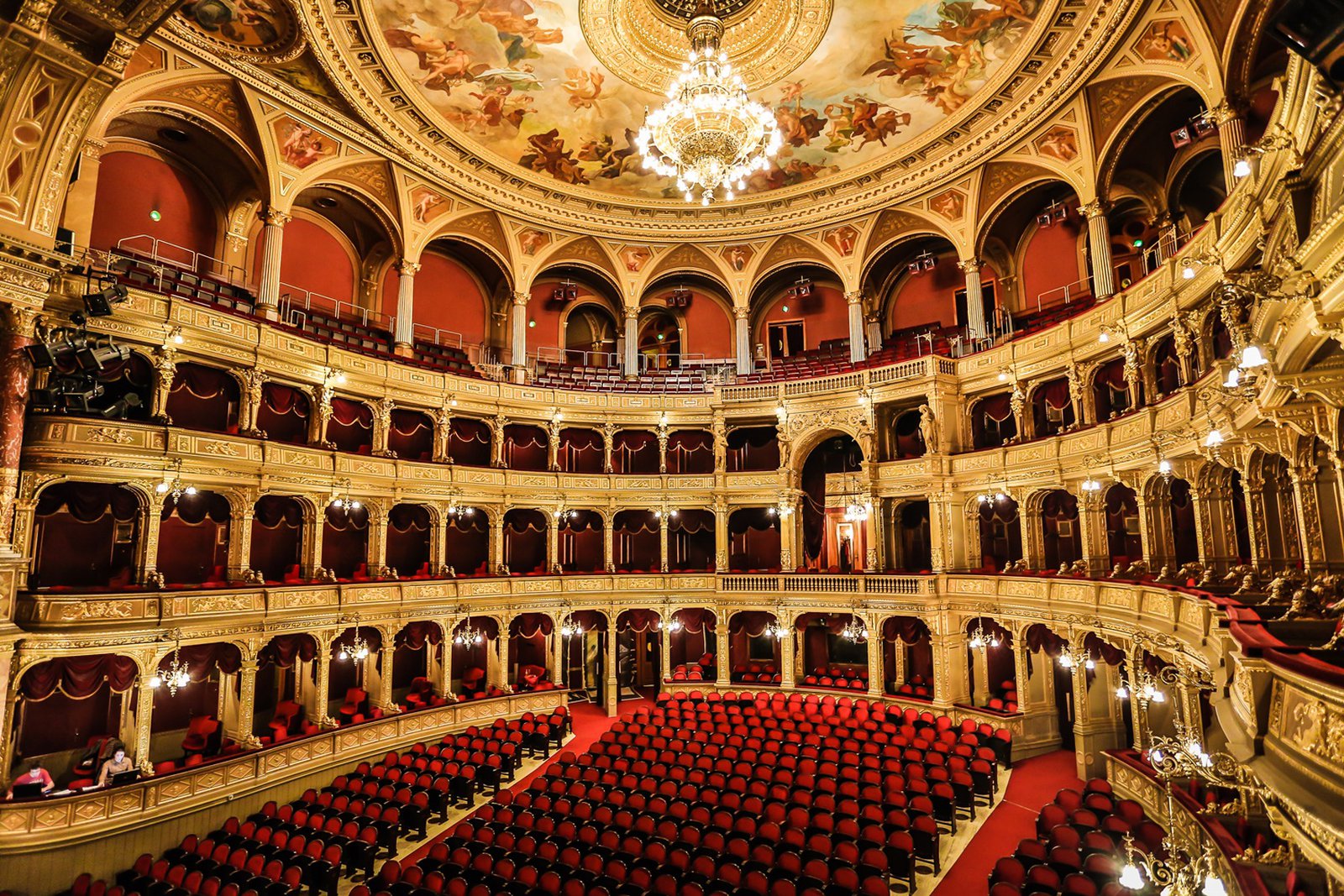
The Opera House is not only one of the most significant art relic of Budapest, but the symbol of the Hungarian operatic tradition of more than three hundred years as well. The long-awaited moment in Hungarian opera life arrived on September 27, 1884, when, in the presence of Franz Joseph I. the Opera House was opened amid great pomp and ceremony. The event, however, erupted into a small scandal - the curious crowd broke into the entrance hall and overran the security guards in order to catch a glimpse of the splendid Palace on Sugar út. Designed by Mikós Ybl, a major figure of 19th century Hungarian architecture, the construction lived up to the highest expectations. Ornamentation included paintings and sculptures by leading figures of Hungarian art of the time: Károly Lotz, Bertalan Székely, Mór Than and Alajos Stróbl. The great bronze chandelier from Mainz and the stage machinery moda by the Asphaleia company of Vienna were both considered as cutting-edge technology at that time.
Many important artists were guests here including Gustav Mahler, the composer who was director in Budapest from 1887 to 1891. He founded the international prestige of the institution, performing Wagner operas as well as Magcagni’ Cavalleria Rusticana. The Hungarian State Opera has always maintained high professional standards, inviting international stars like Renée Fleming, Cecilia Bartoli, Monserrat Caballé, Placido Domingo, Luciano Pavarotti, José Cura, Thomas Hampson and Juan Diego Flórez to perform on its stage. The Hungarian cast include outstanding and renowed artists like Éva Marton, Ilona Tokody, Andrea Rost, Dénes Gulyás, Attila Fekete and Gábor Bretz.
©

Related events