



en
en v
Phone
Cart0 Tickets
Total: 0€
Account
Calendar
Search
Menu
X

Coffee Cantata

VenueRudolfinum
CalendarSun 23 May 2027
Synopsis/Details

According to legend, the beneficial effects of coffee beans were discovered by an observant Ethiopian goatherd named Kaldi. Over time the delicious brew, for whose preparation these days you simply need a decent coffee machine and high-quality coffee beans, not only provided a physical boost but also a reason for people to come together and share thoughts, ideas and experiences. Thus the first cafés started to appear, places where people exchanged information so essential that these venues became known as “schools of the wise”. And these were places where music-making flourished as well! 


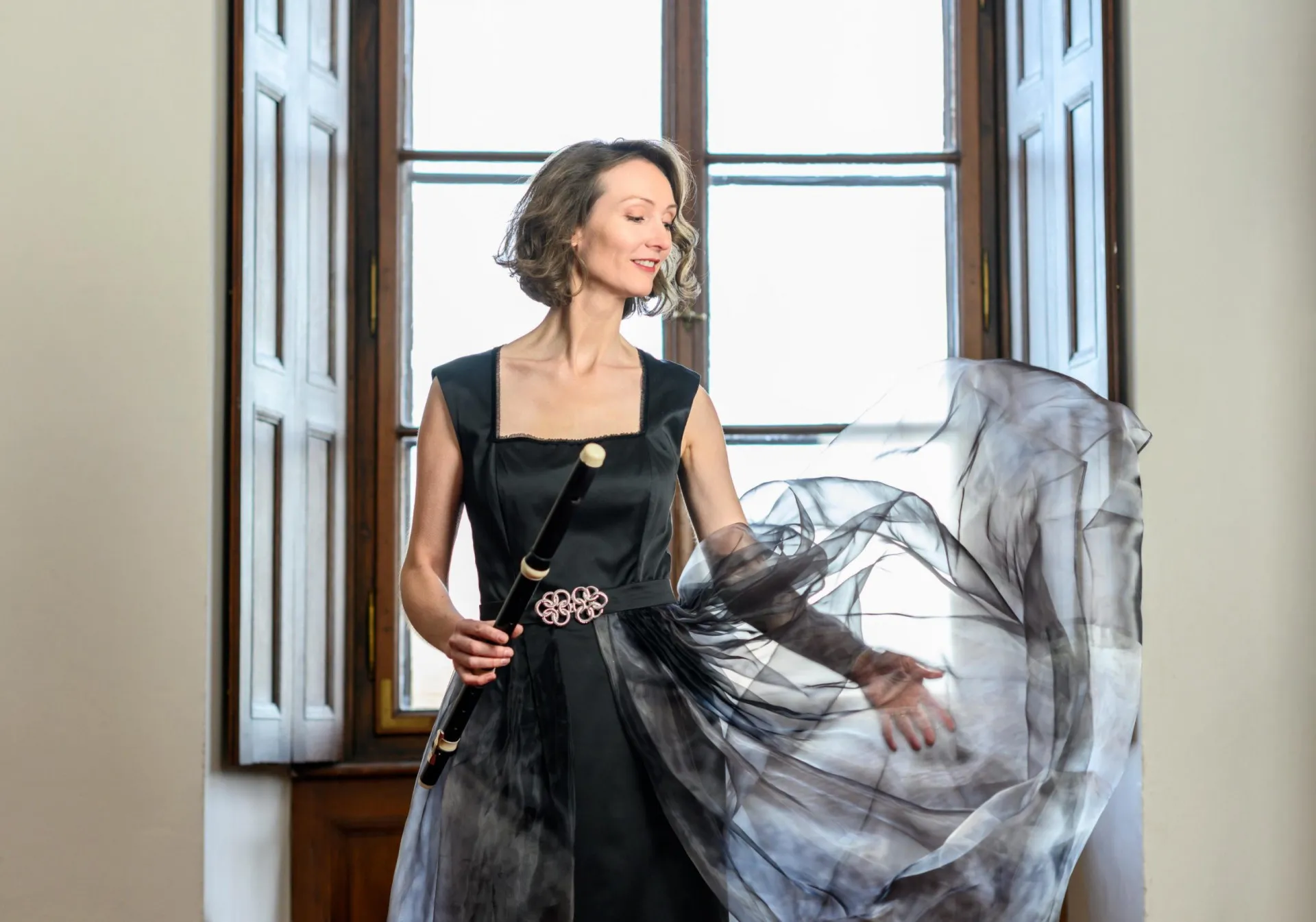
One of the most celebrated coffee houses bearing the name of its founder and proprietor Gottfried Zimmermann was established in Leipzig in 1702. Why are we mentioning it? Because it was here that – thanks to the endeavours of the Collegium Musicum ensemble – the paths of two seemingly incompatible composers converged: Georg Philipp Telemann (1681–1767) and Johann Sebastian Bach (1685–1750). For each of them music held a different purpose. While Telemann wished to enchant and delight his audiences, Bach wanted people to touch God through music. Yet even he, immersed in the mysterious forces of ars combinatoria, came up with some surprises, as this Prague Spring programme demonstrates. First-rate Czech early music ensemble Collegium Marianum, headed by Baroque traverso player Jana Semerádová and a trio of superb singers, will transport you back three hundred years to allow you to discover Johann Sebastian Bach in “Telemannesque mode”, namely, full of lightness, wonderful humour and also business acumen! We could simply quote from the text of his Coffee Cantata, which saw its premiere – where else? – in Zimmermannsches Kaffeehaus: “If I cannot drink my little cup of coffee three times a day, then, to my torment, I will shrivel up like a piece of roasted goat!” Might this be a reference to the person who discovered coffee? In any event, this is a concert for anyone looking to enjoy some great music. 

Cast

Programme

Johann Sebastian Bach: Suite No. 2 in B minor BWV 1067

Georg Philipp Telemann: The Wonderful Constancy of Love, or Orpheus TWV 21:18 (excerpts)

Johann Sebastian Bach: Doris’s aria “Hunderttausend Schmeicheleien” from the Shepherd Cantata “Entfliehet, verschwindet, entweichet, ihr Sorgen” BWV 249a

Georg Philipp Telemann: Vespetta and Pimpinone's duet “Nel petto il cor mi giubila” from the opera Pimpinone TWV 21:15

Georg Philipp Telemann: Conclusion in E minor from the collection Tafelmusik TWV50:e5

Johann Sebastian Bach: Coffee Cantata “Schweigt stille, plaudert nicht” BWV 211


Performers

Collegium Marianum

Hana Blažíková – soprano

Ondřej Holub – tenor

Roman Hoza – baritone

Lenka Torgersen – violin

Jana Semerádová – traverso, artistic director

Venue
Rudolfinum

The Rudolfinum, one of the most noteworthy buildings in Prague, was built between 1876 and 1884 according to the designs of architects Josef Zítek and Josef Schulze. Originally intended as a multipurpose cultural building in Prague, the Rudolfinum was inagurated on February 7, 1885. It carried out its mission until 1919, when it was converted to the House of Commons of the Czechoslovak Republic. Concert activity was restored to the Rudolfinum during the German occupation, but full rehabilitation, particularly of the gallery, did not take place until 1992. After a general reconstruction by architect Karel Prager in 1992, the Rudolfinum became the home of the Czech Philharmonic and the Rudolfinum Gallery.


Dvorana – Ceremony Hall

The central space in the gallery portion of the Rudolfinum was designed by Josef Zítek and Josef Schulz as an entrance hall to the art gallery. After 1918, however, this space was converted into a parliamentary cafeteria, and after World War II it served as a gymnasium for the Prague Conservatory. At the end of the 1980s, Ceremony Hall was threatened with reconstruction – but plans to tear down the main staircase to make room for another concert hall did not go through, and the hall retained its original appearance. Of particular interest in Ceremony Hall are 25 empty spaces on its walls, which were originally intended to be filled in with frescos. The majority of the eminent Czech painters, however, boycotted the 1891 fresco competition in protest over the large number of German artists involved in the construction of the Rudolfinum.


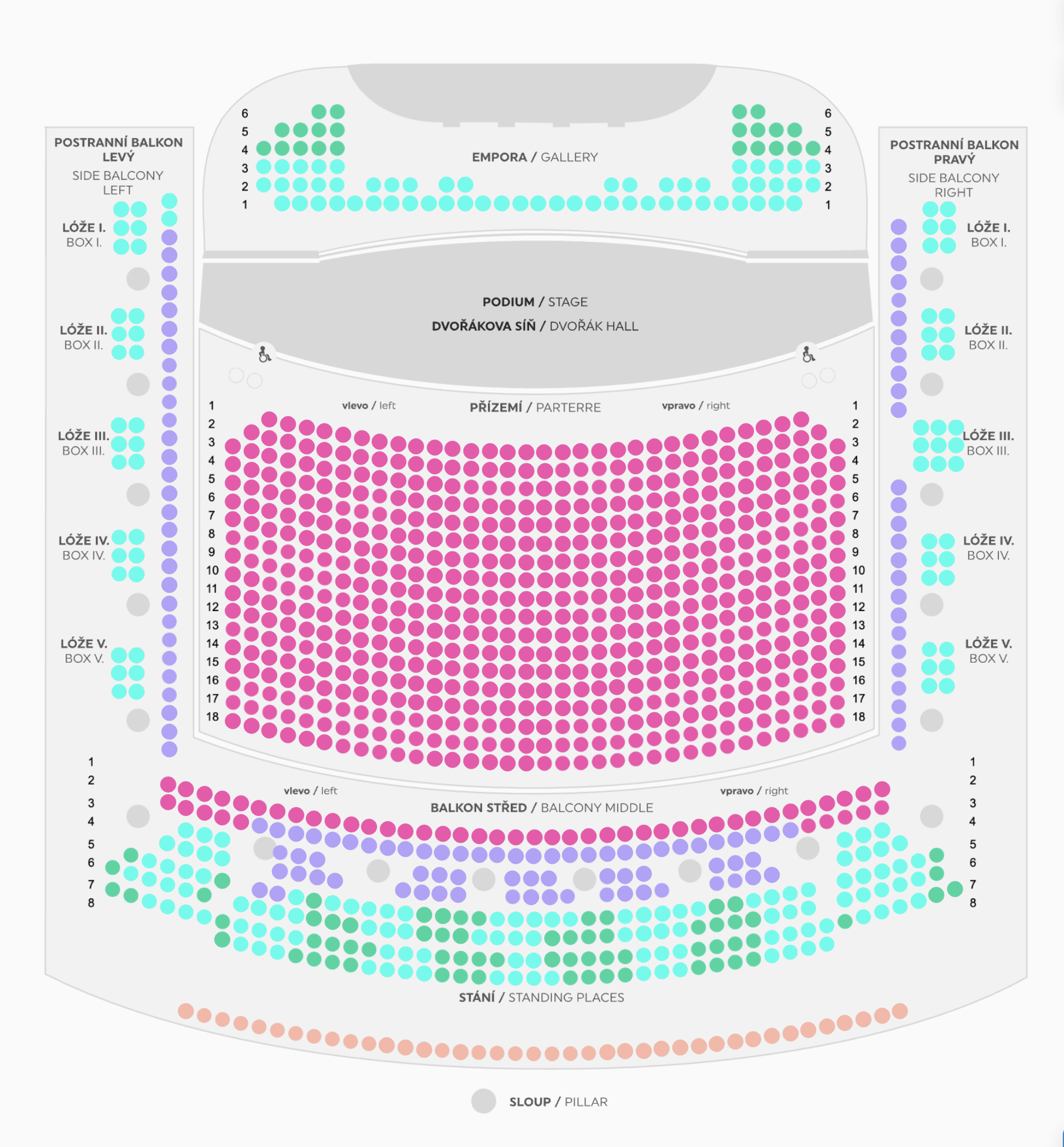
Dvořák Hall

The Czech Philharmonic took the stage in this world-famous concert hall in 1896, performing for its first-ever concert under the baton of Antonín Dvořák himself. The hall remained a space for concerts and performances until 1918, at which time it became a boardroom for the new parliament of the Czechoslovak Republic. The stage and the organ loft became a tribunal (garnished with a statue of President T.G. Masaryk), from which parliamentary leaders presided over proceedings. The hall's original character (and purpose) was restored
in 1940–1942 according to a project conceived by Antonín Engel and Bohumír Kozák, and it has remained in this form through to the present. In accordance with Josef Zítek and Josef Schulz's original proposal, the central visual element in the hall is an organ, which was made in Frankfurt, Germany. During the hall's stint as a parliamentary meeting place, the organ was housed in Brno. When it returned to the Rudolfinum in 1940, its register was extended. Dvořák Hall's final update took place in 1992 when the entire Rudolfinum building underwent reconstruction.


When travelling by public transport, get off at the Staroměstská metro station (Line A), tram stop (trams nos. 17, 18 and 53) or bus stop (no. 207).
Parking is available at the underground parking facility on Jan Palach Square. The facility is not part of the Rudolfinum premises.


Accomodation

Buy now

Gift vouchers

Gift someone an unforgettable night at the opera.
Choose a gift coupon and let them pick the performance they love—music, drama, and world-class artistry, all in one elegant experience.
Official Tickets for Europe's Most Famous Opera Houses, Classical Concerts etc.
Instagram
Payment
Google Play
App Store
© 2026 RM Europa Ticket GmbH
Whatsapp