en
en v
Phone
Cart0 Tickets
Total: 0€
Account
Calendar
Search
Menu
X

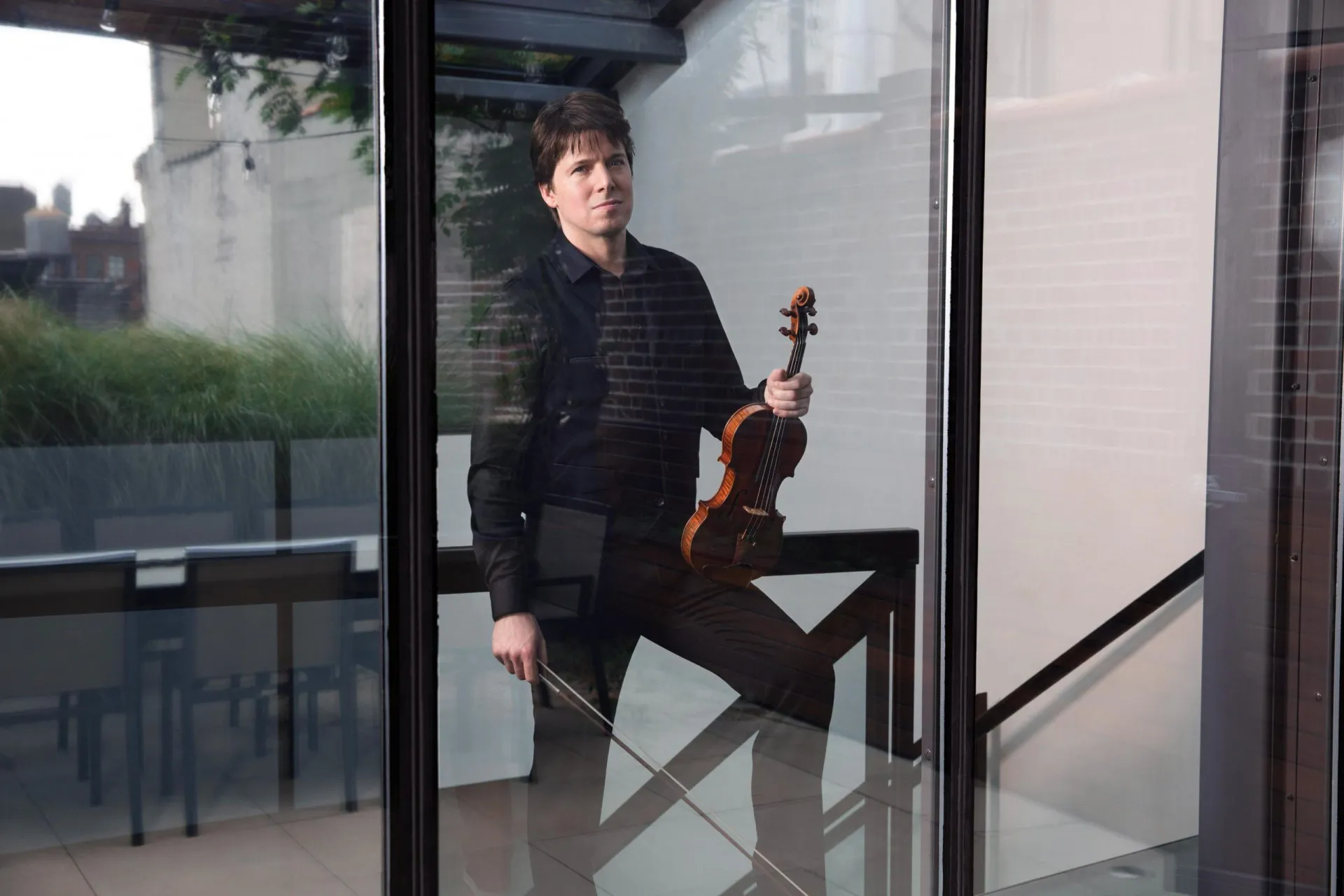
Joshua Bell And Verbier Festival Chamber Orchestra

VenueRudolfinum
CalendarSun 30 May 2027
Synopsis/Details

The disposition of the creative spirit can sometimes seem inscrutable: After the Eroica I faced a long, seventeen-month struggle with the score of my only opera Fidelio, yet my Violin Concerto saw the light of day in December 1806 within the space of a single month. A crystalline piece. Soaring, full of feeling, much like my Fourth Symphony. The timpanist begins with a gentle “dum-dum-dum-dum”, announcing the entry of the oboes, clarinets and bassoons in the first movement… My friend Schuppanzigh complained to me about the difficulty of the violin part. But how could I possibly take into consideration his tiny little fiddle when I had been inspired by God Himself?   

The delectable, elegant tone and ethereal technique of Franz Clement, whom I entrusted with the premiere of the work with its endearing dedication “Concerto par Clemenza pour Clement”, were wonderfully suited to the character of the piece. It is sad indeed how fate treated this violinist par excellence. I recall that, in 1811, he was accused of espionage in Russia and his imprisonment cost him all his Viennese estates. The Violin Concerto fell into oblivion for several decades, until it was performed by that prodigious twelve-year-old boy from Kittsee [Joseph Joachim]. By then, of course, I was looking down upon him from the musical firmament. 


The return of Joshua Bell 

Josef Suk, Igor Oistrakh, Anne-Sophie Mutter, Gil Shaham and Nigel Kennedy. This is just a brief list of the superb violinists who, over the eighty-year history of the Prague Spring, appeared at the festival with Violin Concerto in D major by Ludwig van Beethoven (1770–1827), a piece with countless exposed passages in vertiginous registers, which require crystal-clear intonation and extraordinary finger pressure. The star of the Prague Spring performance will be American violinist Joshua Bell, who launched his incredibly successful career at the age of fourteen when he performed with the Philadelphia Orchestra under Riccardo Muti. Let’s hope this Grammy Award holder doesn’t attempt the same stunt in Prague on his 1713 Stradivarius as violinist Franz Clement at the 1806 premiere: The latter inserted a composition of his own between the concerto movements, which he played with his violin held upside down!  


Mozart’s last symphony  

The last symphony by Wolfgang Amadeus Mozart (1756–1791), Jupiter from 1788, regularly features in the top ten in surveys to find “the best symphony of all time”. One 19th century Russian critic wrote of this work: “One must hear this music to believe it possible.” At the Prague Spring the piece will be performed by the Verbier Festival Chamber Orchestra – one of the finest chamber ensembles in the world, whose members include musicians from leading world orchestras, from the Berlin and Vienna Philharmonics, the Metropolitan Opera Orchestra and the Bavarian Radio Symphony Orchestra, to the Royal Concertgebouw Orchestra. Sir Simon Rattle described the Verbier orchestra in the following words: “What a wonderfully generous and flexible group. Because its musicians come from every corner of the globe and share a commitment to education, there is a remarkably open and positive atmosphere and a sense that they will try anything. Put simply, a huge pleasure!”. This will be the first appearance of the Verbier Festival Chamber Orchestra at the Prague Spring. 


What did Beethoven have in common with Wolfgang Amadeus Mozart? 

It is said that, when 17-year-old Beethoven first visited Vienna in 1787, he met Mozart and played several of his own compositions for him. Mozart was apparently enchanted and commented: “Mark that young man; he will make himself a name in the world!” 

Beethoven greatly admired Mozart. Most of his variations on works by other composers were based on compositions by Mozart (The Magic Flute, Don Giovanni etc.).  

Cast

Programme

Wolfgang Amadeus Mozart: Le nozze di Figaro, overture KV 492

Ludwig van Beethoven: Violin Concerto in D major Op. 61

Wolfgang Amadeus Mozart: Symfonie č. 41 C dur KV 551 "Jupiter"


Performers

Verbier Festival Chamber Orchestra

Joshua Bell

Venue
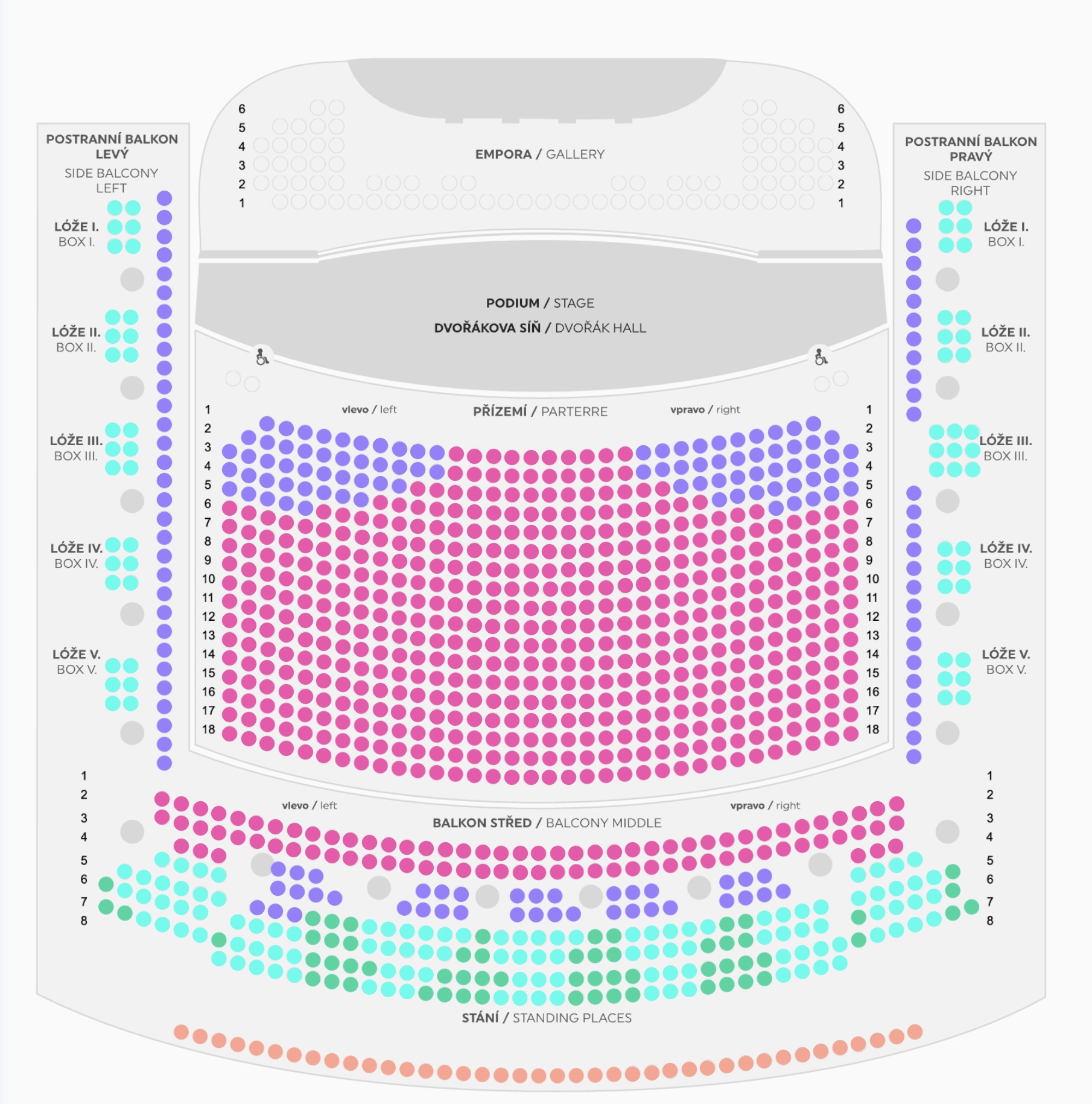
Rudolfinum

The Rudolfinum, one of the most noteworthy buildings in Prague, was built between 1876 and 1884 according to the designs of architects Josef Zítek and Josef Schulze. Originally intended as a multipurpose cultural building in Prague, the Rudolfinum was inagurated on February 7, 1885. It carried out its mission until 1919, when it was converted to the House of Commons of the Czechoslovak Republic. Concert activity was restored to the Rudolfinum during the German occupation, but full rehabilitation, particularly of the gallery, did not take place until 1992. After a general reconstruction by architect Karel Prager in 1992, the Rudolfinum became the home of the Czech Philharmonic and the Rudolfinum Gallery.


Dvorana – Ceremony Hall

The central space in the gallery portion of the Rudolfinum was designed by Josef Zítek and Josef Schulz as an entrance hall to the art gallery. After 1918, however, this space was converted into a parliamentary cafeteria, and after World War II it served as a gymnasium for the Prague Conservatory. At the end of the 1980s, Ceremony Hall was threatened with reconstruction – but plans to tear down the main staircase to make room for another concert hall did not go through, and the hall retained its original appearance. Of particular interest in Ceremony Hall are 25 empty spaces on its walls, which were originally intended to be filled in with frescos. The majority of the eminent Czech painters, however, boycotted the 1891 fresco competition in protest over the large number of German artists involved in the construction of the Rudolfinum.


Dvořák Hall

The Czech Philharmonic took the stage in this world-famous concert hall in 1896, performing for its first-ever concert under the baton of Antonín Dvořák himself. The hall remained a space for concerts and performances until 1918, at which time it became a boardroom for the new parliament of the Czechoslovak Republic. The stage and the organ loft became a tribunal (garnished with a statue of President T.G. Masaryk), from which parliamentary leaders presided over proceedings. The hall's original character (and purpose) was restored
in 1940–1942 according to a project conceived by Antonín Engel and Bohumír Kozák, and it has remained in this form through to the present. In accordance with Josef Zítek and Josef Schulz's original proposal, the central visual element in the hall is an organ, which was made in Frankfurt, Germany. During the hall's stint as a parliamentary meeting place, the organ was housed in Brno. When it returned to the Rudolfinum in 1940, its register was extended. Dvořák Hall's final update took place in 1992 when the entire Rudolfinum building underwent reconstruction.


When travelling by public transport, get off at the Staroměstská metro station (Line A), tram stop (trams nos. 17, 18 and 53) or bus stop (no. 207).
Parking is available at the underground parking facility on Jan Palach Square. The facility is not part of the Rudolfinum premises.


Accomodation

Buy now

Gift vouchers

Gift someone an unforgettable night at the opera.
Choose a gift coupon and let them pick the performance they love—music, drama, and world-class artistry, all in one elegant experience.
Official Tickets for Europe's Most Famous Opera Houses, Classical Concerts etc.
Instagram
Payment
Google Play
App Store
© 2026 RM Europa Ticket GmbH
Whatsapp