
en
en v
Phone
Cart0 Tickets
Total: 0€
Account
Calendar
Search
Menu
X

Levit, Beethoven Sonatas

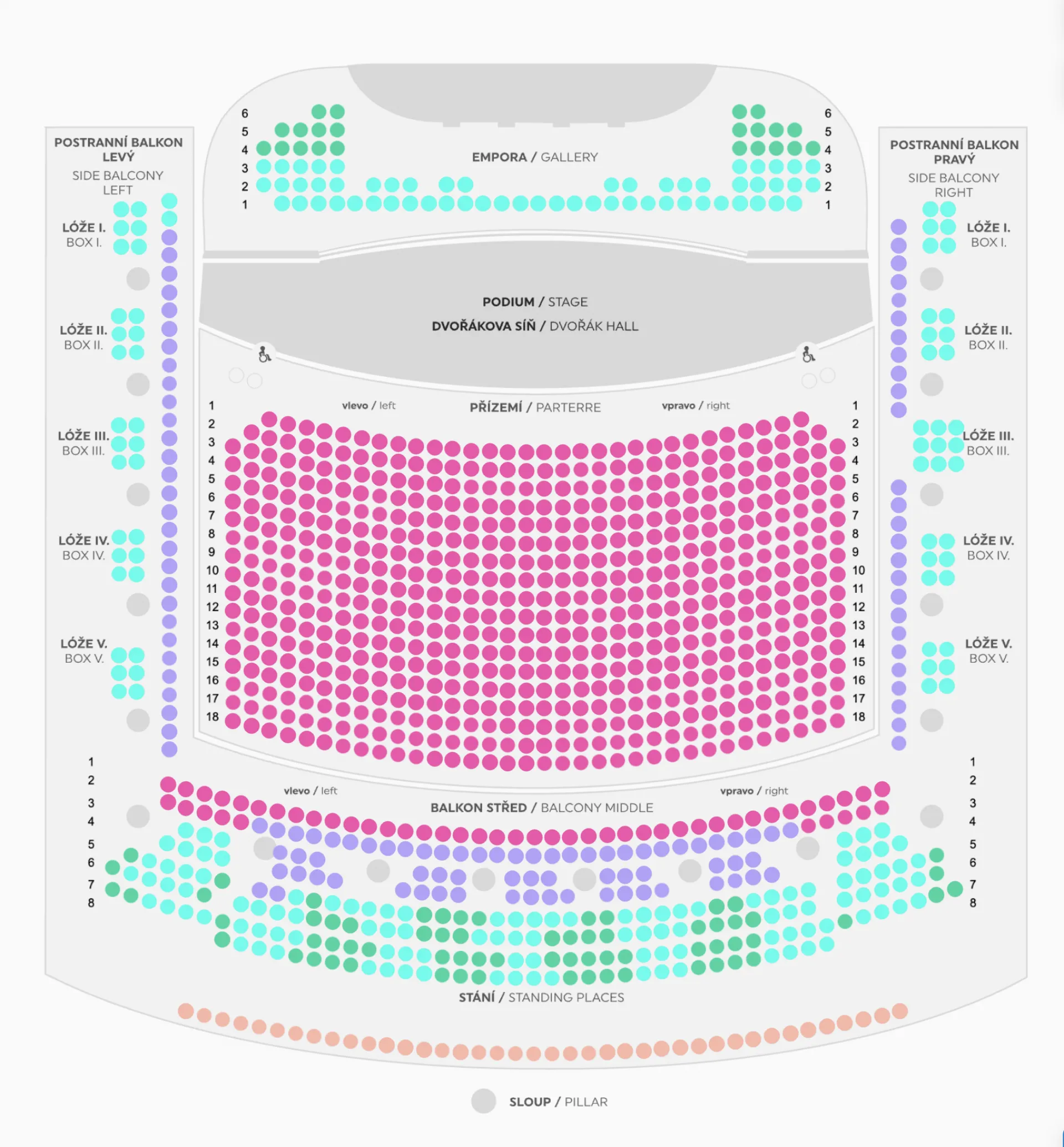
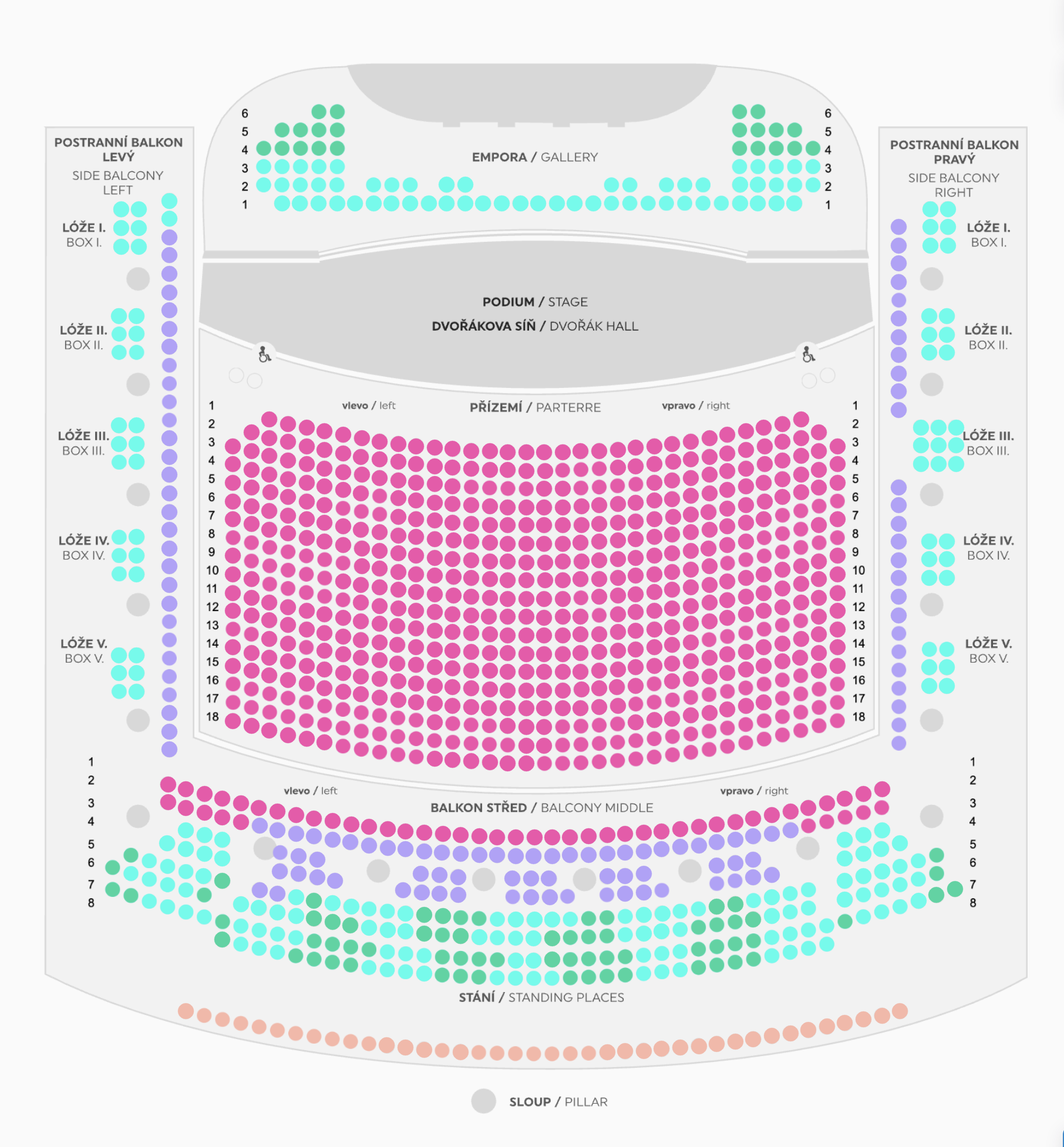
VenueRudolfinum
CalendarSat 22 May 2027
Synopsis/Details

The piano was my life, my friend, with whom I shared a passionate and tender relationship, through whose mouth I communicated with the world. The thirty-two sonatas I wrote for this instrument say much about my life. Through them I declared my love, I found relief from fear and despair, and I reflected on the meaning of existence.  


1796 | Sonata No. 1 in F minor Op. 2 No. 1 

The first three sonatas published as opus two in 1796 I dedicated to my teacher Haydn. If I am honest, it was more out of politeness; he did not teach me all that much, moreover, during our lessons he drank chocolate, which I found extremely disagreeable. Sonata No. 1 in F minor is filled with the kind of passion I later injected into my Appassionata. That is why it is also known as the Little Appassionata.  

“With this sonata, Beethoven comes out and says: ʽICH bin da!ʼ (I am here!), and the word ʽICHʼ is in capital letters with six exclamation marks.” (Igor Levit) 


1802 | Sonata No. 17 in D minor Op. 31 No. 2 “Tempest” 

I finished the Tempest in 1802. It got its name from the Shakespeare play, since I had apparently declared to my secretary Anton Schindler that he would understand my sonata if he read The Tempest. Admittedly, I did not remember any of that later, but it is a good title. It is passionate music! Even now I shiver when I think about it. Serenity alternates with turmoil, reconciliation with struggle. It is an augury of my Third and Fifth Symphonies.  

“One of the most tragic and most brutal of Beethoven’s sonatas.” (Igor Levit) 


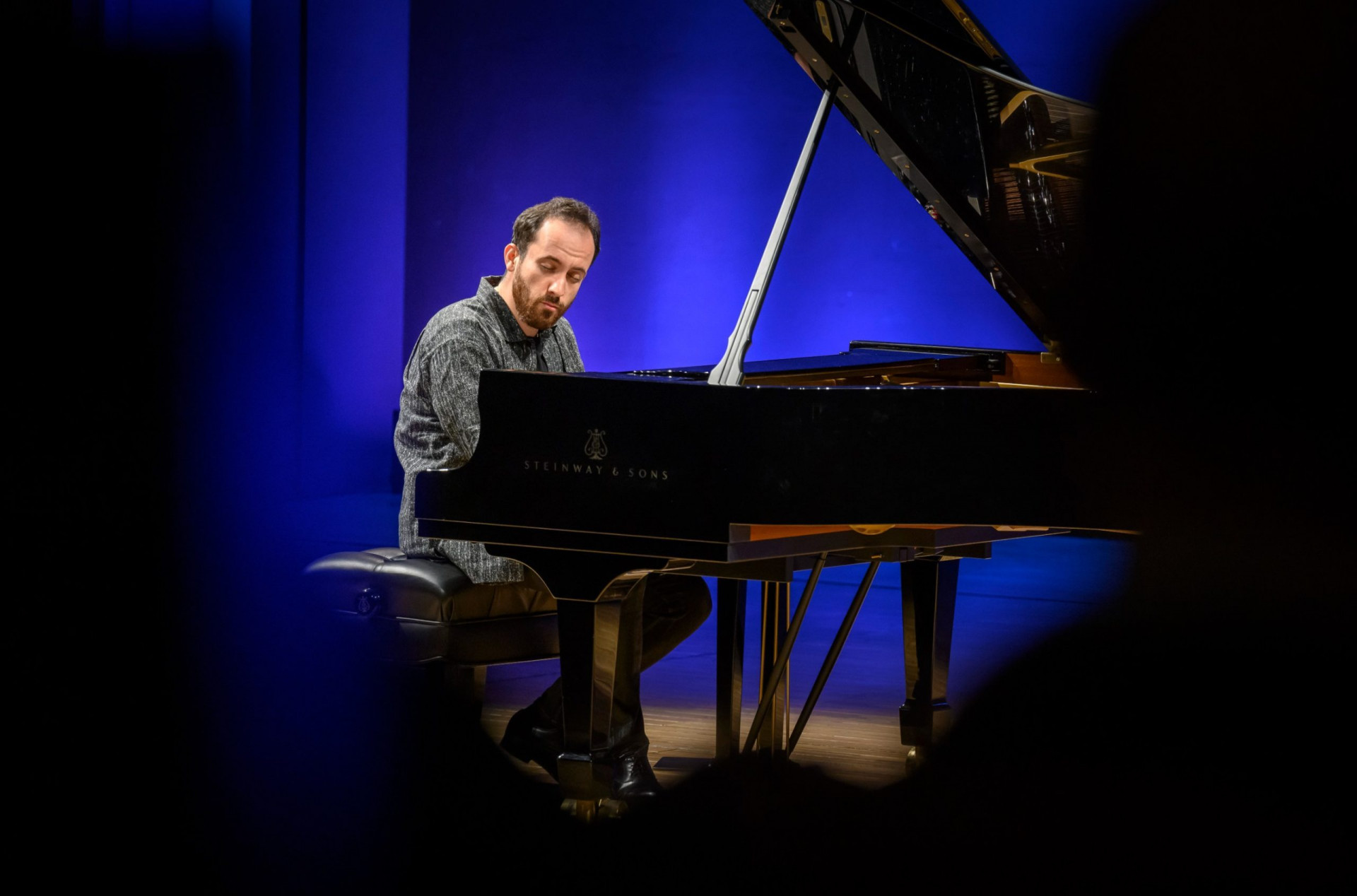
Igor Levit – Prague Spring Artist-in-Residence 2027  

The New York Times described him as “one of the essential artists of his generation”, while the Berliner Morgenpost hailed him as a “master of exquisite, poetic sound and delicate cantabile”. Born in Nizhny Novgorod, Levit emigrated to Germany with his family when he was eight. His future career on the world concert stage was firmly established with his success at the Arthur Rubinstein International Piano Competition in 2005 where, as the event’s youngest participant ever, he not only won one of the top prizes, but he also garnered several other awards, including the Audience Prize. He received prestigious awards for his recordings as well: the Opus Klassik, Gramophone magazine’s “Artist of the Year” title, “Recording Artist of the Year” from Musical America and “Recording of the Year” from BBC Music Magazine.  

At the age of thirty-three he further cemented his world prominence when he performed his “home” recitals, streamed live during the Coronavirus lockdown. The very first concert attracted 350,000 listeners, who were joined – over the course of fifty-three recitals – by hundreds of thousands of fans from all over the world. In addition to classical music Levit also served up soul, jazz, rock, Erik Satie’s 20-hour-long Vexations and the music of American avant-gardist Morton Feldman. The series became so popular that one of the recitals was even broadcast from Bellevue Palace, the official residence of the German president. For this expression of civic engagement, along with his commitment in the fight against anti-Semitism, Levit was awarded the Order of Merit of the Federal Republic of Germany in the autumn of 2020. 

Cast

Programme

Ludwig van Beethoven: Sonáta pro klavír č. 1 f moll op. 2/1

Ludwig van Beethoven: Sonáta pro klavír č. 17 d moll op. 31/2 "Bouře"

Ludwig van Beethoven : Sonata No. 25 in G major Op. 79 “Cuckoo”

Ludwig van Beethoven: Sonáta pro klavír č. 21 C dur op. 53 "Valdštejnská"


Performers

Igor Levit – piano

Venue
Rudolfinum

The Rudolfinum, one of the most noteworthy buildings in Prague, was built between 1876 and 1884 according to the designs of architects Josef Zítek and Josef Schulze. Originally intended as a multipurpose cultural building in Prague, the Rudolfinum was inagurated on February 7, 1885. It carried out its mission until 1919, when it was converted to the House of Commons of the Czechoslovak Republic. Concert activity was restored to the Rudolfinum during the German occupation, but full rehabilitation, particularly of the gallery, did not take place until 1992. After a general reconstruction by architect Karel Prager in 1992, the Rudolfinum became the home of the Czech Philharmonic and the Rudolfinum Gallery.


Dvorana – Ceremony Hall

The central space in the gallery portion of the Rudolfinum was designed by Josef Zítek and Josef Schulz as an entrance hall to the art gallery. After 1918, however, this space was converted into a parliamentary cafeteria, and after World War II it served as a gymnasium for the Prague Conservatory. At the end of the 1980s, Ceremony Hall was threatened with reconstruction – but plans to tear down the main staircase to make room for another concert hall did not go through, and the hall retained its original appearance. Of particular interest in Ceremony Hall are 25 empty spaces on its walls, which were originally intended to be filled in with frescos. The majority of the eminent Czech painters, however, boycotted the 1891 fresco competition in protest over the large number of German artists involved in the construction of the Rudolfinum.


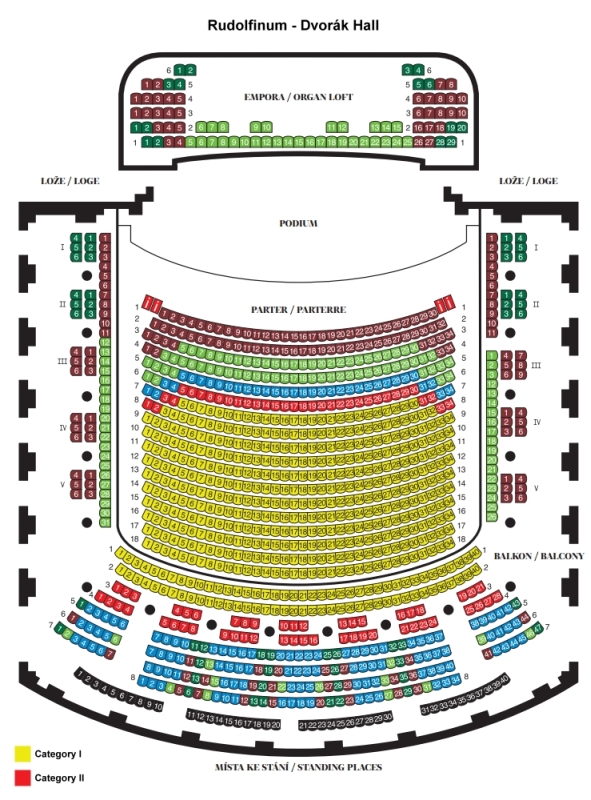
Dvořák Hall

The Czech Philharmonic took the stage in this world-famous concert hall in 1896, performing for its first-ever concert under the baton of Antonín Dvořák himself. The hall remained a space for concerts and performances until 1918, at which time it became a boardroom for the new parliament of the Czechoslovak Republic. The stage and the organ loft became a tribunal (garnished with a statue of President T.G. Masaryk), from which parliamentary leaders presided over proceedings. The hall's original character (and purpose) was restored
in 1940–1942 according to a project conceived by Antonín Engel and Bohumír Kozák, and it has remained in this form through to the present. In accordance with Josef Zítek and Josef Schulz's original proposal, the central visual element in the hall is an organ, which was made in Frankfurt, Germany. During the hall's stint as a parliamentary meeting place, the organ was housed in Brno. When it returned to the Rudolfinum in 1940, its register was extended. Dvořák Hall's final update took place in 1992 when the entire Rudolfinum building underwent reconstruction.


When travelling by public transport, get off at the Staroměstská metro station (Line A), tram stop (trams nos. 17, 18 and 53) or bus stop (no. 207).
Parking is available at the underground parking facility on Jan Palach Square. The facility is not part of the Rudolfinum premises.


Accomodation

Buy now

Gift vouchers

Gift someone an unforgettable night at the opera.
Choose a gift coupon and let them pick the performance they love—music, drama, and world-class artistry, all in one elegant experience.
Official Tickets for Europe's Most Famous Opera Houses, Classical Concerts etc.
Instagram
Payment
Google Play
App Store
© 2026 RM Europa Ticket GmbH
Whatsapp