


en
en v
Phone
Cart0 Tickets
Total: 0€
Account
Calendar
Search
Menu
X

Luisa Miller

VenueTeatro San Carlo Naples Italy
CalendarWed 02 Dec 2026 - Thu 10 Dec 2026
Synopsis/Details

Synopsis

Time: Early 17th Century

Place: The Tyrol


Act 1

Scene 1: A village

On Luisa's birthday, the villagers have gathered outside her house to serenade her. She loves Carlo, a young man she has met in the village (Lo vidi e 'l primo palpito /"I saw him and my heart felt its first thrill of love") and looks for him in the crowd. Luisa's father, Miller, is worried by this mysterious love since Carlo is a stranger. Carlo appears and the couple sing of their love (Duet: t'amo d'amor ch'esprimere / "I love you with a love that words can only express badly"). As the villagers leave to enter the nearby church, Miller is approached by a courtier, Wurm, who is in love with Luisa, wishes to marry her, and previously attained permission to marry Luisa from Miller. But Miller tells him that he had agreed to give his blessing but she had to agree to the marriage herself and Miller will never make a decision against his daughter's will (Sacra la scelta è d'un consorte / "The choice of a husband is sacred"). Irritated by his reply, Wurm reveals to Miller that in reality Carlo is Rodolfo, Count Walter's son. Alone, Miller expresses his anger (Ah fu giusto il mio sospetto / "Ah! My suspicion was correct").


Scene 2: Count Walter's castle

Wurm informs the Count of Rodolfo's love for Luisa and is ordered to summon the son. The Count expresses his frustration with his son (Il mio sangue la vita darei / "I would give my life's blood"). When Rodolfo enters, Count Walter tells him that it is intended that he marry Walter's niece Federica, the Duchess of Ostheim.

When Rodolfo is left alone with Federica, he confesses that he loves another woman, hoping that the duchess will understand. But Federica is too much in love with him to understand (Duet: Duchessa! Duchessa tu m'appelli! / "Duchessa! Duchessa you call me!").


Scene 3: Miller's house

Miller tells his daughter who Rodolfo really is. Rodolfo arrives and admits his deception but swears that his love is sincere. Kneeling in front of Miller he declares that Luisa is his bride. Count Walter enters and confronts his son. Drawing his sword, Miller defends his daughter and Walter orders that both father and daughter be arrested. Rodolfo stands up against his father and threatens him: if he does not free the girl, Rodolfo will reveal how Walter became count. Frightened, Walter orders Luisa to be freed.


Act 2

Scene 1: A room in Miller's home

Villagers come to Luisa and tell her that her father has been seen being dragged away in chains. Then Wurm arrives and confirms that Miller is to be executed. But he offers her a bargain: her father's freedom in exchange for a letter in which Luisa declares her love for Wurm and states that she has tricked Rodolfo. Initially resisting (Tu puniscimi, O Signore / "Punish me, o Lord"), she gives way and writes the letter at the same time being warned that she must keep up the pretense of voluntarily writing the letter and being in love with Wurm. Cursing him (A brani, a brani, o perfido / "O perfidious wretch"), Luisa wants only to die.


Scene:2: A room in Count Walter's castle

At the castle Walter and Wurm recall how the Count rose to power by killing his own cousin and Wurm reminds the Count how Rodolfo also knows of this. The two men realize that, unless they act together, they may be doomed (Duet: L'alto retaggio non ho bramato / "The noble inheritance of my cousin"). Duchess Federica and Luisa enter. The girl confirms the contents of her letter.


Scene 3: Rodolfo's rooms

Rodolfo reads Luisa's letter and, ordering a servant to summon Wurm, he laments the happy times which he spent with Luisa (Quando le sere al placido / "When at eventide, in the tranquil glimmer of a starry sky"). The young man has challenged Wurm to a duel. To avoid the confrontation the courtier fires his pistol in the air, bringing the Count and his servants running in. Count Walter advises Rodolfo to revenge the offense he has suffered by marrying Duchess Federica. In despair, Rodolfo abandons himself to fate (L'ara o l'avello apprestami / "Prepare the altar or the grave for me").


Act 3

A room in Miller's home

In the distance echoes of the celebration of Rodolfo and Federica's wedding can be heard. Old Miller, freed from prison, comes back home. He enters his house and embraces his daughter, then reads the letter she has prepared for Rodolfo. Luisa is determined to take her own life (La tomba è un letto sparso di fiori / "The grave is a bed strewn with flowers"), but Miller manages to persuade her to stay with him. (Duet: La figlia, vedi, pentita / "Your child, see, repentant"). Alone now, Luisa continues praying. Rodolfo slips in and unseen pours poison into the water jug on the table. He then asks Luisa if she really wrote the letter in which she declared her love for Wurm. "Yes," the girl replies. Rodolfo drinks a glass of water and passes a glass to Luisa, inviting her to drink. Then he tells her that they are both condemned to die. Before she dies, Luisa has time to tell Rodolfo the truth about the letter (Duet: Ah piangi; il tuo dolore / "Weep; your sorrow is more justified"). Miller returns and comforts his dying daughter; together the three say their prayers and farewells (Trio, Luisa: Padre, ricevi l'estremo addio / "Father, receive my last farewell"; Rodolfo: Ah! tu perdona il fallo mio / "Oh, forgive my sin"; Miller: O figlia, o vita del cor paterno / "Oh, child, life of your father's heart"). As Luisa dies, the peasants enter with Count Walter and Wurm. Rodolfo runs his sword through Wurm's breast, declaring to his father La pena tua mira / "Look on your punishment" before he dies.

  • Where is Teatro San Carlo located?
    • Teatro San Carlo is located at Via San Carlo, 98, 80132 Naples, Italy, in the heart of Naples, next to Piazza del Plebiscito and close to the Royal Palace and Galleria Umberto I.
  • How early should I arrive before the Concert?
    • We recommend arriving at least 30 minutes before the scheduled start time. This allows enough time to reach the entrance, have your ticket checked and find your seat.
  • What should I wear?
    • There is no need to wear formal evening attire. Smart casual or elegant clothing is recommended. Comfortable but presentable attire is appropriate for the theatre environment.
  • Can I enter the auditorium if I arrive late?
    • Late entry to the auditorium may not be permitted once the performance has started. Latecomers may be admitted during the first available interval, depending on the theatre's rules and the nature of the performance.
  • Can I bring a large bag or backpack?
    • Large bags and backpacks should not be taken into the auditorium. If available, they should be left in the theatre's designated cloakroom or storage area.
  • Can I bring food or drinks into the auditorium?
    • No. Food and beverages are not permitted inside the auditorium during the performance or interval.
Cast

Tragigict melodrama in three acts
Music by Giuseppe Verdi
Booklet by Salvadore Cammarano


Director | Daniel Oren
Directed by | Davide Livermore
Scene | Eleonora Peronetti and Paolo Gep Cucco
Costumes | Giusi Giustino
Lights | Nicolas Bovey
Video | D-Wok


Interpreters
Luisa | Mariangela Sicilia / Marta Torbidoni*
Rodolfo | Piotr Beczała / Stefan Pop*
Miller | Igor Golovatenko / Franco Vassallo*
The Count of Walter | Michele Pertusi / Gabriele Sagona*
Federica | Martina Belli
Worm | Marko Mimica

Orchestra and Choir of the San Carlo Theater
Choir Master | Fabrizio Cassi


New Production of the San Carlo Theater

Venue
Teatro San Carlo Naples Italy


Teatro di San Carlo Napoli; San Carlo Opera House; Real Teatro di San Carlo Naples.


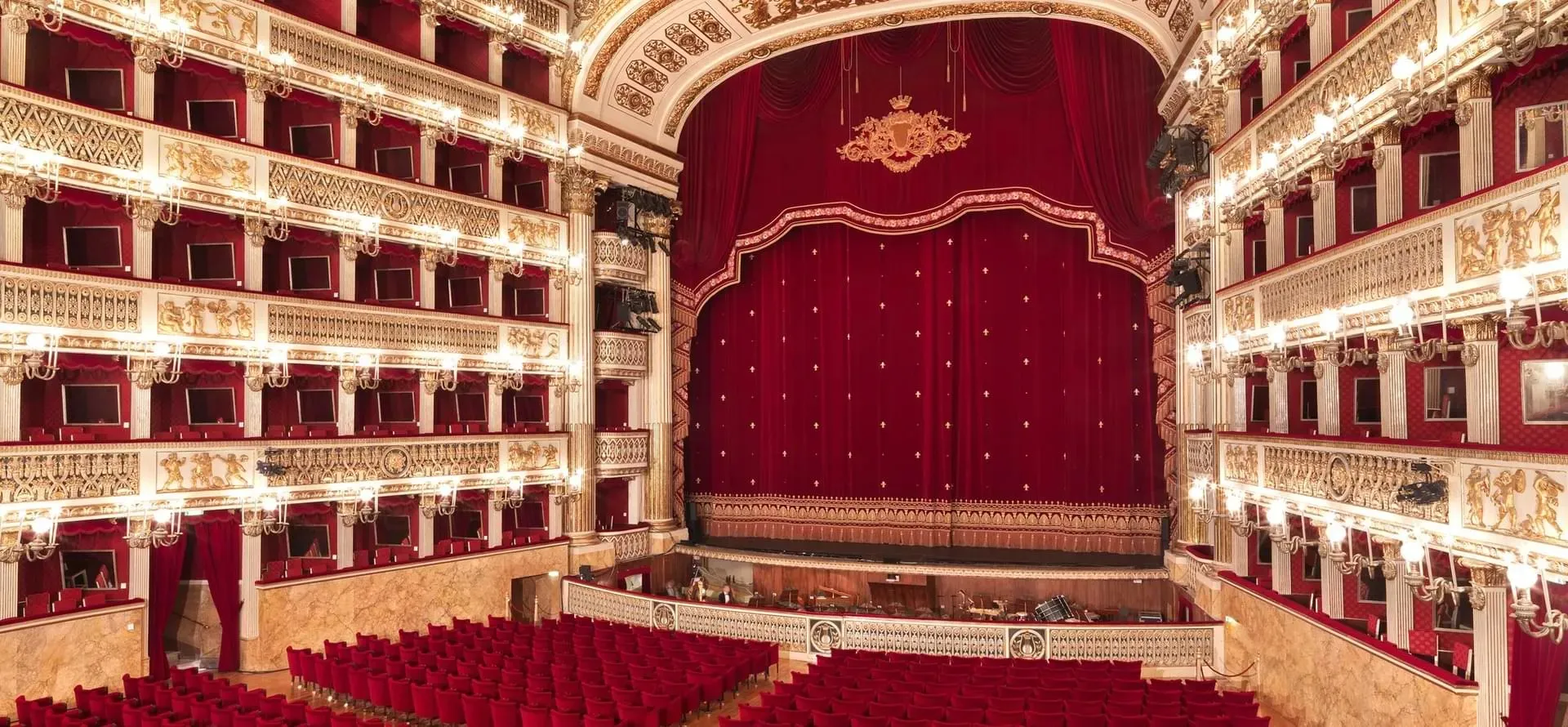
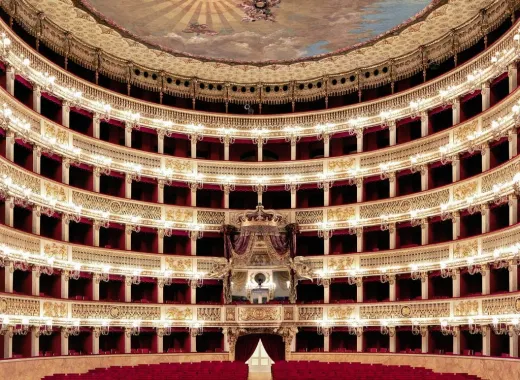
The Real Teatro di San Carlo (Royal Theatre of Saint Charles), its original name under the Bourbon monarchy but known today as simply the Teatro di San Carlo, is anopera house in Naples, Italy. It is located adjacent to the central Piazza del Plebiscito, and connected to the Royal Palace.


It is one of the oldest continuously active venue for public opera in the world, opening in 1737, only five years after the Manoel Theatre in Malta and decades before both the Milan's La Scala and Venice's La Fenice theatres. 


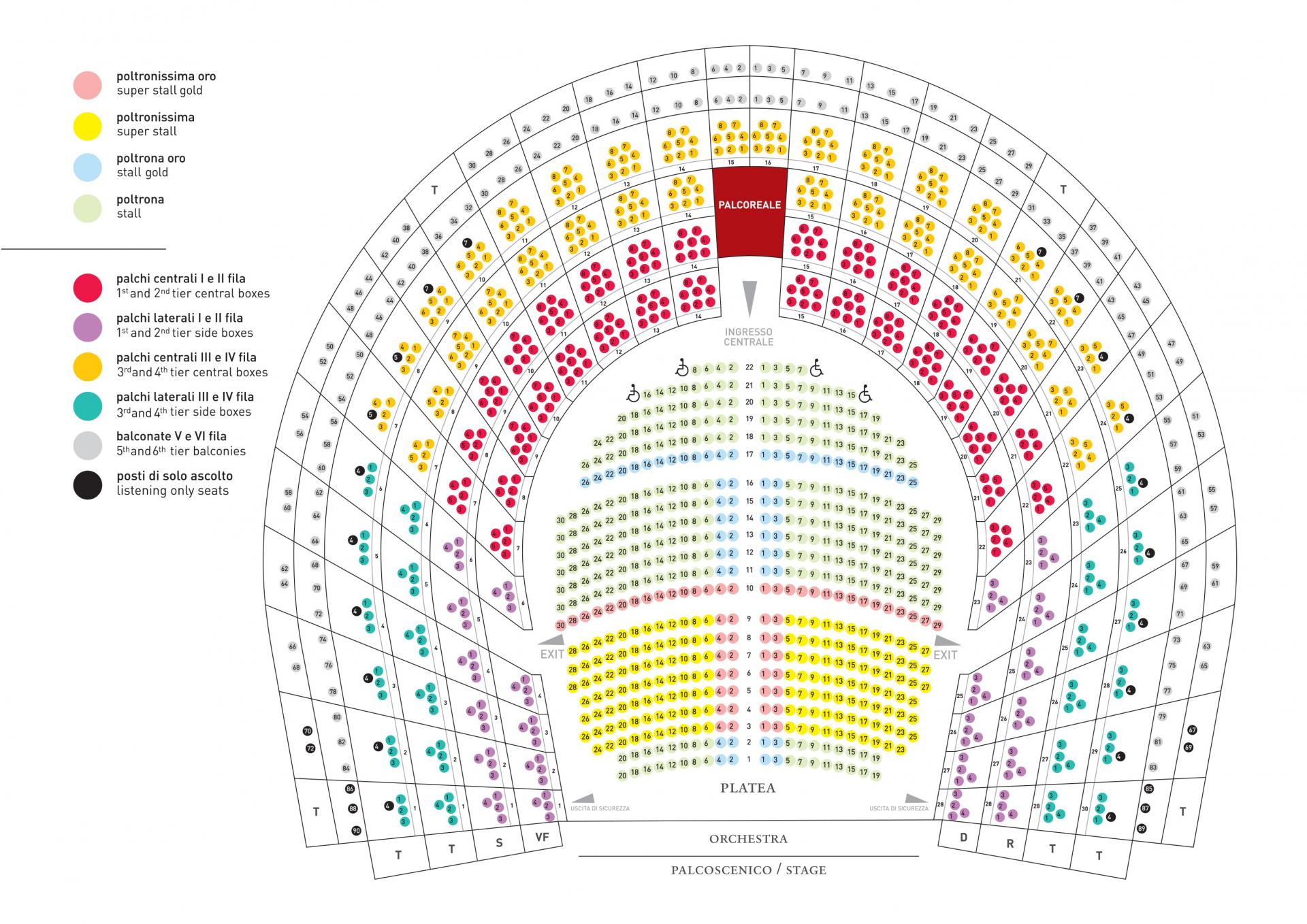
The opera season runs from late January to May, with the ballet season taking place from April to early June. The house once had a seating capacity of 3,285.but nowadays has been reduced to 1414 seats.[3] Given its size, structure and antiquity was the model for the following theatres in Europe.


History of the opera house


Commissioned by the Bourbon King Charles VII of Naples (Carlo VII in Italian), Charles wanted to endow Naples with a new and larger theatre to replace the old, dilapidated, and too-small Teatro San Bartolomeo of 1621, which had served the city well, especially after Scarlatti had moved there in 1682 and had begun to create an important opera centre which existed well into the 1700s.


Thus, the San Carlo was inaugurated on 4 November 1737, the king's name day, with the performance of the opera Domenico Sarro's Achille in Sciro, which was based on the 1736 libretto by Metastasio which had been set to music that year by Antonio Caldara. As was customary, the role of Achilles was played by a woman, Vittoria Tesi, called "Moretta"; the opera also featured soprano Anna Peruzzi, called "the Parrucchierina" and tenor Angelo Amorevoli. Sarro also conducted the orchestra in two ballets as intermezzi, created by Gaetano Grossatesta, with scenes designed by Pietro Righini. The first seasons highlighted the royal preference for dance numbers, and featured among the performers famous castrati.


In the late 18th century, Christoph Willibald Gluck was called to Naples by the impresario Tufarelli to direct his 1852 Clemenza di Tito at the theatre, and Johann Christian Bach in 1761-62 brought two operas, Catone in Utica and Alessandro nell'Indie.


1737: Construction of the Teatro di San Carlo


The new opera house was designed by Giovanni Antonio Medrano, a military architect, and Angelo Carasale, the former director of the San Bartolomeo. The horseshoe-shaped auditorium is the oldest in the world. It was built at a cost of 75,000 ducats. The hall was 28.6 meters long and 22.5 meters wide, with 184 boxes, including those of proscenium, arranged in six orders, plus a royal box capable of accommodating ten people, for a total of 1,379 seats. Including standing room, the theatre could hold over 3,000 people. The fastidious composer and violinist Louis Spohr reviewed the size and acoustic properties of this opera house very thoroughly on 15 February 1817 and concluded that:


there is no better place for ballet and pantomime. Military movements of infantry and cavalry, battles, and storms at sea can be represented here without falling into the ludicrous. But for opera, itself, the house is too large. Although the singers, Signora Isabella Colbran, [Prima Donna of the Teatro San Carlo opera company and Rossini's future wife], and the Signori Nozzari, Benedetti, etc., have very strong voices, only their highest and most stentorian tones could be heard. Any kind of tender utterance was lost.


Much admired for its architecture, its gold decorations, and the sumptuous blue upholstery (blue and gold being the official colours of the Bourbons), the San Carlo was now the biggest opera house in the world.[6] In relation to the power of the existing Bourbon Kingdom of the Two Sicilies, Beauvert notes that the design of the house, with its 184 boxes lacking any curtains was so that "no one could avoid the scrutiny by the sovereign" who had his private access from the Royal Palace.


In 1809 Domenico Barbaia was appointed manager of the royal opera houses in Naples and remained in charge until 1841. He soon established a reputation for innovative and dazzling productions, which attracted both the public and leading singers to the opera house.


 

Accomodation

Buy now

Gift vouchers

Gift someone an unforgettable night at the opera.
Choose a gift coupon and let them pick the performance they love—music, drama, and world-class artistry, all in one elegant experience.
Official Tickets for Europe's Most Famous Opera Houses, Classical Concerts etc.
Instagram
Payment
Google Play
App Store
© 2026 RM Europa Ticket GmbH
Whatsapp