


Mozart Requiem and Ravel Bolero
Mo | Tu | We | Th | Fr | Sa | Su |
The Helios Orchestra is a professional musical ensemble based in Paris, founded in 2015 by Paul Savalle with the aim of bringing classical music to a wide audience in iconic heritage venues. The orchestra's approach combines artistic excellence, accessibility, and the promotion of cultural heritage.
Composed of professional musicians from leading French and European orchestras, the Helios Orchestra performs a wide-ranging repertoire, from Baroque masterpieces to the great works of Romanticism, including major sacred and symphonic pieces. The programs are designed to offer audiences an immersive musical experience, highlighting both the richness of the works performed and the exceptional acoustics of the venues.
The Helios Orchestra distinguishes itself by performing in historic Parisian buildings, particularly churches and monuments of significant cultural importance. This artistic and heritage-focused approach fosters a dialogue between music, architecture, and spirituality, while attracting a broad audience that includes international visitors, those seeking new experiences, and seasoned music lovers and musicians familiar with the classical repertoire.
Alongside these concerts in heritage venues, the Helios Orchestra also performs in concert halls, thus expanding its broadcast formats and artistic possibilities, in order to respond to a diversity of audiences and projects.
Beyond concerts, the Helios Orchestra develops regular collaborations with renowned choirs, soloists, and artists, as well as projects with an event-based or educational focus. Collaboration with different conductors plays a vital role in the ensemble's dynamic, enriching the diversity of interpretations, stimulating the musicians, renewing collective energy, and contributing to a stronger impact on audiences. Each production is the result of in-depth work, with particular attention paid to artistic quality and the overall coherence of the programs offered.
Through its identity, professionalism and artistic vision, the Helios Orchestra has established itself today as an engaged player in Parisian musical life, working towards a vibrant and demanding classical music, resolutely focused on the public, and driven by a strong desire to transmit the classical repertoire.
Program and cast
Ravel's Bolero
Boléro is the most frequently performed piece of classical music in the world, with a performance every 15 minutes. At the time of its creation, the composer gave the copyright to his gardener, without anticipating its widespread popularity.
This work is the archetype of the ostinato. The melody is taken up in turn by the different instruments of the orchestra over a rhythmic pattern in the percussion.
Mozart's Requiem
The unusual circumstances surrounding the commission of this work, and the somewhat tragic conditions of its composition on the composer's deathbed, contribute to its legend. In July 1791, Count Walsegg-Stuppach, under a veil of secrecy, commissioned a Requiem from Mozart for his wife, who had died in February. Work was delayed until October due to the composer's exhaustion from working on La Clemenza di Tito and The Magic Flute .
At Mozart's death, the Requiem remained unfinished. In the final stages of his illness, Mozart had written the entirety of the "Requiem aeternam": from the Kyrie to the Confutatis , only the vocal parts and the basso continuo were written. For the Lacrimosa , only the first eight bars of the vocal part and the first two bars of the violin and viola parts were completed. Sketches for additional pieces have been lost. While he was bedridden, friends came to sing parts of the Requiem at his bedside.
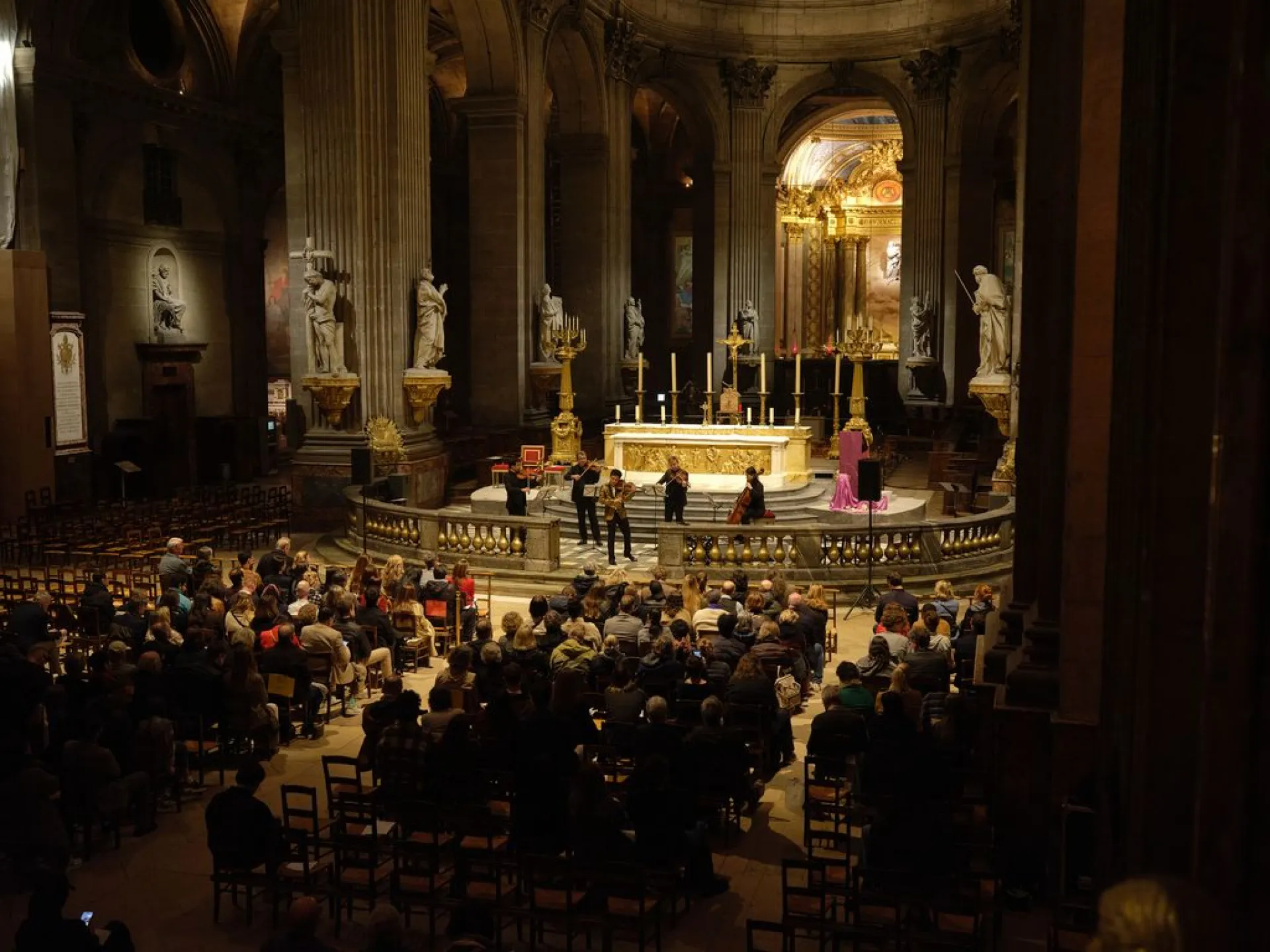
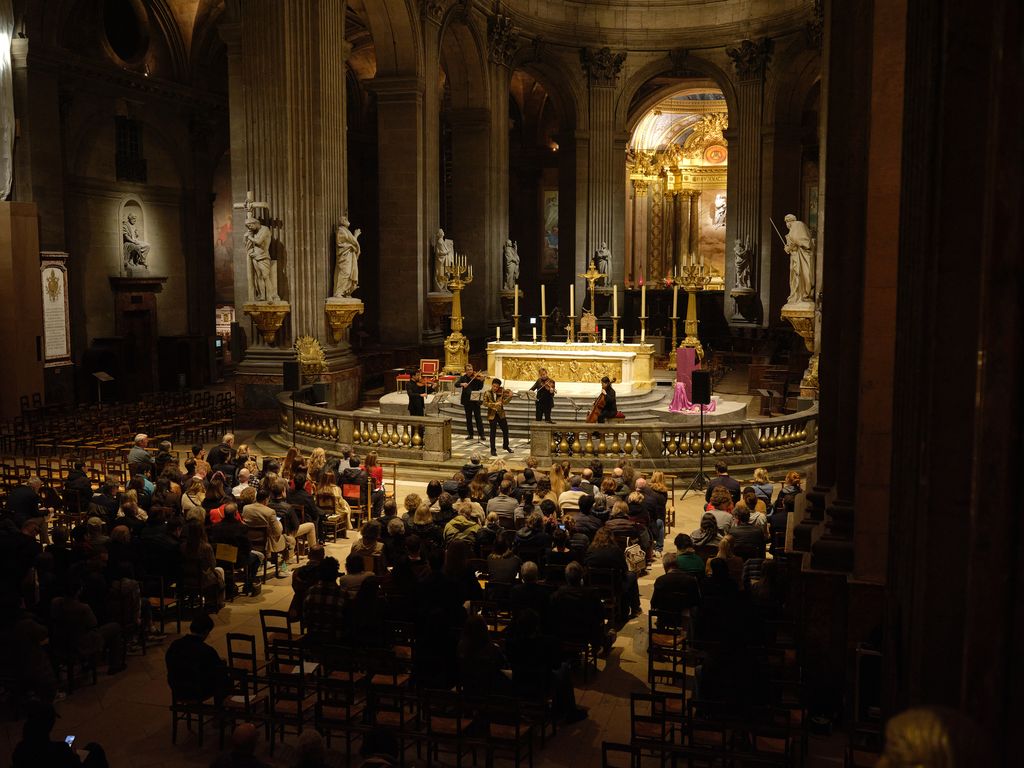
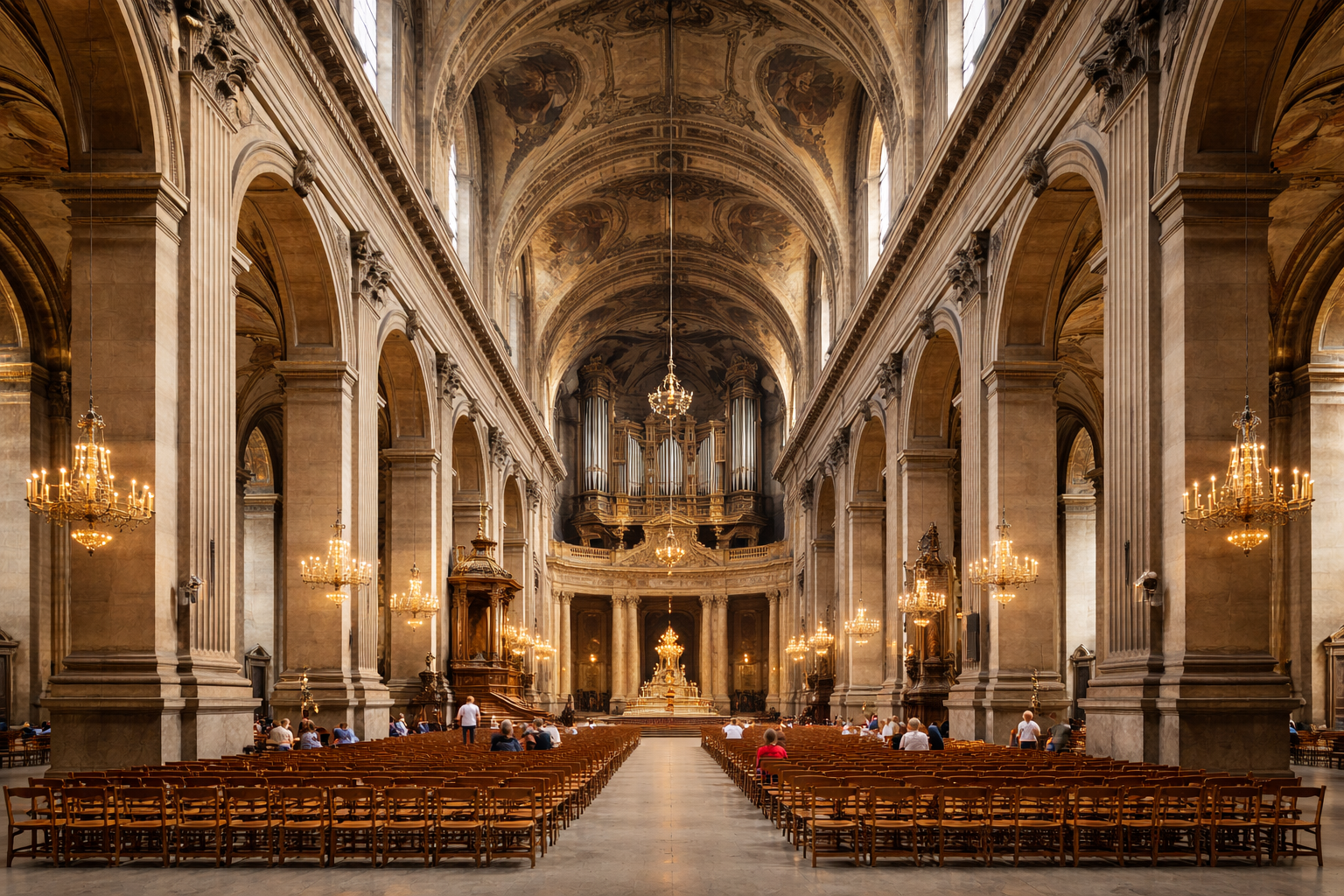
Church of Saint Sulpice
The Church of Saint Sulpice is the second largest church in Paris after the Notre-Dame. It is located in the Luxembourg Quarter of the VIe arrondissement. It was originally constructed during the 13th century and mostly completed in 1732. The church has a long-standing organ tradition which began in the 18th century. It hosts an organ built by Aristide Cavaillé-Coll added in 1862.

EN
DE
IT
FR
ES
RU
JP
RO
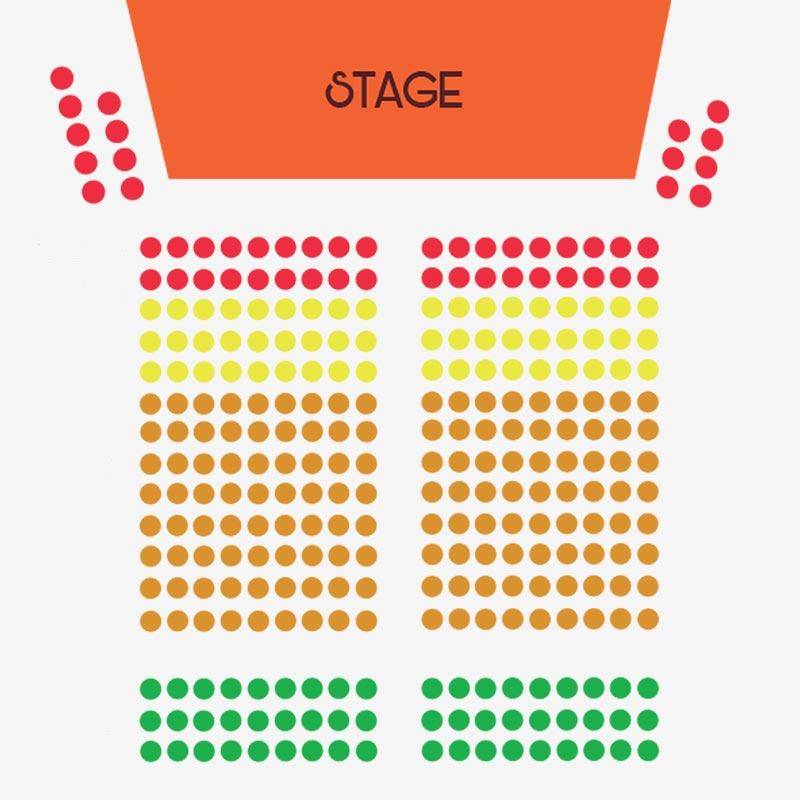
Seating plan