



en
en v
Phone
Cart0 Tickets
Total: 0€
Account
Calendar
Search
Menu
X

Prague Spring Debut

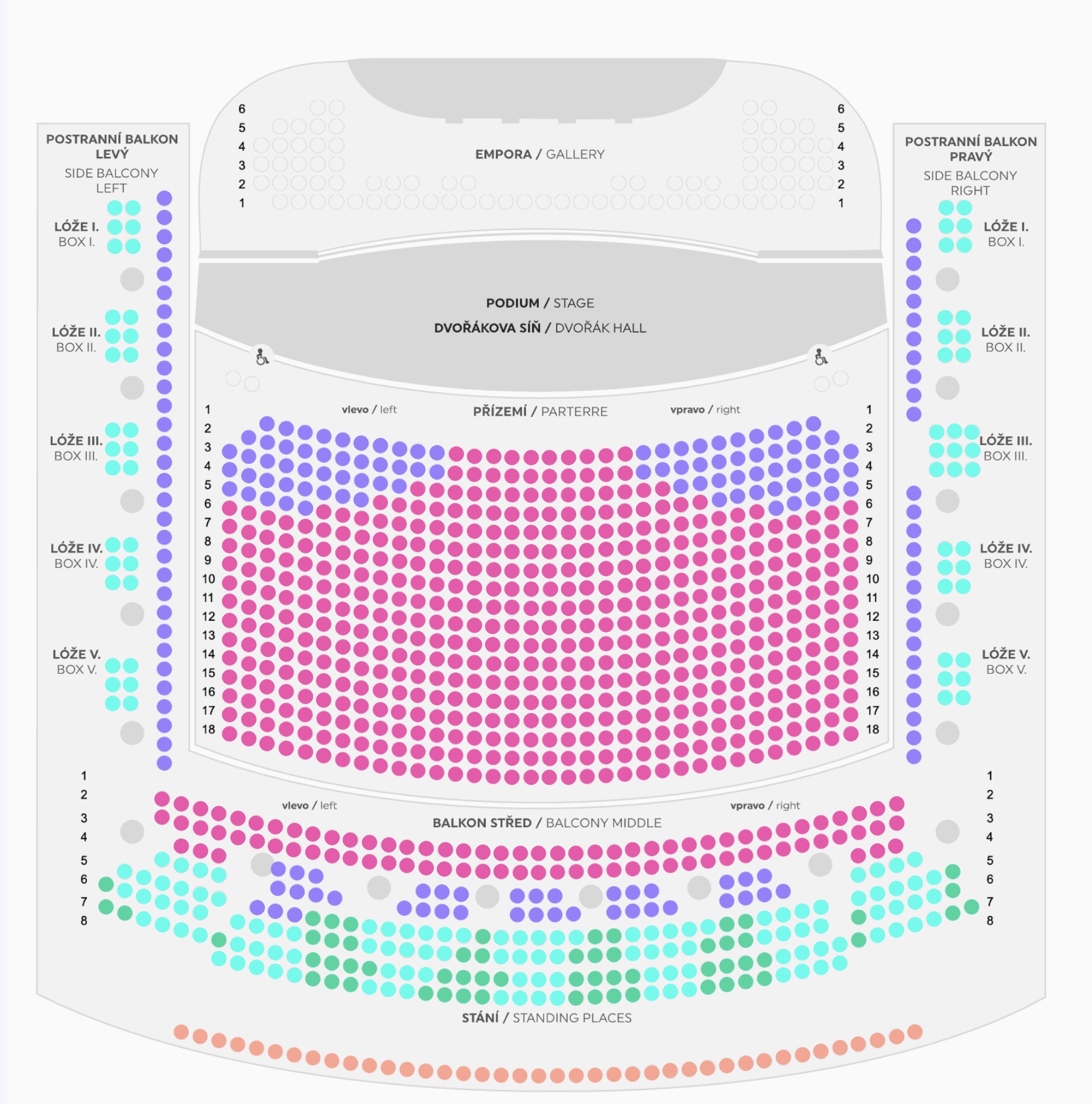
VenueRudolfinum
CalendarTue 01 Jun 2027
Synopsis/Details

The 13th Prague Spring Debut presents thirty-year-old Polish conductor Piotr Wacławik, who currently serves alongside Marin Alsop as Assistant Conductor with the Polish National Radio Symphony Orchestra in Katowice. He held the same position for several seasons in the Warsaw Philharmonic and also undertook one season with the NDR Elbphilharmonie Orchestra in Hamburg. Despite his young age he has acquired valuable experience with a number of European, American and Asian orchestras and he has collaborated with eminent soloists such as Ivo Pogorelić, Bomsori Kim and Yulianna Avdeeva. His mentors include the legendary Jorma Panula, Leonard Slatkin, Alan Gilbert, Mikhail Jurowski, Cristian Măcelaru, Robert Spano, Mark Stringer and David Zinman. He studied conducting and the viola da gamba at the Karol Szymanowski Academy of Music in Katowice. He was awarded the Aspen Conductor Prize in 2024.  


“I put together the programme for my Prague Spring debut from music which demonstrates the colourful palette and brilliance of the symphony orchestra, works which also have a personal significance for me,” he says. “I listened to Pictures at an Exhibition as a child – it fired my imagination and, thanks to this piece, I grew to love symphonic music and perhaps it even led me to take up conducting later on. I wanted to conduct Lutosławski’s Symphonic Variations from the moment I first heard it played live five years ago. As a Pole I am delighted to be able to come to Prague to present this rarely performed yet extraordinary work. My debut at the Prague Spring, one of the most important music festivals in the world, is a great honour for me and also a deeply personal endeavour. I have lived in the Czech Republic for over six years and it has become my second home. And so the opportunity to appear in the Rudolfinum with the Prague Radio Symphony Orchestra is something truly special for me.” 


In addition to Symphonic Variations by Witold Lutosławski (1913–1994) and Pictures at an Exhibition by Modest Petrovich Mussorgsky (1839–1881), a piece whose fame was undeniably assured by the superb orchestral version by Maurice Ravel (1875–1937), the programme also includes perhaps the best known work by French composer Paul Dukas (1865–1935) L’Apprenti sorcier (The Sorcerer’s Apprentice), based on the ballad by Johann Wolfgang von Goethe. Like Ravel, Dukas was also a master of instrumentation, as is evident from this piece about a mischievous apprentice, whose laziness almost causes him to flood the sorcerer’s hut. The enchanted broom which fetches the water, for instance, is wittily portrayed by the bassoon, which is then joined by the clarinet when the apprentice, in an attempt to avert disaster, splits the broom in two. The dazzling solo contribution to the programme will be Piano Concerto No. 1 by Franz Liszt (1811–1886), which the composer premiered himself in 1855. In Prague the solo part will be performed by winner of the Prague Spring piano competition 2026, nineteen-year-old Sehyeok Son. 


The history of the Prague Spring Debut 

The Prague Spring Debut was established in 2014 by Jiří Bělohlávek, former President of the Prague Spring’s Artistic Board and Chief Conductor of the Czech Philharmonic. It has now become a traditional platform, which enables young male and female conductors to strengthen ties with leading Czech orchestras, to demonstrate their skills before public audiences, and to gain invaluable experience along the way. The Prague Spring Debut has played an important role in the early careers of such artists as Marek Šedivý, Jakub Klecker, Jiří Rožeň, Robert Kružík, František Macek, Marek Prášil and Jiří Habart. The first female conductor to appear in the event was Alena Hron in 2023, while the most recent debutant was Ondřej Soukup in 2026. In addition to these Czech conductors, the platform has also hosted two winners of the Besançon International Competition for Young Conductors in France – Jonathon Heyward and Ben Glassberg.  

Cast

Programme

Paul Dukas: L’Apprenti sorcier

Franz Liszt: Piano Concerto No. 1 in E flat major

Witold Lutosławski: Symphonic Variations

Modest Petrovič Musorgskij: Pictures at an Exhibition (arr. Maurice Ravel)


Performers

Prague Radio Symphony Orchestra

Piotr Wacławik – conductor

Sehyeok Son – piano

Venue
Rudolfinum

The Rudolfinum, one of the most noteworthy buildings in Prague, was built between 1876 and 1884 according to the designs of architects Josef Zítek and Josef Schulze. Originally intended as a multipurpose cultural building in Prague, the Rudolfinum was inagurated on February 7, 1885. It carried out its mission until 1919, when it was converted to the House of Commons of the Czechoslovak Republic. Concert activity was restored to the Rudolfinum during the German occupation, but full rehabilitation, particularly of the gallery, did not take place until 1992. After a general reconstruction by architect Karel Prager in 1992, the Rudolfinum became the home of the Czech Philharmonic and the Rudolfinum Gallery.


Dvorana – Ceremony Hall

The central space in the gallery portion of the Rudolfinum was designed by Josef Zítek and Josef Schulz as an entrance hall to the art gallery. After 1918, however, this space was converted into a parliamentary cafeteria, and after World War II it served as a gymnasium for the Prague Conservatory. At the end of the 1980s, Ceremony Hall was threatened with reconstruction – but plans to tear down the main staircase to make room for another concert hall did not go through, and the hall retained its original appearance. Of particular interest in Ceremony Hall are 25 empty spaces on its walls, which were originally intended to be filled in with frescos. The majority of the eminent Czech painters, however, boycotted the 1891 fresco competition in protest over the large number of German artists involved in the construction of the Rudolfinum.


Dvořák Hall

The Czech Philharmonic took the stage in this world-famous concert hall in 1896, performing for its first-ever concert under the baton of Antonín Dvořák himself. The hall remained a space for concerts and performances until 1918, at which time it became a boardroom for the new parliament of the Czechoslovak Republic. The stage and the organ loft became a tribunal (garnished with a statue of President T.G. Masaryk), from which parliamentary leaders presided over proceedings. The hall's original character (and purpose) was restored
in 1940–1942 according to a project conceived by Antonín Engel and Bohumír Kozák, and it has remained in this form through to the present. In accordance with Josef Zítek and Josef Schulz's original proposal, the central visual element in the hall is an organ, which was made in Frankfurt, Germany. During the hall's stint as a parliamentary meeting place, the organ was housed in Brno. When it returned to the Rudolfinum in 1940, its register was extended. Dvořák Hall's final update took place in 1992 when the entire Rudolfinum building underwent reconstruction.


When travelling by public transport, get off at the Staroměstská metro station (Line A), tram stop (trams nos. 17, 18 and 53) or bus stop (no. 207).
Parking is available at the underground parking facility on Jan Palach Square. The facility is not part of the Rudolfinum premises.


Accomodation

Buy now

Gift vouchers

Gift someone an unforgettable night at the opera.
Choose a gift coupon and let them pick the performance they love—music, drama, and world-class artistry, all in one elegant experience.
Official Tickets for Europe's Most Famous Opera Houses, Classical Concerts etc.
Instagram
Payment
Google Play
App Store
© 2026 RM Europa Ticket GmbH
Whatsapp