


en
en v
Phone
Cart0 Tickets
Total: 0€
Account
Calendar
Search
Menu
X

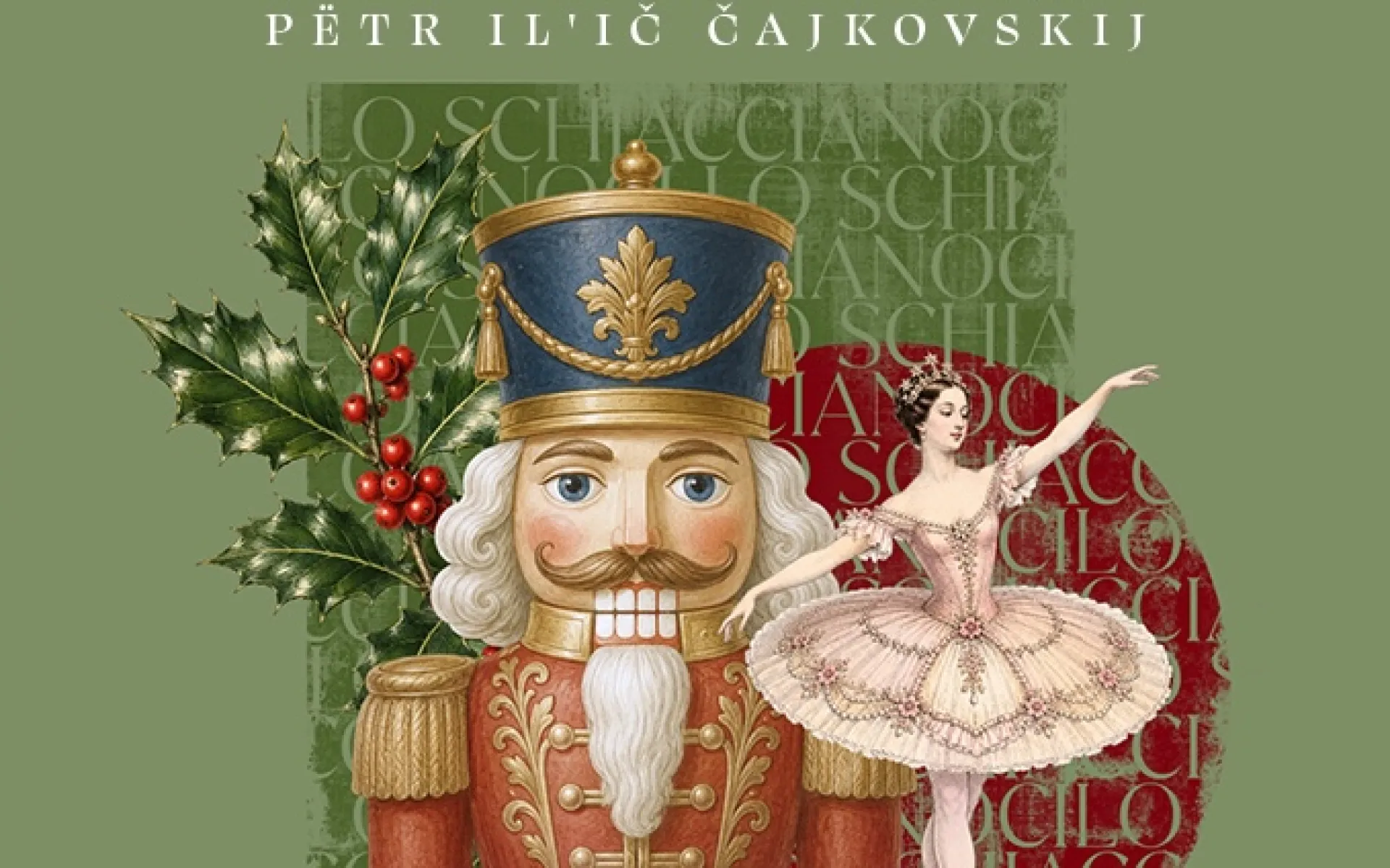
The Nutcracker

VenueTeatro Verdi Trieste
CalendarThu 10 Dec 2026 - Sun 13 Dec 2026
Synopsis/Details

Synopsis


Act I
By the chapel; at the Stahlbaum House

It is Christmas Eve, and as snow flurries fall, the smallest children of the Stahlbaum family, Marie, and her brother, Fritz head towards the chapel with their nanny while the rest of the family prepare for the great event. In front of the house there is an ice-skating rink and a vendor of roasted chestnuts. One after the other, the guests – including Uncle Drosselmeier and his nephew – arrive to celebrate together with the family.

The Christmas party

While the children wait in the antechamber to be allowed inside and see the Christmas tree, Drosselmeier performs a series of magic tricks to entertain them. The doors of the salon open up, and at Drosselmeier’s command the festivities begin. The guests gather around the beautifully decorated Christmas tree, where a great number of presents are waiting for the children. Marie’s uncle entertains the guests with a dance performance. The show is about the battle between the Nutcracker and the Mouse King, in which the Nutcracker is performed by Drosselmeier’s nephew and the Princess by Louise, Marie’s sister. Drosselmeier gives a nutcracker doll to Marie, who happily dances with her new favourite. Fritz thoughtlessly grabs the nutcracker doll from Marie, breaking it. Fortunately, Drosselmeier is able to fix the toy. The Christmas festivities close with everybody joining in a dance before the guests’ departure and the children going to bed.

Marie’s dream

Full of happiness and joy, Marie falls sound asleep, naturally with the nutcracker doll she has received beside her. The clock strikes midnight. As Marie dreams, everything seems to grow to an enormous size: the Christmas tree, the gifts, and the furniture. The dance show also comes to life. The Mouse King leads mice and rats in preparations to attack the house and Christmas tree. In her fright, Marie hopes that the Nutcracker will come to her aid. At the head of an army of lead soldiers who have come to life, the Nutcracker defeats the Mouse King.

Journey to the Land of Snow

The room and the house transform into a forest winter wonderland. Marie and Nutcracker delight in the Waltz of the Snowflakes together and then dance a lovely, lyrical duet to show their feelings for each other.

Act II
The journey

Marie and Nutcracker board Drosselmeier’s board to embark on a fantastic journey together. They are accompanied by Drosselmeier. The voyage to wonderland is a long one in which the young lovers find their path blocked by bats in a cave. Drosselmeier, however, disperses them with a single blow, and his magic kingdom opens up.

The Snow Crystal Palace

The inhabitants of the fairy-tale realm adoringly welcome Prince Nutcracker and his bride, Marie. A series of dance divertissements, in which the “residents” of the realm introduce themselves, ensues. A lively Spanish trio is followed by an Oriental snake-charming dance. Three Chinese dancers then entertain the guests with jumps and fast spins before the magnificent Russian dance commences. Next, is a pas de trois, a brilliant variation for “rococo” ballerinas, which leads, as the greetings conclude, to the climax of these divertissements: the Waltz of the Flowers. After the waltz comes the grand pas de deux between Princess Marie and Prince Nutcracker, a duet constructed in keeping with classical tradition as an adagio, two variations and a coda testifying to the fulfilment of their love. In the finale, they are joined by the entire corps de ballet and the enchantingly lovely inhabitants of the Snow Crystal Palace.

Marie’s room

On Christmas morning, Marie awakes from a wonderful dream. Racing into the room is Fritz, and they share the adventures they experienced in their dream. Marie herself is unable to say whether the Christmas magic was something she dreamed or actually experienced.

Opera And Ballet Season 2026-27

The Nutcracker

Pëtr Il’ič Čajkovskij

Cast

The Production

Coreography: SIMONE VALASTRO

Set designer: NICOLA RUBERTELLI 

Costume designer: GIUSI GIUSTINO

Light designer: VALERIO TIBERI 

Production by Fondazione Teatro di San Carlo di Napoli


Characters and performers

Soloist and Dancers of Teatro di San Carlo di Napoli

Orchestra and Technicians of Fondazione Teatro Lirico Giuseppe Verdi di Trieste

With the partecipation of the choir "I Piccoli Cantori della Città di Trieste" - Choir master CRISTINA SEMERARO

Venue
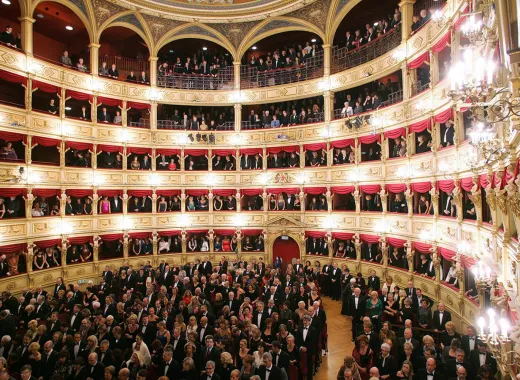
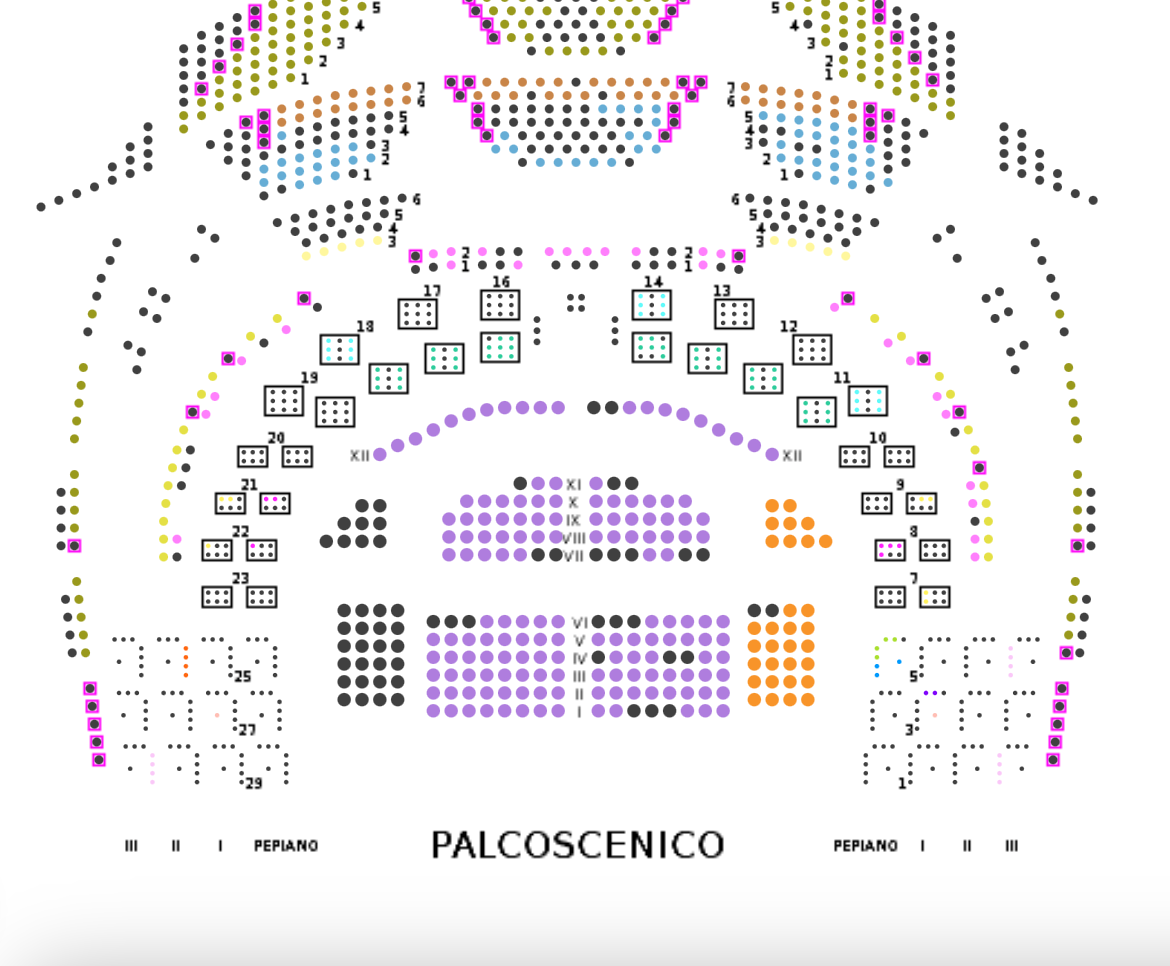
Teatro Verdi Trieste

The Teatro Lirico Giuseppe Verdi is an opera house located in Trieste, Italy and named after the composer Giuseppe Verdi. Privately constructed, it was inaugurated as the Teatro Nuovo to replace the smaller 800-seat "Cesareo Regio Teatro di San Pietro" on 21 April 1801 with a performance of Johann Simon Mayr's Ginevra di Scozia. Initially, the Nuovo had 1,400 seats. In 1821, it became known as the Teatro Grande.


By the end of the 18th century, the need for a new theatre in Trieste became evident. Its main theatre, the Teatro di San Pietro, had become increasingly inadequate and finally closed its doors in 1800. A proposal to the Austrian Chancery from Giovanni Matteo Tommasini to build a private theatre had existed since 1795 and, in June 1798, a contract was drawn up whereby annual funding would come from the municipality and Tommasini would hold the rights to several boxes and the rights to sell others. Gian Antonio Selva, the architect of the La Fenice in Venice, was engaged, and he designed a classic horseshoe-shaped auditorium. However, his exterior designs were considered to be too plain for the Austrians who then engaged another architect, Matteo Pertsch, to solve the problem, which was accomplished by incorporating elements of Milan's La Scala opera house. The "Nuovo" became a mixture of La Fenice on the inside and La Scala on the exterior.


History

Several name changes have occurred during the theatre's lifetime, the first in 1821 when it became the Teatro Grande [1] and it was under this name that the theatre was the site of two Verdi opera premieres: Il corsaro in 1848 (featuring the soprano Giuseppina Strepponi, who Verdi married in 1859, in the leading role) and Stiffelio, a production which Verdi supervised - not without controversy - in 1850.[2] However, before these premieres, Verdi's operas had begun to dominate the Teatro Grande's stage, followed, as the century progressed, by all the major works of the opera repertoire, including those by Puccini and Wagner.


A further name change followed in 1861 due to a change from private to public ownership. Thus it became the Teatro Comunale and existed as such throughout the latter years of the 19th century. By 1881, seating capacity had been increased to 2,000 through the use of existing standing room spaces; but, by that December, the theatre was declared to be unsafe and it was closed for renovations, during which electricity replaced gas lighting for the reopening in 1889 with 1,000 seats.


Within hours of his death in January 1901,[3] the theatre was once again renamed, this time to honour the memory of Giuseppe Verdi. It was extensively restored between 1992 and 1997 and re-opened with about 1,300 seats[4] and with a Viva Verdi concert[3] which included excerpts from many of the composer's operas. (Like the restoration of La Scala between 2001 and 2004, a temporary alternative venue was quickly created in Trieste and the Sala Tripcovich continues to offer space for chamber opera and operettas.)


A major feature of the Teatro Verdi's programming in the past 40 years, which stems from the original Austrian occupation of the city in the 19th century and the fact that Trieste did not become part of Italy until 1918, is the "International Festival of Operetta" which takes place every summer.


Premieres

The theatre has seen the world premieres of the following operas:

Ginevra di Scozia by Simon Mayr, 21 April 1801
Annibale in Capua by Antonio Salieri 20 May 1801 
Ricciarda di Edimburgo by Cesare Pugni, 29 September 1832.
Enrico II by Otto Nicolai, 26 November 1839 
Il corsaro by Giuseppe Verdi, 25 October 1848
Stiffelio by Giuseppe Verdi, 16 November 1850
Nozze istriane by Antonio Smareglia, 28 March 1895

Accomodation

Buy now

Gift vouchers

Gift someone an unforgettable night at the opera.
Choose a gift coupon and let them pick the performance they love—music, drama, and world-class artistry, all in one elegant experience.
Official Tickets for Europe's Most Famous Opera Houses, Classical Concerts etc.
Instagram
Payment
Google Play
App Store
© 2026 RM Europa Ticket GmbH
Whatsapp