en
en v
Phone
Cart0 Tickets
Total: 0€
Account
Calendar
Search
Menu
X

Tonkünstler Orchestra of Lower Austria

VenueMusikverein Golden Hall
CalendarFri 13 Nov 2026 - Tue 08 Jun 2027
Synopsis/Details

The Tonkünstler Orchestra of Lower Austria is one of Austria's leading symphony orchestras, celebrated for its musical versatility, expressive performances, and distinctive sound. With a rich tradition and a diverse repertoire ranging from classical masterpieces to contemporary works, the orchestra performs at renowned concert venues and festivals. Its commitment to artistic excellence and engaging musical experiences makes every performance an opportunity to discover the beauty and power of orchestral music.

  • Location
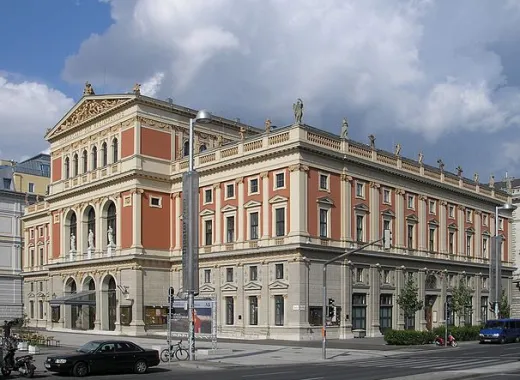
    • › The Musikverein is a renowned concert hall in Vienna, Austria, located in the city centre, near Karlsplatz and the Vienna State Opera. It is famous for its outstanding acoustics and rich musical history. 
    • › The address is Musikvereinsplatz 1, 1010 Wien.
  • Public transportation
    • › The Musikverein building is centrally located and very well connected to the public transport network. Support us in our commitment to environmental protection and sustainability and travel by public transport if possible.
    • → Subway:
    • -U1, U2 and U4 to station Karlsplatz (approx. 7 or 4 minutes away)
    • → Tram:
    • -Line 1, 2, 62 to station Oper, Karlsplatz (approx. 4 minutes away)
    • -Line 71, D to Schwarzenbergplatz (approx. 4 minutes away)
    • -Badner Bahn to the final destination Wien Oper (approx. 4 minutes away)
    • → Bus:
    • -Line 59A, to station ‘Oper, Karlsplatz’ (approx. 4 minutes away)
    • -Line 4A to station ‘Karlsplatz’ (approx. 4 minutes away)
    • ›Please note that tickets for using the public transport network must be purchased from the ticket machines or counters of Wiener Linien. Our admission tickets do not entitle you to use public transport free of charge.
  • Dresscode
    • › We would be delighted if you could attend our concerts and events in festive attire appropriate to the occasion. Please refrain from wearing sportswear or training gear when you visit.
  • Cloakroom
    • › For security reasons, coats, bags, rucksacks, umbrellas and folding chairs may not be taken into the hall, not even to the standing area. The Gesellschaft der Musikfreunde reserves the right to charge a fee for storing your clothing and larger bags or rucksacks. Please note that suitcases and large bags cannot be stored.
  • Punctuality
    • › Don’t come at the last minute. Bring a little time with you and let yourself be inspired by the ambience. Admire the rooms in which Anton Bruckner, Gustav Mahler and Johannes Brahms played …
    • › Take your seat in good time. A gong will remind you that it is time to take your seat. After the auditorium doors have closed, it is only possible to take your seat during the applause breaks or even after the first half of the concert out of consideration for the artists.
  • Admission time
    • › The Musikverein building opens 1 hour before the start of an event. Admission to the hall is usually granted 30 minutes before the start of the performance. Please note that after the start of a performance, admission for latecomers can only take place during the interval or during a possible applause break. Entry during a movement break is not possible. This also applies to seats in the parterre and balcony boxes as well as for visitors in the standing area.
  • Applause
    • › In Vienna, it is customary not to interrupt the music with applause. Even if you are particularly impressed by the performance, you should only clap once a piece has finished, not after a single movement – this allows you to savour that brief moment when the final note fades away and to appreciate the piece in its entirety. The performers are then all the more delighted by a round of applause. Applause is also very much welcome when soloists or conductors take to the stage or leave it.
  • At your seat
    • › All listeners benefit from your switched-off phone. Especially you, as you can concentrate all your senses on the music.
    • › Your new top hat is an eye-catcher, but your hairstyle also deserves admiration. Please refrain from wearing voluminous headgear out of consideration for those sitting behind you.
    • › Please avoid talking during the concert. Due to the unique acoustics of our halls, even the slightest whisper is very disturbing.
    • › Food and drinks may not be taken into the hall. Enjoy refreshments at the buffet during the break.
  • Accessible concert attendance
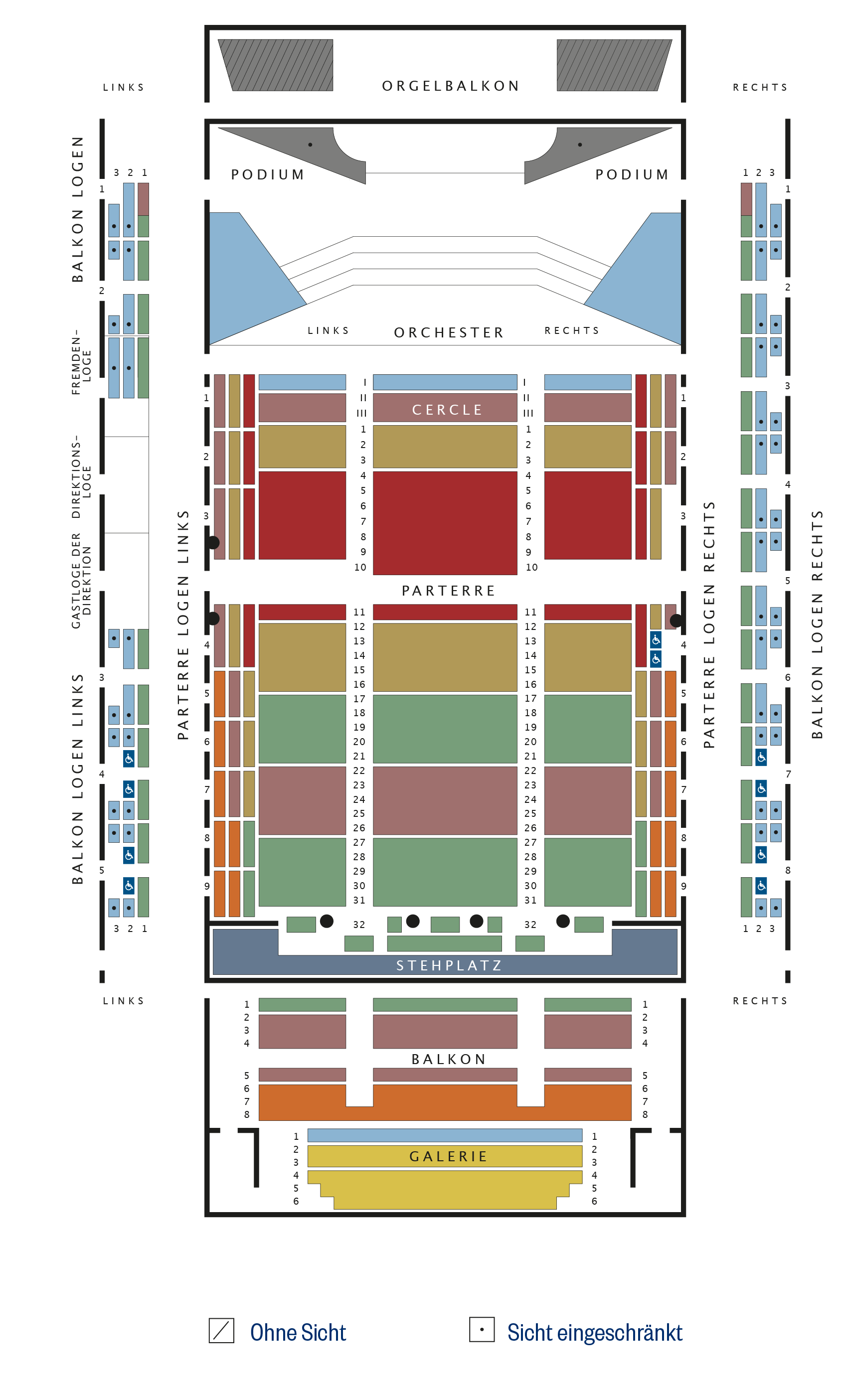
    • › The barrier-free entrance for wheelchair users is located at the main entrance on the right. Elevators are available in the building.
    • › The Musikverein has three wheelchair-accessible toilets: in the 2nd foyer (2nd basement floor), at the main entrance on the right and at the balcony boxes on the left.
Cast

30. OCTOBER 2026

Tonkünstler Orchestra of Lower Austria

Andreas Ottensamer, conductor
Barnabás Kelemen, Violin


PROGRAM

Zoltán Kodály

Galántai táncok (Dances from Galanta)

Béla Bartók

Concerto for Violin and Orchestra No. 1, Sz 36, op. posth.

– Break –

Franz Schubert

Symphony No. 8 in C major, D 944, "Great C major Symphony"


1. NOVEMBER 2026

Sound Artist Orchestra Lower Austria
Andreas Ottensamer, conductor
Barnabás Kelemen, Violin


PROGRAM

Zoltán Kodály

Galántai táncok (Dances from Galanta)

Béla Bartók

Concerto for Violin and Orchestra No. 1, Sz 36, op. posth.

– Break –

Franz Schubert

Symphony No. 8 in C major, D 944, "Great C major Symphony"


13, 15, 28 and 29 NOVEMBER 2026

Sound Artist Orchestra Lower Austria
Fabien Gabel, conductor
Anastasia Kobekina, cello


PROGRAM

Johannes Brahms

Academic Festive Overture in C minor, op. 80

Robert Schumann

Concerto for cello and orchestra in A minor, op. 129

– Break –

Richard Strauss

Suite from the opera "Der Rosenkavalier", AV 145

Maurice Ravel

The Valse. Choreographic Poem


18 and 20 DECEMBER 2026

Tonkünstler Orchestra of Lower Austria

Jun Märkl, conductor
Lucas Jussen, piano
Arthur Jussen, piano


PROGRAM

Camille Saint-Saëns

Orient and West. Grande Marche, op. 25

Fazıl Say

Anka kuşu ("Phoenix"). Concerto for piano to four hands and orchestra, op. 97

– Break –

Peter Ilyich Tchaikovsky

Swan Lake. Balletsuite, op. 20a


26. JANUARY 2027

Sound Artist Orchestra Lower Austria
Fabien Gabel, conductor
Albert Hosp, Moderation


PROGRAM

Joseph Haydn

Symphony in E-D, Hob. I:99


14, 16 FEBRUARY 2027

Sound Artist Orchestra Lower Austria
Yutaka Sado, Conductor
Lawrence Power, Viola


PROGRAM

Ludwig van Beethoven

Overture to Goethe's tragedy “Egmont”, op. 84

Magnus Lindberg

Concerto for Viola and Orchestra (Austrian Premiere)

– Break –

Ludwig van Beethoven

Symphony No. 1 in C mal, op. 21


23. FEBRUARY 2027

Sound Artist Orchestra Lower Austria
Fabien Gabel, conductor
Myles Sanko, Vocals
Ric Elsworth, Drums
Tom O'Grady, piano
Jon Mapp, electric bass


PROGRAM

The program will be announced at a later date.


5, 7 MARCH 2027

Sound Artist Orchestra Lower Austria
Christian Arming, conductor
Simone Lamsma, Violin


PROGRAM

Peter Ilyich Tchaikovsky

Concerto for Violin and Orchestra in D Fior, op. 35

Bedřich Smetana

Šárka. Symphonic poetry from the cycle "Mein Vaterland"

– Break –

Leoš Janáček

Tara's Bulba. Rhapsody for orchestra based on a saga edited by Nikolaj W. Gogol


20, 21 MARCH 2027

Sound Artist Orchestra Lower Austria
Fabien Gabel, conductor
Javier Perianes, Piano


PROGRAM

Ludwig van Beethoven

Concerto for Piano and Orchestra No. 5 In E-fl, Op. 73

Franz Schreker

Prelude to a drama

– Break –

Erich Wolfgang Korngold

The Sea Hawk Suite for Orchestra; edited by Patrick Russ


4, 6 and 9 APRIL 2027

Sound Artist Orchestra Lower Austria
Fabien Gabel, conductor
Xavier de Maistre, Harp


PROGRAM

Igor Stravinsky

Fireworks. Fantasy for large orchestra, op. 4

Alexander Wassilevich Mosolov

Concert for harp and orchestra

– Break –

Paul Dukas

The sorcerer's apprentice. Symphonic Scherzo after a ballad by Johann Wolfgang von Goethe (“L'apprenti sorcier”)

Foreplay to the 3. Act of the opera "Ariane et Barbe-bleue"

Maurice Ravel

Daphne and Chloe. Suite No. 2


18. APRIL 2027

Sound Artist Orchestra Lower Austria
Nuno Coelho, Conductor
Cédric Tiberghien, piano


PROGRAM

Ludwig van Beethoven

Concerto for Piano and Orchestra No. 3 in C minor, op. 37

– Break –

Dmitry Shostakovych

Symphony No. 10 in E minor, op. 93


29. APRIL 2027

INTERPRETERS

Sound Artist Orchestra Lower Austria
Guest Waltzing, conductor
Daoirí Farrell, Vocals
Mark Redmond, Uilleann Pipes


PROGRAM

The program will be announced at a later date.


23, 25 MAY 2027

Sound Artist Orchestra Lower Austria
Tomáš Netopil, conductor
Fedor Rudin, Violin


PROGRAM

Johann Sebastian Bach

Ricercare à 6. No. 5 from the "Musical Sacrifice", BWV 1079; instrumented by Anton Webern

Dmitry Shostakovych

Concerto for Violin and Orchestra No. 2 C minor, op. 129

– Break –

Felix Mendelssohn Bartholdy

Symphony No. 5 in D minor, op. 107, "Reformation Symphony"


6 and 8 JUNE 2027

Sound Artist Orchestra Lower Austria
Domingo Hindoyan, conductor
James Ehnes, Violin


PROGRAM

Jörg Widmann

Con brio. Concert overture for orchestra

Felix Mendelssohn Bartholdy

Concerto for Violin and Orchestra in E minor, op. 64

– Break –

Ludwig van Beethoven

Symphony No. 5 in C minor, op. 67

Venue
Musikverein Golden Hall

This building is located on Dumbastraße/Bösendorferstraße behind the Hotel Imperial near the Ringstraße boulevard and the Wien River, between Bösendorferstraße and Karlsplatz. However, since Bösendorferstraße is a relatively small street, the building is better known as being between Karlsplatz and Kärntner Ring (part of Ringstraße loop). It was erected as the new concert hall run by the Gesellschaft der Musikfreunde, on a piece of land provided by Emperor Franz Joseph I of Austria in 1863. The plans were designed by Danish architect Theophil Hansen in the Neoclassical style of an ancient Greek temple, including a concert hall as well as a smaller chamber music hall. The building was inaugurated on 6 January, 1870. A major donor was Nikolaus Dumba whose name the Austrian government gave to one of the streets surrounding the Musikverein.
 

Great Hall - Golden Hall

“As high as any expectations could be, they would still be exceeded by the first impression of the hall which displays an architectural beauty and a stylish splendour making it the only one of its kind.” This was the reaction of the press to the opening of the new Musikverein building and the first concert in the Großer Musikvereinssaal on 6 January 1870.

The impression must have been overwhelming – so overwhelming that Vienna’s leading critic, Eduard Hanslick, irritatingly brought up the question of whether this Großer Musikvereinssaal “was not too sparkling and magnificent for a concert hall”. “From all sides spring gold and colours.”


Brahms Hall

"In order not to promise too much it can be said that it has been made into the most beautiful, most magnificent, perfect example of a chamber concert hall that any of us knows in the world.” This was the reaction of a Vienna daily newspaper in October 1993 as the Brahms-Saal was presented to the public after extensive renovation work.

The surprise was perfect. It was a completely new hall. In contrast to the Grosse Musikvereinssaal, the Brahms-Saal had changed its appearance quite considerably over the years. When and how it acquired that slightly melancholy duskiness that was known to music lovers before 1993 cannot be precisely documented.


Glass Hall

As a venue for events from concerts to luxury banquets, the Glass Hall / Magna Auditorium is not only the largest of the Musikverein's 4 new halls but also the most flexible in terms of usage.

Hub podiums enable the smooth transformation of the concert hall into a conference centre, the cinema into a ballroom, or the stage into a catwalk. State-of-the-art equipment for sound, lighting, video and widescreen digital projection provide the ideal conditions for half-scenic productions.
The Glass Hall / Magna Auditorium was designed by the Viennese architect Wilhelm Holzbauer. With a height of 8 metres, the hall (including the gallery) can play host to up to 380 visitors.

Accomodation

Buy now

Gift vouchers

Gift someone an unforgettable night at the opera.
Choose a gift coupon and let them pick the performance they love—music, drama, and world-class artistry, all in one elegant experience.
Official Tickets for Europe's Most Famous Opera Houses, Classical Concerts etc.
Instagram
Payment
Google Play
App Store
© 2026 RM Europa Ticket GmbH
Whatsapp