



en
en v
Phone
Cart0 Tickets
Total: 0€
Account
Calendar
Search
Menu
X

Women In Music 

VenueRudolfinum
CalendarThu 27 May 2027
Synopsis/Details

“You should pull yourself together, and collect yourself; you should educate yourself more seriously and assiduously towards your real goal, that of a housewife, the only profession for a girl.” Even a man as well–educated as Abraham Mendelssohn chose to write these words to his 14-year-old daughter Fanny in 1820; yet, a year earlier, this brilliant pianist had performed Bach’s entire Well-Tempered Clavier from memory as a birthday gift to her father. Fanny Mendelssohn was not alone in this respect: A number of female composers before and after her literally had to fight for their music or compose in secret – which makes discovering their work all the more exciting. 


A programme about love, joy and happiness 

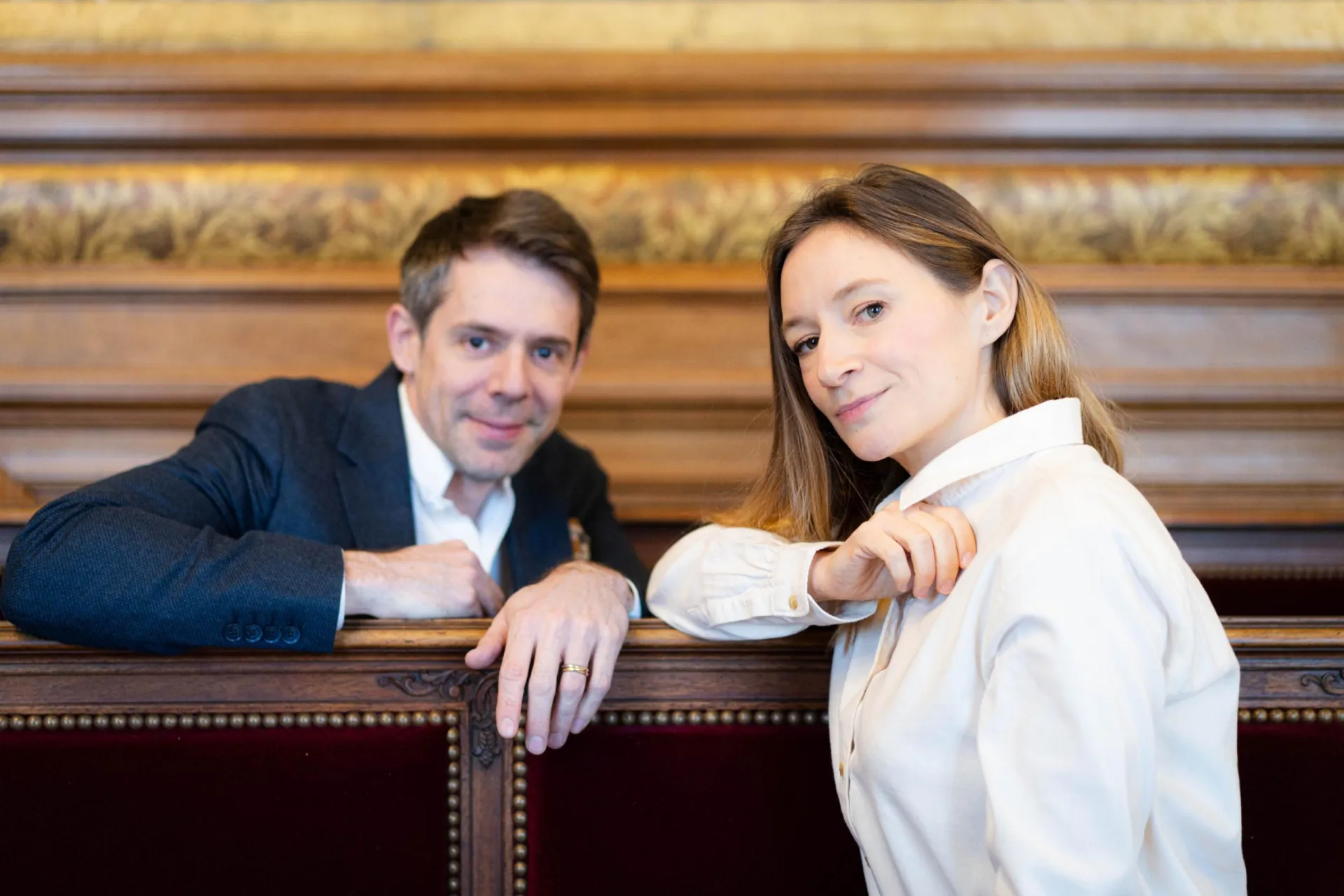
This song recital given by Sabine Devieilhe, three-time winner of the Victoire de la musique classique award in the category “Singer of the Year”, offers a rare opportunity to become acquainted with music by French and German female composers that spans an arc from the Middle Ages to the 20th century. Devieilhe is known for her unconventional approach to programming, where she boldly combines works from various stylistic periods, placing them in thought-provoking intellectual and emotional contexts. Her Prague Spring programme ruthlessly disrupts the traditional song recital form. The result is an immensely dynamic and stimulating evening full of unexpected twists and contrasts. The concert explores the themes of love, joy and happiness, thus it comes as no surprise that Devieilhe and pianist Mathieu Pordoy gave their programme the subheading “Glücklich allein ist die Seele, die liebt” (Happy alone is the soul that loves), a quotation from the song Freudvoll und leidvoll by Franz Liszt.  


An evening full of contrasts 

Devieilhe and Pordoy will guide you through various eras, from contemplative music by medieval poet Hildegard of Bingen (1098–1179), to the Schubertian salon songs of Fanny Mendelssohn (1805–1847) and Amy Beach (1867–1944), also compositions by Alma Mahler (1879–1964) reflecting a sense of uneasiness under the influence of the fin de siècle, then the playful French coloraturas of Cécile Chaminade (1857–1944) and J-e t apostrophe a-i-m-e by Yvonne Loriod (1924–2010), in which the singer spells out the phrase Je t’aime, including the apostrophe… And in amongst these works pianist Mathieu Pordoy will interweave such gems as the blues-inflected India Song, the central melody of the film of the same name by Marguerite Duras, who wrote the celebrated novel The Lover, or the favourite by Claude Debussy (1862–1918) The Girl with the Flaxen Hair. 

Cast

Programme

Hildegard von Bingen: O Euchari in leta via

Claude Debussy: La Fille aux cheveux de lin, L.15 (1881)

Fanny Mendelssohn: Frühling from 6 Lieder Op. 7

Alma Mahler: Die stille Stadt from Fünf Lieder

Clara Schumann: Lorelei

Fanny Mendelssohn: Nach Süden from Fünf Lieder Op. 10

Fanny Mendelssohn: Könnt ich zu den Wäldern flüchten from the cycle Anklänge

Cécile Chaminade: L’été

Clara Schumann: Liebst du um Schönheit from Lieder Op. 12

Fanny Mendelssohn: Achmed an Irza

Robert Schumann: Aus meinen Tränen sprießen and Die Rose, die Lilie, die Taube, die Sonne from Dichterliebe Op. 48

Fanny Mendelssohn: Die Mainacht from Sechs Lieder Op. 9

Carlos D’Alessio: India Song

Reinhold Glière: Allegro from Concerto for Coloratura Soprano Op. 82

Mel Bonis: Gai printemps from 5 Pièces pour piano Op. 11

Olivier Messiaen: Vocalise-Étude

Yvonne Loriod: J-e t apostrophe a-i-m-e from Grains de cendre

Franz Liszt: Freudvoll und leidvoll S.280/1

Amy Beach: Elle et moi from Three Songs Op. 21

Marguerite Canal: Le bonheur est dans le pré


Performers

Sabine Devieilhe – soprano

Mathieu Pordoy – piano

Venue
Rudolfinum

The Rudolfinum, one of the most noteworthy buildings in Prague, was built between 1876 and 1884 according to the designs of architects Josef Zítek and Josef Schulze. Originally intended as a multipurpose cultural building in Prague, the Rudolfinum was inagurated on February 7, 1885. It carried out its mission until 1919, when it was converted to the House of Commons of the Czechoslovak Republic. Concert activity was restored to the Rudolfinum during the German occupation, but full rehabilitation, particularly of the gallery, did not take place until 1992. After a general reconstruction by architect Karel Prager in 1992, the Rudolfinum became the home of the Czech Philharmonic and the Rudolfinum Gallery.


Dvorana – Ceremony Hall

The central space in the gallery portion of the Rudolfinum was designed by Josef Zítek and Josef Schulz as an entrance hall to the art gallery. After 1918, however, this space was converted into a parliamentary cafeteria, and after World War II it served as a gymnasium for the Prague Conservatory. At the end of the 1980s, Ceremony Hall was threatened with reconstruction – but plans to tear down the main staircase to make room for another concert hall did not go through, and the hall retained its original appearance. Of particular interest in Ceremony Hall are 25 empty spaces on its walls, which were originally intended to be filled in with frescos. The majority of the eminent Czech painters, however, boycotted the 1891 fresco competition in protest over the large number of German artists involved in the construction of the Rudolfinum.


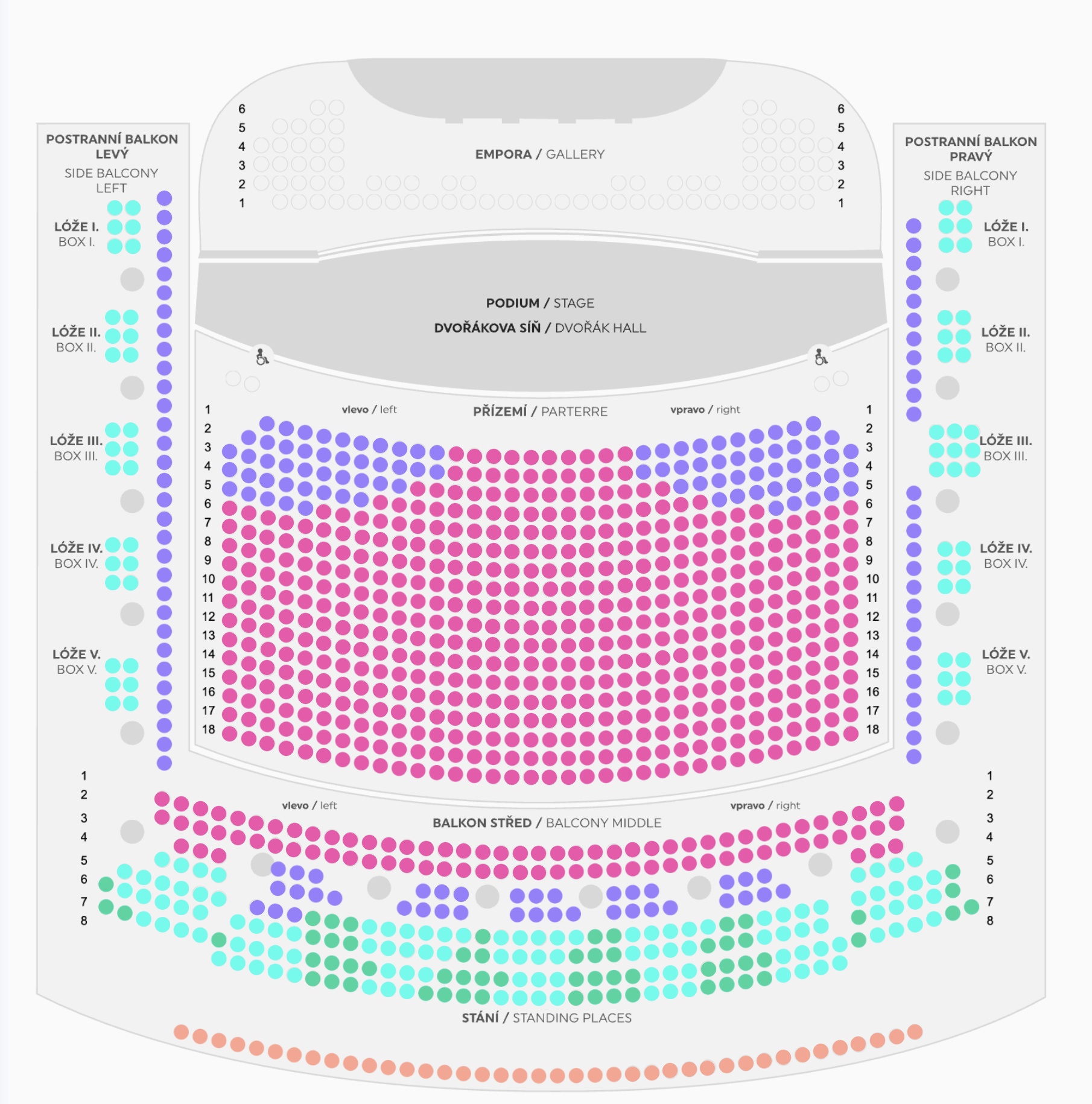
Dvořák Hall

The Czech Philharmonic took the stage in this world-famous concert hall in 1896, performing for its first-ever concert under the baton of Antonín Dvořák himself. The hall remained a space for concerts and performances until 1918, at which time it became a boardroom for the new parliament of the Czechoslovak Republic. The stage and the organ loft became a tribunal (garnished with a statue of President T.G. Masaryk), from which parliamentary leaders presided over proceedings. The hall's original character (and purpose) was restored
in 1940–1942 according to a project conceived by Antonín Engel and Bohumír Kozák, and it has remained in this form through to the present. In accordance with Josef Zítek and Josef Schulz's original proposal, the central visual element in the hall is an organ, which was made in Frankfurt, Germany. During the hall's stint as a parliamentary meeting place, the organ was housed in Brno. When it returned to the Rudolfinum in 1940, its register was extended. Dvořák Hall's final update took place in 1992 when the entire Rudolfinum building underwent reconstruction.


When travelling by public transport, get off at the Staroměstská metro station (Line A), tram stop (trams nos. 17, 18 and 53) or bus stop (no. 207).
Parking is available at the underground parking facility on Jan Palach Square. The facility is not part of the Rudolfinum premises.


Accomodation

Buy now

Gift vouchers

Gift someone an unforgettable night at the opera.
Choose a gift coupon and let them pick the performance they love—music, drama, and world-class artistry, all in one elegant experience.
Official Tickets for Europe's Most Famous Opera Houses, Classical Concerts etc.
Instagram
Payment
Google Play
App Store
© 2026 RM Europa Ticket GmbH
Whatsapp